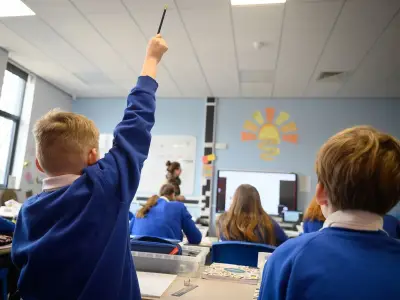
Russian teachers leading mandatory weekly patriotic classes have been instructed to identify and report students deemed 'disloyal' to Moscow, according to newly published educational documents. Students who ask disruptive questions or challenge the status quo can be reported to the police, potentially resulting in reprisals against them and their families.
Mandatory 'Conversations about Important Matters'
The course outline for Russia's mandatory 'Conversations about Important Matters' classes shows students of all ages will take part in 'patriotism' lessons throughout the 2026/27 academic year. The 'patriot lessons' first appeared on the school curriculum in 2022 and are now mandatory in schools nationwide. As of September, junior patriot classes will also be taught in kindergartens.
The hour-long Monday lessons are designed to teach students the “Russian civic identity, patriotism, [and] respect for the Homeland”. According to lesson plans published by the Ministry of Education, any students who ask disruptive questions or disrupt the status quo are noted down and reported to the authorities.
Teacher reporting and self-assessment
As per the Moscow Times, homeroom teachers must record any incidents regarding pupils who disagree with the lesson's "value orientations". Educators are also required to complete a self-assessment section in their report following each lesson, reflecting on how students with differing opinions were course-corrected.
While education department documents say these post-lesson debriefs are meant to help teachers collate data to evaluate the impact of the lessons, Amnesty International has labelled the classes "indoctrination" at a classroom level.
Amnesty International's condemnation
Amnesty International stated: "Since Russia’s full-scale invasion of Ukraine in 2022, Russian authorities have used the education system as a tool for political indoctrination. Schools are forced to justify the war through official narratives, militarised patriotism and loyalty to government policies, while restricting alternative viewpoints. Demand the Russian Ministry of Education make schools places of learning, not instruments of ideological control."
The human rights organisation continued: "The authorities are also using schools to identify and silence potential dissenters. Children are taught to avoid independent media and other sources of alternative information and opinion. School staff are instructed to monitor students’ behaviour and record their opinions on political and other issues. If a student is disloyal, teachers must report them to the police and security services, resulting in reprisals against them and their families."
Curriculum expansion and guest speakers
These 'Conversations about Important Matters' classes, held each Monday at schools across Russia, became a compulsory part of the school curriculum in 2023. Russian officials claimed the classes were designed to help build patriotism amongst young people and instil in them a deeper love for their country. Lessons have regularly featured guest speakers, with Russian soldiers and mercenaries often invited to talk to small children about the importance of making a "sacrifice for the nation".
As recently as Tuesday - the first day of the new Russian school year - students at a school assembly in Siberia were urged by a war veteran to study the workings of the Kalashnikov rifle if they "want the whole world [to speak] Russian", Novaya Gazeta reports. The Russian machine gunner also made a hand gesture referencing the Wagner Group, a state-funded militia of mercenaries that acted as a shadow army for the Kremlin. He wished everyone a good first day back at school, adding that "victory will be ours" over Ukraine.
In addition to the mandatory lessons for pupils, educators are also having their values tested through state-sanctioned questionnaires. In May, Russia's Ministry of Education released three new assessments for teachers, student teachers, and students. The questionnaires were designed to quiz anyone under 35 on their "civic-patriotic and moral" attitudes, as well as about "patriotic actions" and their willingness to engage in "patriotic education."