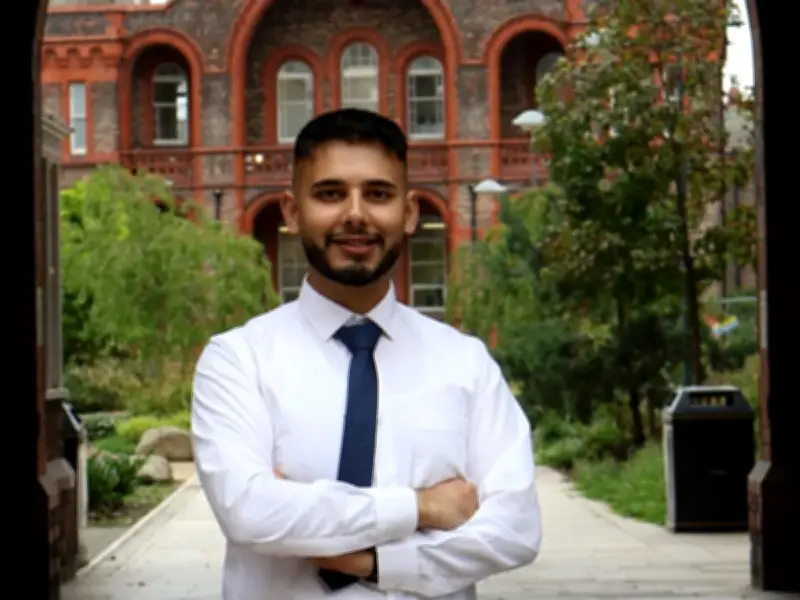
Samawer Sohail, a 23-year-old from Kensington, Liverpool, is using his education company Beat Modules to counter the growing influence of the manosphere among secondary school pupils. The company creates digital PSHE lessons covering sexism, misogyny, and respectful relationships, aiming to help boys question attitudes absorbed online and understand that kindness, vulnerability, and respect are not signs of weakness.
Concerns over online influences
Sohail is worried that young people are learning about masculinity from the wrong sources, as many boys are drawn to online personalities who promote wealth, dominance, and popularity, with figures such as Andrew Tate presented as examples of successful men. He told the ECHO: "When you really get to the bottom of it, these are the people who actually want to be good men, good husbands, good brothers, good future employees. So they really want to be successful. But a lot of the time, it's what they're consuming online, it's the examples that they have."
Sohail noted that social media algorithms play a significant role in drawing boys toward these figures, especially those searching for someone to look up to. He said: "When they are spending lots of time in their bedrooms consuming content online, doom-scrolling, unfortunately, the algorithms are designed in a very specific way. They would push out very specific things to people who are sometimes looking for somebody to look up to because they haven't got someone to look up to. They are, for the very first time, seeing a tangible example of somebody who's financially successful, or who has all these kinds of partners which they show online. And that can be very appealing and luring to young people."
He added that some boys are attracted to the idea of being the "Top G" or "Alpha," attracting many girls and belonging to an exclusive group of supposedly successful people. However, he said the problem extends beyond social media, with traditional stereotypes about male superiority also shaping attitudes. He explained: "Besides social media, there are also traditional stereotypes where you inherently believe that this is something you deserve as a man. It's a sense of superiority complex that you get to dictate people's actions just because you are a boy or a man, or this is what you are supposed to do if you're trying to be a 'real man'."
Beat Modules' approach
Beat Modules, co-founded with business partner Oliver Le Brun, creates digital PSHE lessons for secondary schools on topics including vaping, digital addiction, and misogyny. Its positive masculinity module helps pupils examine their own beliefs, understand harmful stereotypes, and have open conversations about pressures on boys and girls.
Sohail said one of the biggest challenges is engaging young people with subjects they might dismiss as "cringey." He said: "It is very hard and it's particularly difficult in Liverpool, from my personal experience, because most kids are trying to be the hardest kid. But unfortunately, the biggest gap is what they sometimes fail to realise is that becoming the hardest kid in the class isn't going to help them achieve what they are looking to achieve."
The company aims to help pupils understand they can be kind, respectful, and ambitious without sacrificing one for the other. Sohail said: "The big mission with teaching misogyny is that being nice is the bare minimum, and we can achieve greater, better things if we are just kinder to each other. A lot of the time, their kind of misbelief is that you can't be nice, smart, and successful all at the same time. So I want to make sure that we can help young people realise that you actually can be nice, and still do exciting things in life."
Supporting teachers
Sohail said schools are also facing difficulties in tackling misogyny, with teachers sometimes lacking time, resources, or confidence to address sensitive issues. He said: "It's very unfortunate. I hear all these stories about the accusations against teachers. One teacher I spoke with was doing an assembly on Andrew Tate and she was faced with comments like, 'Oh yeah, of course you're a teacher, you're a female, of course you hate all men'."
He believes simply telling pupils that figures like Tate are wrong is not enough. Instead, he wants young people to question what they see and reach their own conclusions. He said: "First we need to be meeting young people where they are, which is where we take the first step, which is to try to acknowledge their reality. Try not to push their reality under the carpet and say it doesn't exist. Once we've acknowledged their reality, I think a lot of the time it's things like having a really open dialogue."
He believes conversations should look beyond the wealth and popularity displayed by online influencers and encourage young people to think about the bigger picture, including future relationships and happiness. He added: "You ideally want them to come to the conclusion themselves, but we help them get there by having lots of conversations, lots of reflection, lots of discussion."
The idea behind Beat Modules is to make education on difficult subjects more accessible and engaging for both pupils and teachers. The company works with researchers, university students, headteachers, and teachers to develop lessons, turning research into videos, quizzes, games, and interactive activities. Sohail said the aim is to give teachers confidence and resources to tackle contemporary issues without spending hours researching and preparing lessons.
He said: "PSHE is usually treated as a box-ticking exercise in schools. Teachers are absolutely stretched, and understandably they do not have the time to do all the reading up on contemporary issues, such as misogyny. We wanted to make sure that we could build something for the teachers which would give them sufficient support. Sometimes teachers do not have confidence to actually deliver or talk about such sensitive subjects because they do get subjected to slurs and abuse in classrooms, especially our female teachers, which is absolutely heartbreaking. So we wanted to make sure that we could build something for the teachers which would give them sufficient support in terms of they wouldn't have to do all the lesson planning or all the research, and they could feel confident in knowing that what they were delivering had actual, real, evidence-based value results."
Born in Pakistan, Sohail moved to Liverpool with his family and grew up in Toxteth. He became the first member of his family to attend university, studying Biomedical Sciences at the University of Liverpool. His experiences of navigating different cultures and expectations have shaped his outlook and desire to make a difference through education.
Now, having built a business focused on helping young people navigate pressures facing their generation, Sohail hopes to reach as many schools and pupils as possible. While he wants to challenge harmful messages pushed towards boys online, his ultimate aim is not to tell them what kind of men they should become, but to help them work it out for themselves. He said: "It's about being to them how they want to be spoken to - not patronising or condescending. You ideally want them to come to the conclusion themselves but we help them to get there by having lots of conversations and reflection about self awareness."