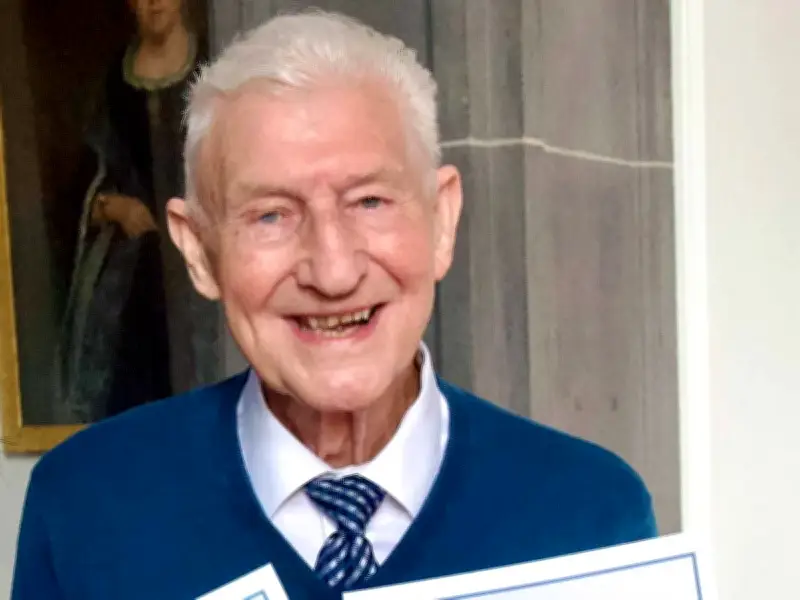
Alan Hannay, an 86-year-old great-grandfather from Dibden Purlieu in Hampshire, has finally learned to read after struggling with dyslexia all his life. He decided to make the change for his family after his great-grandchildren asked him for a story, inspiring him to give reading 'one last chance'.
A lifetime of struggle
The retired chauffeur went to his local library, where he found the charity Read Easy. The charity says that 2.4 million adults in England cannot read at all or struggle to read.
With their help, Alan now reads for two hours every morning, attends class twice a week, and this year read his 65th wedding anniversary cards for the first time.
A personal milestone
He said: "Being able to read those cards was one of the greatest things that has ever happened in my life. The joy of being able to read anything at all is the greatest pleasure. In my era, no one knew what dyslexia was and a lot of people weren't able to read or had struggles."
"This is the first time in my 86-years that I feel confident in my reading, writing and spelling."
Understanding dyslexia
Alan described his condition as a 'blindness of words', noting that he thinks his lack of ability was covered by his confidence and memory. According to the NHS, dyslexia is a common learning difficulty where the brain works differently to most people, mainly affecting reading, writing and using numbers. There is no cure, but there are ways to help manage the condition.
Over the years, Alan's family helped with paperwork, and his bosses praised his 'other attributes' at his job. He had attempted to attend evening classes almost twenty years ago but found group situations difficult.
A new chapter
Alan now enjoys reading 'wonderful stories' to his great-grandchildren. He said: "I suddenly thought one day that these beautiful children are going to grow up and ask me to read a book."
"The other motivation was I'd felt like I could do it, but I'd never had the opportunity with the modern systems of today. I got so used to be not being able to do it throughout my life that I managed to avoid reading."
"The hardest thing is to ask for help. But by being brave enough, I can guarantee to anyone, if they gave themselves a chance, they could change their lives."
The NHS encourages anyone who thinks they have dyslexia to have a diagnostic assessment, usually carried out by an educational psychologist or a specialist in dyslexia rather than a regular doctor. Assessments look at abilities around reading, writing and using numbers, and can be requested from the British Dyslexia Association (BDA) or a private dyslexia assessment service, though most people need to pay.