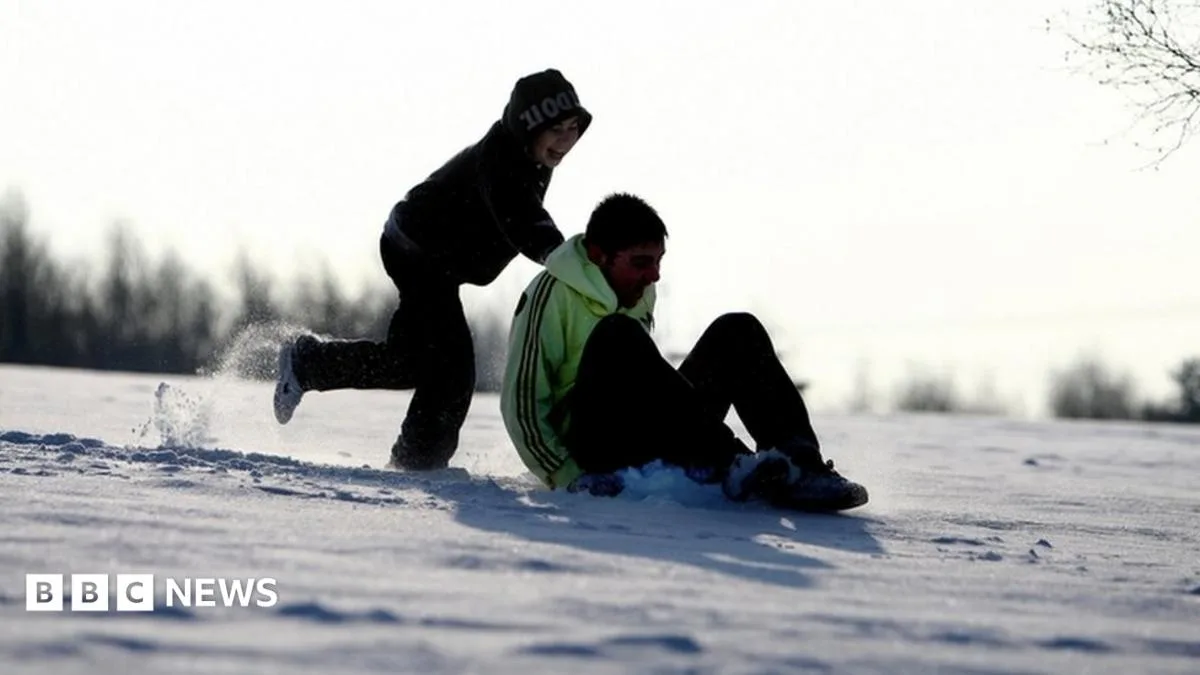
As a deep freeze grips the nation following the festive break, parents across the UK are facing uncertainty over whether their children's schools will open. With temperatures struggling to climb above zero, the return to work and school has been severely disrupted by widespread snow and ice.
The Decision-Making Process for School Closures
On days of severe weather, educational institutions make every effort to remain operational. However, the ultimate decision to close – either fully or partially – rests with each individual school. This judgement is based on a local risk assessment, where the safety of pupils and staff is the paramount concern.
Schools develop their own policies for handling adverse conditions. A common-sense approach is taken, weighing a variety of local factors. These can include whether enough teachers can safely travel to work, the condition of pathways and roads immediately surrounding the school, and the ability to maintain adequate heating within the buildings.
Communication methods vary between schools, with many relying on dedicated apps, messaging services, email, or social media to inform parents. While schools aim to give as much advance notice as possible, the rapidly changing nature of weather conditions means decisions can sometimes be made at the last minute.
Widespread Warnings and Current Disruption
The Met Office has issued a series of cold weather warnings, highlighting a range of potential hazards. As of Tuesday, 6 January 2026, two amber warnings for snow and five yellow warnings for snow and ice are in effect across large swathes of the country.
These warnings cover Scotland, the North West, east and south west of England, Northern Ireland, and Wales. Scotland has borne the brunt of the severe conditions, with hundreds of schools in the north remaining shut on Tuesday.
Schools in Shetland, Orkney, and Aberdeenshire are closed for a second day, extending the festive holiday for pupils due to the dangerous weather. The amber warnings for the Highlands and Central Scotland predict a spell of heavy snow moving eastwards, bringing a further 5 to 10cm widely, and up to 15cm in some areas, particularly above 200 metres.
The disruption extends beyond education, with a number of flight cancellations and affected train lines reported across the UK.
Guidance for Parents and Remote Learning
If a school does decide to close temporarily due to the weather, it should consider implementing remote learning for its pupils until it is safe to reopen. This ensures continuity of education despite the disruption.
Official guidance also covers situations where travel is widely disrupted. If parents believe the journey to school would be unsafe due to a local or national emergency, they should contact the school as soon as possible. They must explain why their child will not be attending, in line with the institution's standard absence policy.
The key advice for all parents remains to check their school's chosen communication channels regularly for the very latest updates, as the situation can evolve quickly during a cold snap.