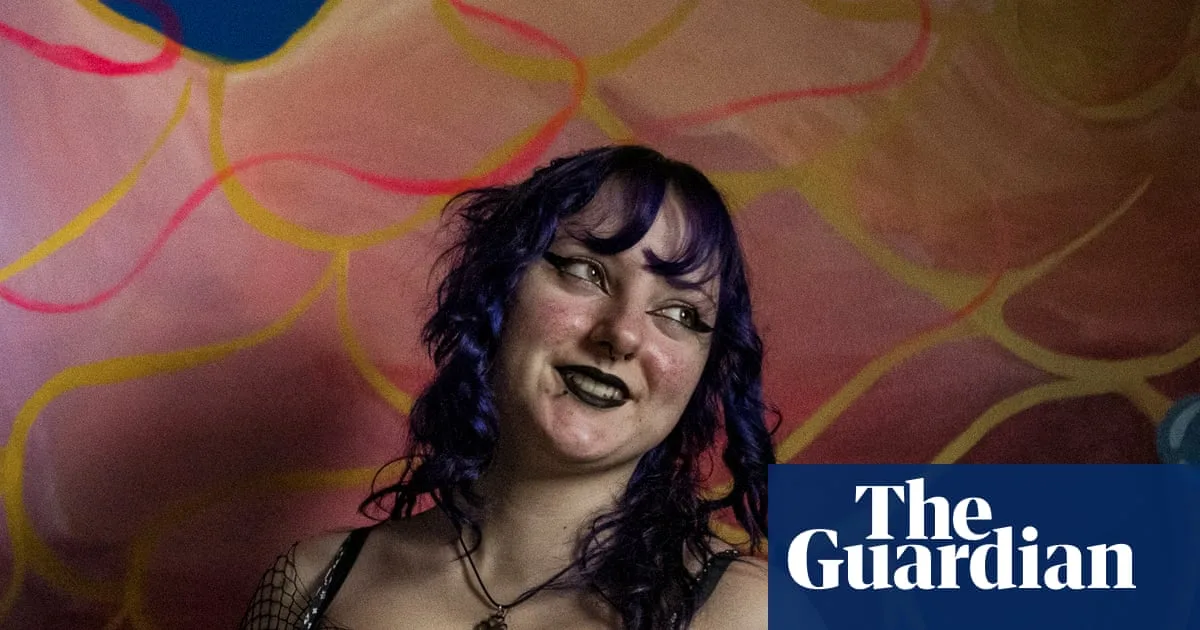
An 18-year-old student who accumulated more than 50 suspensions during her early secondary education has completely transformed her prospects through an alternative school programme in Melbourne's north.
Britnie Magnani, now studying for a diploma in community services, represents the success story that experts believe should become standard for students disengaged from mainstream education.
The turning point after repeated exclusions
By year 8, Britnie had racked up over 50 suspensions from her mainstream school. The emotional turmoil from her difficult home life frequently spilled into the classroom, leading to verbal outbursts that resulted in repeated exclusions.
"There were also times where it was just a cry for help, and it just led to suspension," Britnie recalls. Her situation deteriorated to the point where she was only permitted to attend her public school for three hours daily.
As a final measure, she was referred to the Pavilion School, an alternative state institution specifically designed for students who have become disengaged or been excluded from conventional education.
How the Pavilion model creates success
The Pavilion School serves a cohort including students with youth justice system involvement and children in out-of-home care. Its flexible learning model offers face-to-face contact hours ranging from two-and-a-half to five hours, tailored to individual needs.
Each classroom contains students of mixed ages and abilities, supported by three staff members: a teacher, a teaching assistant, and a wellbeing worker. The school provides vocational pathways, individualised learning options, and specialised programmes for First Nations students.
Britnie began consistently attending school after enrolling at Pavilion's Epping campus, graduating last year and now pursuing further education.
"It was the caring nature, them understanding you and not just seeing you as a kid," she explains. "They see you as a person and an equal. The care and vulnerability they show you means there is vulnerability you're allowed to have."
Broader implications for education and youth justice
As the Victorian government emphasises tougher approaches to youth crime, human rights and legal experts are advocating for increased investment in early intervention programmes outside the justice system.
Victoria's outgoing children's commissioner, Meena Singh, stresses that trauma-informed education should be central to all schools, rather than using suspensions and exclusions as primary behaviour management tools.
"We need to really think differently about how children and young people learn and the impact of trauma on their learning," Singh states. "We often look for the shiny fix when it comes to issues like youth justice, but it is absolutely the basics that have to be put into every single child's life in order for them to thrive."
Data from Victoria's Council on Bail, Rehabilitation and Accountability indicates that 70% of the state's most serious youth offenders were chronically absent from school before beginning their offending behaviour.
The state government recently announced plans to employ social workers at 20 public schools to prevent at-risk students from dropping out, though teacher unions have criticised the measure as insufficient.
Personal transformations through tailored support
For Britnie, the school's individualised approach and dedicated wellbeing support proved life-changing. When she struggled to access meals at her foster care placement, she could confide in the school's wellbeing worker.
"They'd be the voice that I needed," she says. The staff recognised her passion for helping others, particularly after a positive experience with a child protection worker, and encouraged her to pursue vocational qualifications.
Another former student, 19-year-old Tayah Carroll, battled alcohol addiction and prescription pill dependency before enrolling at Pavilion four years ago. Her previous school attendance had been sparse, and she frequently attended while intoxicated.
"I felt like I was so far behind that I was just never going to catch up. So there was no point," Carroll admits. The school's support extended beyond academics, with wellbeing workers accompanying her during difficult periods to provide distraction and encouragement.
"It really changed my mindset that people were out there to help me and not to get me," she reflects. "It just made me feel very important."
Challenges facing alternative education
Despite its success, the Pavilion School faces staffing uncertainties. Funding through Charles La Trobe College, which operates Pavilion's two campuses, is based on enrolment numbers, and four staff positions are set to be lost next year.
Paul Bridgeford, chair of charity Link Centre Foundation and member of Pavilion's subcommittee, is campaigning for the school to become stand-alone to secure its future.
Reflecting on her journey, Britnie acknowledges she once had no vision for her future. "I didn't really have a future for myself, because my mental health was so horrible back then," she confesses. "I didn't care what the future looked like."
Now preparing for a career supporting children in the out-of-home-care system, she credits Pavilion with her transformation: "It put me on a path where I realised I'm more than I thought I could be, and I can help people, and I can be great. It's everything I could have wished for."