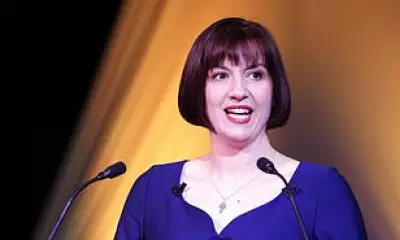
Actress and campaigner Sophie Winkleman has made a startling personal confession, revealing she has 'failed spectacularly' in her own home by allowing her 12-year-old daughter a mobile phone. This admission comes despite her long-standing and vocal campaign for a ban on smartphones for under-16s and screens in schools.
A Personal Concession in a Public Campaign
The 45-year-old Peep Show star, who is married to Lord Frederick Windsor and is second cousin to King Charles III, has been an outspoken critic of the damage screens cause to children's education, eyesight, and mental wellbeing. However, she told The Sunday Times that her resolve crumbled when her eldest daughter, Maud, now 12, presented a heartfelt case.
"She said: 'Dear mother, your ideology is really ruining my life. I don't know what anyone's talking about every morning when I come in. I'm so isolated,'" Winkleman recounted. She described Maud as being "very articulate and sweet" about her social isolation at a school where all her peers had phones. Consequently, Winkleman relented, though she stipulated that her daughter cannot have any social media accounts.

The Call for Uniform Government Legislation
This personal experience has reinforced Winkleman's belief that a patchwork approach is ineffective and unfair. She argues that when some children are banned from having phones while others are allowed, it creates friction at home and leaves those without devices feeling ostracised and "very unhappy".
"[There's] sort of a need for children to do what their friends are doing and if it's not legislated, we all lose. I mean, it's brutal," she stated. The actress is now calling on the Government to take decisive responsibility, insisting that a uniform national policy is the only way to empower both parents and schools to enforce effective bans. "I think most people with young children would be very, very grateful for some government legislation," she added.
The National Debate on School Phone Bans
Winkleman's plea lands amid intense political debate and concerning statistics. Recent research indicates the average teenager spends a staggering 11 hours a day on screens, while 55 percent of children aged eight to 11 already own a smartphone.
Earlier this year, the Conservative Party pushed for an amendment to the Schools Bill to legally mandate phone bans in classrooms, but it was defeated by Labour MPs. They argued that official guidance already exists and is widely followed. Education Secretary Bridget Phillipson dismissed the proposal as a ‘headline-grabbing gimmick’, while Labour leader Keir Starmer has focused instead on stopping harmful online content.
Currently, the Department for Education's guidance for schools to prohibit phone use is non-statutory. A survey by Teacher Tapp this year found that while 100% of primary schools have a ban, and 83% of secondary schools do, the rules are not universal. This inconsistency has even sparked legal action, with parents arguing the guidance fails to adequately protect pupils from extreme online content accessed during the school day.
However, some private school leaders have cautioned that an 'outright ban' lacks 'nuance', suggesting policies should be 'community specific', especially regarding safety and travel. A Department for Education spokesman responded, stating: "Phones have no place in our schools, and leaders already have the power to ban phones." They cited figures showing 99.8% of primary and 90% of secondary schools have restrictive policies, backed by the new Online Safety Act.