Record US Preschool Enrollment Hits 1.8 Million, California Leads Surge
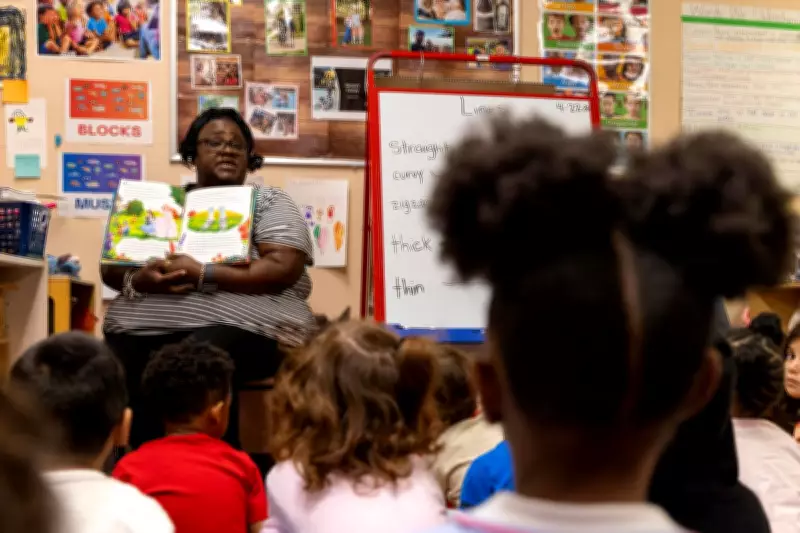
State-funded preschool enrollment in the United States has reached unprecedented levels, with 1.8 million children attending programs during the last school year. This represents a significant milestone in early childhood education, driven by substantial state investments and expanding universal access initiatives.
National Growth with Regional Disparities
The latest annual report from the National Institute of Early Education Research reveals that 37% of 4-year-olds and approximately 10% of 3-year-olds now participate in state-funded preschool programs nationwide. States collectively added 44,000 students to their preschool rolls, though researchers note this growth was slower than the previous year.
Steven Barnett, founder and director of the early education institute, emphasized the importance of these programs: "We have evidence — very strong evidence — that preschool programs substantially improved the foundation for later success."

However, the report highlights concerning disparities in access and quality across states. Some regions have made remarkable progress while others have lost ground or barely begun their preschool initiatives.
California's Transformational Expansion
California accounted for more than half of the national enrollment increase, adding approximately 25,000 students to its preschool programs. This surge follows the state's decision to make every 4-year-old eligible for its "transitional kindergarten" (TK) program.
Jessica Sawko of Children Now, an early childhood advocacy organization in California, commented: "Universal TK ... is a real win, but it's also just the start of the work and not the end of it."
The rapid expansion has presented challenges. California currently meets only two of ten quality benchmarks established by the National Institute of Early Education Research, though state officials anticipate meeting additional standards next year through improved student-teacher ratios and enhanced teacher training requirements.
Quality Versus Accessibility Tradeoffs
The report illustrates the difficult balance states face between expanding access quickly and maintaining program quality. Hawaii exemplifies this tension — while it meets all ten quality benchmarks, its state preschool program serves only 10% of 4-year-olds.
Heather Sufuentes, director of elementary education for Chico Unified School District in California, observed the benefits of quality preschool firsthand: "They're well prepared to transition into that big elementary school setting." Her district has more than doubled its transitional kindergarten capacity since 2022.
Economic and Educational Impacts
Research increasingly demonstrates that high-quality preschool provides lasting benefits, including better kindergarten preparation, higher high school graduation rates, and improved employment prospects. These programs also support economic recovery by enabling parents, particularly mothers, to return to the workforce.
Marisol Márquez, a state employee in Los Angeles, experienced this economic relief firsthand when her daughter gained access to free transitional kindergarten: "If it hadn't been for this program, we would have never found that out," she said, referring to educators discovering her daughter's academic talents.
Political Landscape and Funding Challenges
Preschool expansion faces significant funding obstacles at the federal level. Recently, President Donald Trump stated that the federal government cannot support child care while engaged in international conflicts, suggesting states should fund these programs independently.
Interestingly, the political map of preschool quality defies conventional partisan expectations. Several Republican-led states, including Oklahoma, Alabama, and West Virginia, have pioneered universal prekindergarten programs. Georgia, another Republican-led state, operates the nation's only universal preschool program meeting all ten quality benchmarks.

Meanwhile, some wealthier Democratic-led states have lagged behind in preschool expansion, though many blue-leaning cities have implemented their own initiatives.
Persistent Accessibility Gaps
Despite progress, preschool access remains highly uneven. Wyoming offers no state-funded preschool, while neighboring Colorado provides free part-time preschool for all 4-year-olds. The District of Columbia offers two full years of prekindergarten even to affluent families, while neighboring Virginia maintains a less comprehensive program.
These disparities exacerbate existing inequalities, as wealthier families can afford private preschool regardless of state offerings. For lower-income families, options are often limited to waitlisted state programs or federally funded initiatives like Head Start, which itself faces declining enrollment due to staffing shortages.
Rebecca Ellis, whose son attends preschool free through Georgia's universal program, summarized the broader benefits: "They focus so much on just helping kids learn how to calm down, to make friends, to regulate their feelings, to solve problems."
As states continue to navigate the complex landscape of preschool expansion, the fundamental challenge remains: providing both universal access and consistently high-quality early education to all American children.