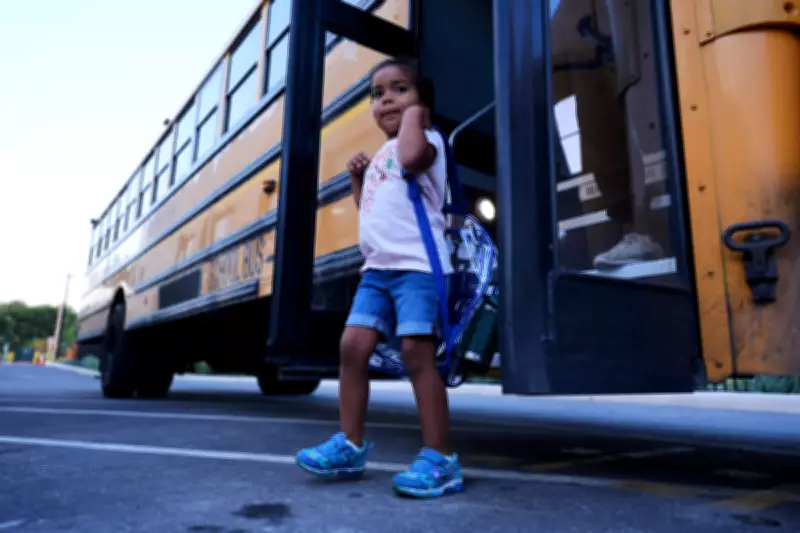
As registration periods approach, many parents across the nation are asking a crucial question: is my child truly ready for kindergarten? New federal data provides some insight, indicating that approximately two-thirds of children aged three to five are considered on track for this significant educational milestone. However, education specialists emphasise that school readiness encompasses far more than a child's ability to count or recite the alphabet; it involves a complex interplay of developmental skills that set the foundation for future academic success.
The National Survey of Children's Health: Measuring Readiness
The effort to capture a comprehensive snapshot of kindergarten readiness forms part of the National Survey of Children's Health, a metric that has been reported annually since 2022. Thousands of parents and guardians have contributed by submitting detailed answers about their children across five critical categories: early learning skills, motor development, social-emotional growth, self-regulation capabilities, and overall health. This collective data aims to address the fundamental question facing families: is your child prepared for the school environment?
While interest in assessing school readiness continues to grow among educators and policymakers, experts hold differing opinions on precisely what should be measured and how these assessments should be conducted. Some even challenge the premise itself, questioning whether children should be expected to adapt to schools or if educational institutions should instead be designed to accommodate the diverse needs of their incoming students. Despite these ongoing debates, one fact remains indisputable: the knowledge and skills a young child acquires before entering formal classrooms can profoundly influence their entire academic trajectory.

Defining Kindergarten Readiness
According to Laura Justice, a professor of educational psychology at Ohio State University, kindergarten readiness encompasses the foundational skills necessary for children to engage effectively within a more structured learning environment. In certain respects, she notes, this concept parallels the expectations for a university graduate entering their first professional role. There exists no single universal definition of kindergarten readiness, yet many experts and educators rely on guidance established by the bipartisan National Education Goals Panel, which identifies five developmental domains critical to a child's success upon starting grade school.
These criteria emphasise a child's physical health and motor skills, social-emotional development, cognitive abilities, language acquisition, and general attitude toward learning—a framework that closely mirrors the categories used in the federal survey. School readiness, however, represents a relatively modern concept, with the panel's guidelines emerging during the 1990s. Historically, expectations for children entering kindergarten were minimal, although students from more affluent families often arrived with noticeably advanced skills compared to their peers, observes Robert Crosnoe, a sociology professor at the University of Texas at Austin.
This historical context highlights the importance of providing enriching learning opportunities before children step into a kindergarten classroom—opportunities that foster not only academic basics like the alphabet but also crucial abilities such as sustaining conversations and solving problems during play. "If we just focus on those strictly academic things, it's only going to get us so far," Crosnoe cautions, underscoring the need for a holistic approach to early development.
Assessing Readiness: A Complex Challenge
Determining whether a child is ready for kindergarten presents a multifaceted challenge, explains Jill Cannon, a senior policy researcher at the global policy think tank RAND. Several methods exist for measuring readiness, yet each approach carries distinct limitations. Parents can respond to questionnaires about their child, as seen in the NSCH survey, but their answers may be subject to bias or misinterpretation, particularly if English is not their primary language.

Alternatively, teachers can assess children directly, but interpretations of a child's behaviour may vary depending on which educator conducts the evaluation. A third option involves directly assessing young children on specific skills, though Cannon describes this method as "hit or miss," since children at this developmental stage may perform inconsistently from one day to the next. Timing also plays a significant role; a child's age upon entering kindergarten—typically around five years old—can influence readiness, as classrooms often include students who are several months older alongside those who have just turned five.
"Six months now to me means nothing, but back then ... I had a lot of learning to do. I grew a lot," Cannon reflects. "These kids, they grow a lot over the kindergarten year." For parents whose children are scheduled for kindergarten readiness assessments, experts advise against undue concern. Most agree that these tests serve as vital tools for educators—not to label children, but to identify the specific supports they will require to thrive.
"We have an arsenal of interventions that can improve these skills in kids," Justice affirms. "So the screening instrument can help us identify where the need is so that we can respond."
Enhancing Kindergarten Readiness
Research consistently indicates that attending a high-quality preschool programme ranks among the most effective strategies for boosting kindergarten readiness. Nevertheless, preschool curricula vary dramatically across the United States, with some programmes prioritising certain developmental areas, such as literacy, over others. Moreover, the quality of preschool education can differ drastically depending on geographic location, making this goal easier stated than achieved for many families.
Certain measures of quality, however, are widely recognised. Many early childhood education experts rely on the National Institute for Early Education Research's ten quality benchmarks to conduct broad assessments across all states offering public preschool programmes. Parents can utilise these standards as a practical guide when selecting a preschool most likely to prepare their child for the next educational step.
These benchmarks include requirements for pre-K teachers to hold bachelor's degrees, maintaining class sizes at twenty children or fewer, implementing ongoing professional development for staff, and offering health screenings and referrals. In 2024, thirteen states met five or fewer of NIEER's standards, while only five states satisfied all ten benchmarks, highlighting significant regional disparities in early education quality.
At home, parents can undertake numerous steps to prepare their children for kindergarten. Reading to your child daily significantly enhances early literacy skills. Assigning small household responsibilities fosters independence and acclimates children to tasks they may encounter in kindergarten. Additionally, coaching your child to identify and articulate their emotions strengthens those vital social-emotional and self-regulation skills essential for building positive relationships with classmates and teachers.