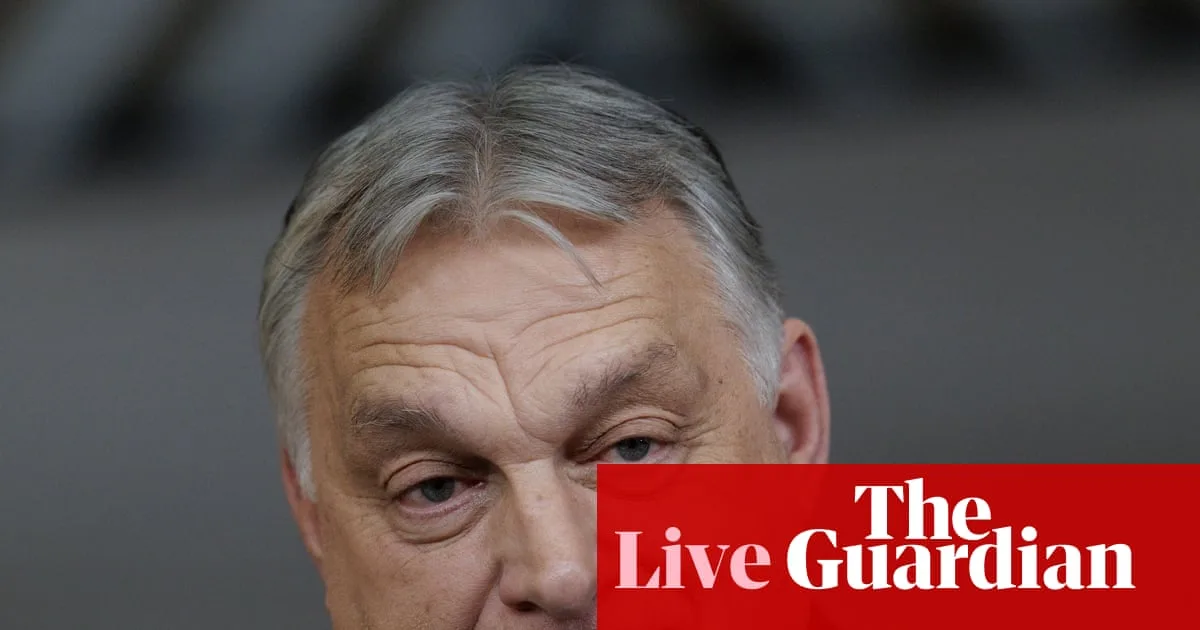
Hungarian Prime Minister Viktor Orbán has reiterated his opposition to Ukraine joining the European Union, claiming the bloc wants to admit the country in 2027 to allow it to benefit from the next seven-year budget. Zoltán Kovács, Hungary's international spokesperson, published clips of Orbán saying that EU leaders were given a document outlining plans for Ukraine's accession in 2027.
“They want to admit Ukraine in 2027. This is because they want to give Ukraine money from the budget, the seven-year European budget starting in 2028. This means … it will be taken away from us, central Europeans,” Orbán said. He added that Ukraine “cannot protect Europe from Russia” and would not strengthen Europe, but “dragging us into war.” He suggested Ukraine should remain as a buffer between the EU and Russia instead.
Orbán's comments come as Ukrainian President Volodymyr Zelenskyy has repeated his target of joining the EU by 2027, despite scepticism in the bloc about the accelerated process required. The statements also coincide with the upcoming Hungarian parliamentary election in April, where Orbán's Fidesz party is trailing the opposition Tisza party by 10 percentage points, according to a recent poll by Zavecz Research.
The poll, published on the news website Telex, showed Tisza with 49% support among decided voters (up from 47% in November), while Fidesz had 39% (up from 38%). The far-right Mi Hazank party was backed by 5% of decided voters. The election is expected to be a critical contest that could potentially end Orbán's 16-year tenure.