Zelensky Condemns Putin for 'Act of Terrorism' in Civilian Train Strike
Ukrainian President Volodymyr Zelensky has accused Russian President Vladimir Putin of committing an "act of terrorism" following a drone attack on a passenger train that resulted in at least five fatalities. The incident, which occurred in northeastern Ukraine, has drawn international condemnation as it targeted civilians with no apparent military justification.
Details of the Attack and Zelensky's Response
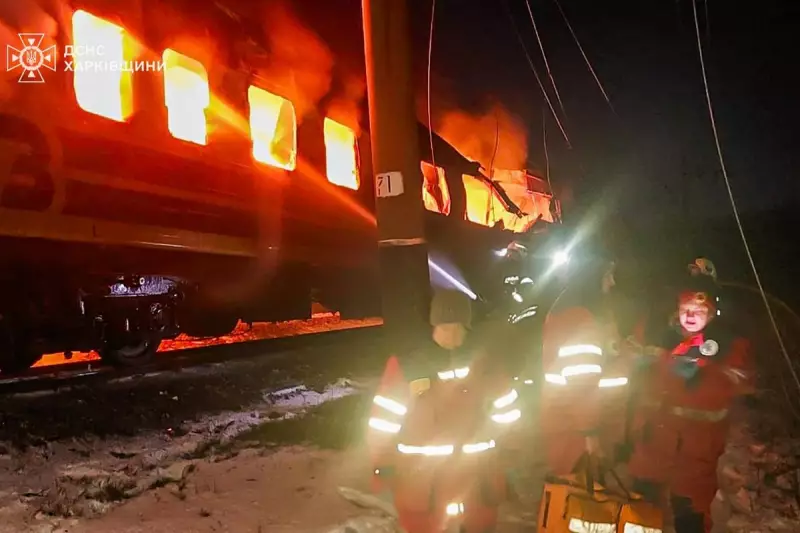
The strike hit a civilian train, setting carriages ablaze and killing five people, with prosecutors confirming the recovery of body fragments at the scene. Zelensky emphasised that "in any country, a drone strike on a civilian train would be regarded in the same way – purely as an act of terrorism." He noted that 18 individuals were in the affected carriage, with over 200 passengers on board the entire train.
Photographs from the site depicted at least two carriages engulfed in flames alongside a snow-covered railbed, highlighting the brutality of the assault. Zelensky called for increased global pressure on Russia, stating, "Our cause – and this is what should unite all normal people in the world – is to ensure the progress of protecting life. This is possible through pressure on Russia."

Broader Context of the Conflict and Peace Efforts
This attack contrasts sharply with recent diplomatic developments, as US President Donald Trump remarked that "very good things" are happening in efforts to broker peace in Ukraine. US-brokered peace talks are scheduled to continue this Sunday, following trilateral discussions in Abu Dhabi that Zelensky described as "constructive."
However, reports indicate that the US has advised Ukraine to sign a peace deal with Russia to secure security guarantees, with suggestions that ceding territory, such as the Donbas region, might be a precondition. Russia currently controls 90% of Donbas, and Ukrainian officials have resisted surrendering any territory not taken by force.
Escalating Violence and International Reactions
The train attack is part of a broader escalation, with Russian drones also striking Odesa, killing three people and wounding 25. NATO has warned that Ukraine faces its "harshest winter" as Russia targets the energy grid, exacerbating humanitarian crises.
Meanwhile, Russia's recruitment tactics, including freeing prisoners and luring foreigners to fight, underscore the prolonged nature of the conflict. In related news, Slovakia plans to challenge the EU's ban on Russian gas imports, reflecting ongoing economic tensions.
As peace talks proceed, the civilian toll continues to rise, with incidents like the train attack underscoring the challenges in achieving a resolution. The international community remains divided on strategies, balancing diplomatic efforts with the urgent need to address humanitarian violations.