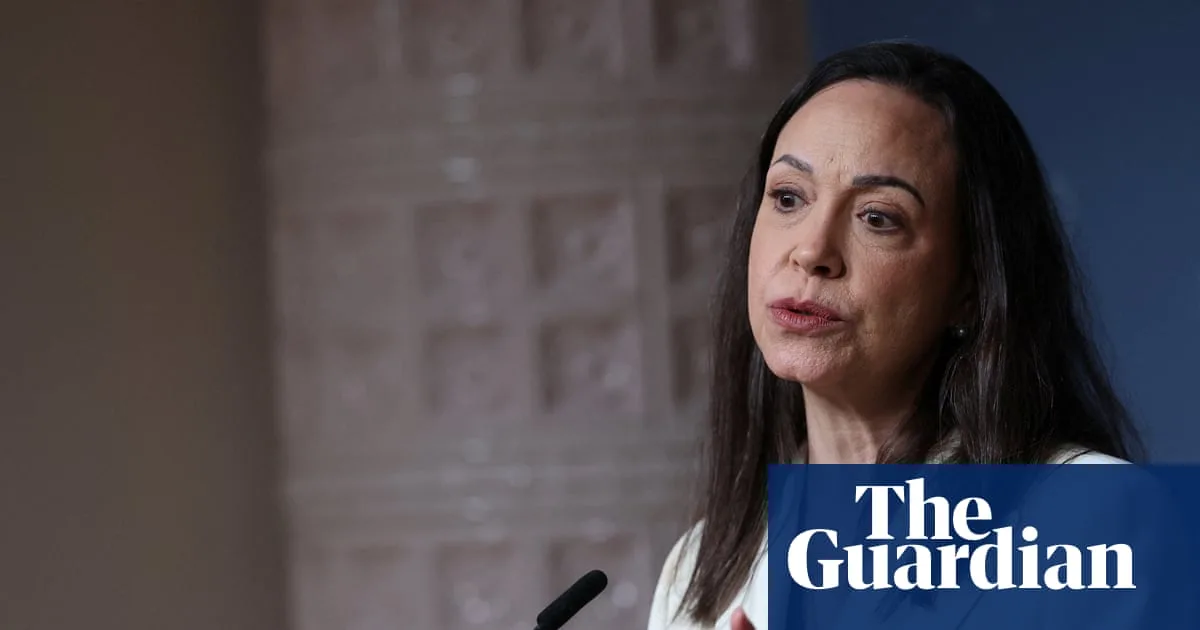
At least three writers have withdrawn from next month’s Hay festival in Cartagena, Colombia, in protest at an invitation extended to the Venezuelan opposition leader and Nobel laureate María Corina Machado. The main reason cited is Machado’s support for Donald Trump’s pressure campaign against Venezuela’s Nicolás Maduro and her comments in favour of a potential US military intervention in the Caribbean country.
In a letter announcing her withdrawal, acclaimed Colombian author Laura Restrepo described Machado as “an active supporter of US military intervention in Latin America”. She added: “No platform should be given or audience facilitated for someone who, like Ms Machado, promotes positions and activities that subject our peoples and undermine the sovereignty of our countries.” Another Colombian author, Giuseppe Caputo, cited deadly US airstrikes on boats in the Caribbean, noting that Machado had dedicated her Nobel prize to Trump, whom she called a “fascist”.
Machado recently told CBS that she “absolutely supports President Trump’s strategy” on Venezuela and that the “cost of staying in power” for Maduro must be increased “by force”. The Venezuelan opposition leader suffered a vertebra fracture during a clandestine 5,500-mile journey from hiding in Venezuela to Oslo, Norway, to receive her Nobel prize. Her remote participation in the Hay festival is still scheduled for January 30, in a conversation with Venezuelan journalist Moisés Naím.
The festival, founded in Wales and expanded internationally, said it respected the authors’ decisions but believed open and diverse dialogue is essential to defending “the free exchange of ideas and freedom of expression”. It clarified that it does not align with or endorse the opinions of its participants. The third writer to withdraw, Dominican activist Mikaelah Drullard, said the invitation validated Machado’s justifications for US intervention and militarisation of the Caribbean.