Venezuela's Delcy Rodríguez: A Latin American Deng Xiaoping?
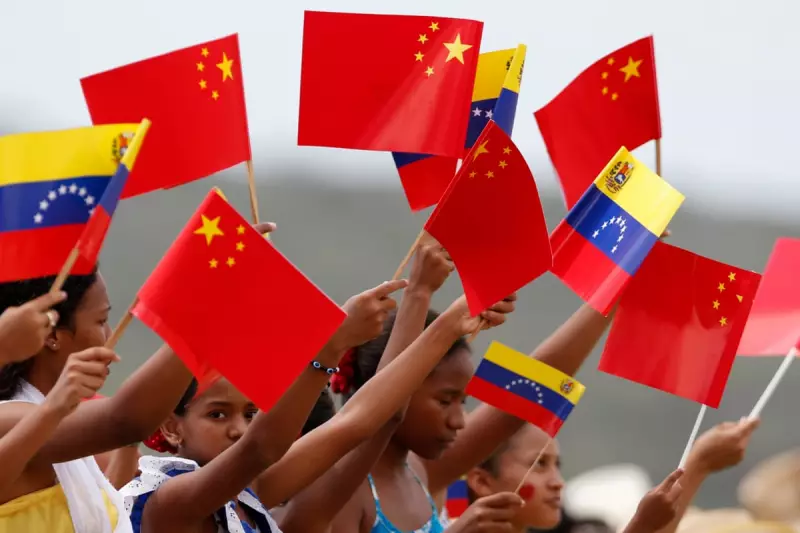
In 2014, Venezuelan children waved flags to welcome China's Xi Jinping at Simón Bolívar airport in Caracas, symbolising the deepening ties between the two nations. Now, a decade later, Venezuela's political landscape is undergoing a seismic shift, with Delcy Rodríguez stepping into the spotlight as the country's new leader. Educated at the Sorbonne, Rodríguez is championing an era of 'reform and opening up', drawing direct inspiration from China's post-Mao economic boom under Deng Xiaoping.
Echoes of China's Transformation
After years of turmoil marked by hunger and despair, Venezuela has witnessed the departure of its 'Gran Timonel', Nicolás Maduro, replaced by his vice-president, Rodríguez. In her inaugural address, she hinted at launching a period reminiscent of Deng's reforms, which followed Mao Zedong's death and the Cultural Revolution. Rodríguez declared the start of a 'new chapter', calling for revised oil laws to attract foreign investment into the world's largest proven reserves and pledging to strengthen relations with Washington, despite tensions over Maduro's abduction.
She emphasised Venezuela's right to engage with global powers, stating, 'Venezuela has the right to relations with China, with Russia, with Cuba, with Iran … and with the United States.' This pragmatic approach has led some to dub her 'Delxiaoping', though critics view this as a spin campaign to whitewash her past role in undermining democracy and overseeing the feared Sebin intelligence agency.

Inspiration from the Chinese Model
Sinologists note that Venezuela's leaders are looking to China's Communist Party for guidance as they seek to escape economic chaos without relinquishing political control. Orville Schell of the Asia Society commented, 'The Deng Xiaoping reform era is a very interesting model for Venezuela. They need to open up to the outside world and get the economy going.' Rodríguez, who has managed Venezuela's oil industry and economy since 2018, is expected to focus on revitalising the sector to generate government funds.
Her strategy includes creating five special economic zones, inspired by Deng's initiatives in 1980s China, and pursuing closer ties with international investors. Phil Gunson, an analyst in Caracas, observed that Rodríguez has overseen a modest recovery by partly dollarising the economy and engaging with business leaders. However, he cautioned that reversing Hugo Chávez's 2007 nationalisation to attract foreign oil investment is crucial, given the current low oil prices and PDVSA's limitations.
Political Realities and Challenges
While economic reforms are on the agenda, experts warn against expecting political liberalisation. Schell recalled Deng's brief flirtation with political reforms in the 1980s, which ultimately gave way to authoritarian crackdowns, such as the Tiananmen Square incident. He predicted Rodríguez would proceed cautiously, noting, 'They are the elite, and they do not want to give up their privileges … a bit like the Chinese Communist party.'
Ricardo Hausmann, a Venezuelan economist, suggested that a China-style opening might be the regime's plan, but expressed doubts about its success, citing concerns from foreign investors. If it does succeed, the long-term impact on Venezuelan democracy could be significant, mirroring China's evolution into a surveillance state under Xi Jinping.
Global Implications and Future Prospects
Rodríguez's upcoming visit to the US, the first by a Venezuelan president in over 25 years, signals a potential thaw in relations, though it may lack the symbolic gestures of Deng's 1979 Texas rodeo appearance. The Trump administration's support for Rodríguez, sidelining opposition leader María Corina Machado, reflects a preference for stable autocracy over democratic ideals, according to Schell.

As Venezuela navigates this transformative period, the parallels with China's rise are striking, but the outcome remains uncertain. With Rodríguez at the helm, the country faces a critical juncture: can it emulate Deng's economic miracles while addressing its deep-seated political and social challenges? Only time will tell if 'Delxiaoping' can steer Venezuela toward prosperity without compromising its democratic foundations.