US Presidential Succession Plan Explained Amid Age Concerns
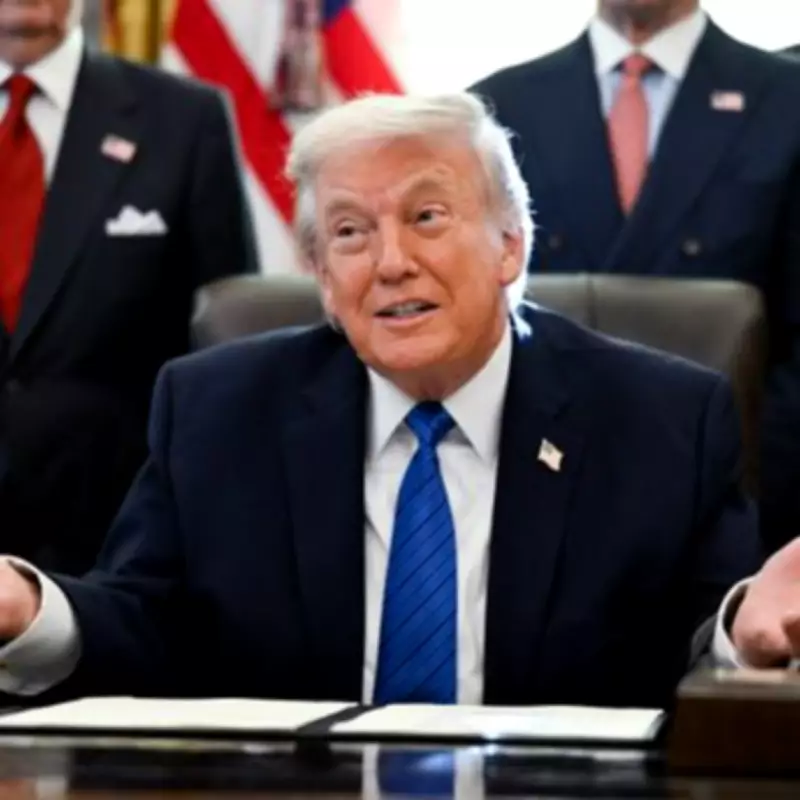
With Donald Trump becoming the oldest person ever elected as US president following his second inauguration in January 2025, significant questions have emerged regarding the constitutional procedures that would be enacted if a sitting president were to die while in office. At 79 years old, Trump surpassed the previous record held by his predecessor, Joe Biden, who was the oldest person to serve as president during his term. This milestone has naturally intensified public and political scrutiny over presidential health and the established mechanisms for succession.
The Constitutional Framework for Succession
The United States Constitution, reinforced by the 25th Amendment, provides clear and unambiguous rules governing presidential succession. According to these provisions, if a president dies, resigns, or is removed from office, the vice president immediately assumes the presidency, taking on all the powers and duties of the role without delay. This process is designed to ensure continuity of government and stability during times of potential crisis.
In the current administration, this means that Vice President JD Vance would automatically succeed to the presidency in such a scenario, being sworn in at the earliest opportunity. Historically, this succession process has occurred eight times in US history, with presidents dying in office—four through assassination and four from natural causes. In each instance, the vice president seamlessly took over, demonstrating the robustness of this constitutional safeguard.

Implications for the Vice Presidency and Term Limits
Once sworn in as president, the new leader retains the authority to either keep or replace cabinet members as they see fit. However, this transition creates a vacancy in the vice presidency. Under the 25th Amendment, the new president must nominate a replacement vice president, who must then be confirmed by a majority vote in both the House of Representatives and the Senate.
An interesting historical note arises if Vance were to become president before his 42nd birthday. He would be younger than Theodore Roosevelt was when Roosevelt assumed office at age 42 following the assassination of President William McKinley in 1901. This would make Vance the youngest person to become president through succession, though Roosevelt remains the youngest president to take office overall, and John F. Kennedy holds the record as the youngest person elected president.
Presidential term limits, as outlined in the 22nd Amendment, also play a crucial role in such scenarios. The amendment states that no person may be elected president more than twice. Additionally, it specifies that anyone who serves more than two years of a term to which another person was elected may only be elected once in their own right. Therefore, if a vice president assumes office and serves more than two years of the remaining term, they would be eligible to run for president only once afterward. Conversely, if they serve two years or less, they could potentially run and be elected twice.
Health Debates and Public Scrutiny
President Trump's health has long been a topic of public debate, with the president himself addressing these concerns in a recent interview with The Wall Street Journal. Trump revealed that he underwent a CT scan in October, clarifying previous incorrect statements about having an MRI scan. He firmly denied any struggles with hearing or instances of falling asleep at recent White House events, expressing clear irritation over the ongoing public discourse regarding his health.
During what the newspaper described as an "impromptu phone call," Trump remarked, "Let's talk about health again for the 25th time," as the publication prepared to release a story on the subject. He disclosed that he has been taking larger than recommended doses of aspirin for the past 25 years, citing its blood-thinning properties, despite acknowledging that it causes him to bruise easily. "They say aspirin is good for thinning out the blood, and I don't want thick blood pouring through my heart," Trump explained.

A doctor for Trump, Navy Capt Sean Barbabella, provided a statement to the Journal confirming that the CT scan was conducted "to definitively rule out any cardiovascular issues" and that the results showed no abnormalities. After being diagnosed with chronic venous insufficiency, a common condition in older individuals, Trump was advised to wear compression socks but declined, stating, "I didn't like them." Instead, he noted that getting up from his desk more regularly has helped improve swelling in his legs.
Regarding bruising seen on his hands in some photographs, Trump mentioned that he now carries makeup to address any marks if his hand gets "whacked." He added, "I have makeup that's, you know, easy to put on, takes about 10 seconds." This focus on health comes in a political context where age and fitness for office have been prominent issues, exemplified by Trump's predecessor, Democratic President Joe Biden, dropping out of the 2024 election race after a stumbling debate raised questions about his age and mental sharpness.
The combination of historical precedent, constitutional clarity, and contemporary health discussions underscores the importance of understanding the US presidential succession plan, especially in an era where the age of leaders is increasingly under the microscope.