Trump's 'Victory' in Iran Conflict: A Nuanced Strategy Beyond Military Triumph
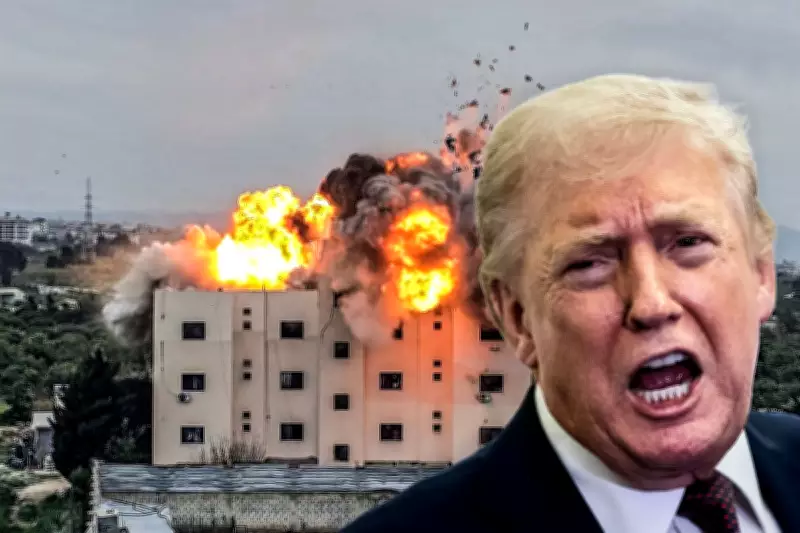
Winning the war is the wrong lens for understanding the ongoing Iranian conflict, according to former RAF two-star officer Philip Lester. What truly matters is what comes next for the Middle East – and which actors can live with the outcomes. The current campaign between the United States and Israel against Iran is not a standalone war but part of a continuum of conflict dating back to the 1979 Khomeini revolution, which established Iran's ambitions as a regional hegemon, counter to US influence and aimed at Israel's removal.
The Illusion of Decisive Victory
Military debates often focus on decisive victory – a clear win and loss with an unmistakable strategic conclusion. However, war outcomes are rarely so definitive, with effects and impacts often unrealised or misunderstood when operations end. The US-Israeli campaign against Iran is no exception, underpinned by a nuanced "theory of success" rather than a quest for total victory. The objective is to shape and influence the next stage of Israel-US-Iranian relations, striving for outcomes acceptable or tolerable to key actors and the wider Gulf region.
Regional and Domestic Dynamics
The conflict extends beyond three states, as Iran has targeted neighbours across the northern Arabian Gulf, involving Gulf monarchies, non-state militias, and multinational corporations. These actors assess their tolerance for disruption from shipping attacks, missile exchanges, or energy market volatility. The strategic question is not merely whether Iran can be weakened, but whether the international system can absorb regional shocks. Iran itself has launched six times more attacks against Gulf neighbours than Israel in the conflict's early days.

Domestic politics also define success. In the US, economic concerns like trade, inflation, and cost of living dominate, making prolonged conflicts with energy price spikes or costly deployments controversial. For Israel, the goal is neutralizing Iran's existential threat and restoring security without undermining the Netanyahu government or national ambitions. For Iran, stakes are existential for the Islamic Revolution, theocratic regime, and Islamic Revolutionary Guard Corps (IRGC), with success likely revolving around survival and preserving influence.
Global Geopolitical Intersections
This conflict intersects with global geopolitics, notably through Iran's ties with Russia, supplying lethal aid for Ukraine, and China's role as a major Middle Eastern energy consumer. Iran, accused of exporting Islamist militancy and manipulating hydrocarbon access via the Strait of Hormuz, faces repercussions with unmistakably global reach, though not indicative of a Third World War.
Five Objectives for US-Israeli Success
The US-Israeli theory of success focuses on a cluster of outcomes rather than a single end-state, characterized by five objectives:
- Neutralisation of the Islamic theocracy: Not immediate regime change, but sustained pressure to catalyse internal uprising or political transition, though opposition leaders have been suppressed.
- Degradation of the IRGC: Reducing its operational capacity in missile forces, militias, and proxy warfare to limit external threats and internal influence.
- Destruction of nuclear weapons capability: Eliminating infrastructure, stockpiles, and expertise to prevent a nuclear-armed Iran, a cornerstone of security policy.
- Preservation of global hydrocarbon trade stability: Ensuring open shipping lanes and intact infrastructure in the Persian Gulf to prevent economic shock.
- Disruption of Iran's weapons supply to Russia: Delivering strategic dividends beyond the Middle East by hindering aid for Ukraine.
Achieving these could foster diplomatic space for regional normalisation, encouraging rapprochement between Israel and Gulf Cooperation Council states and potentially reconfiguring relations with Iran over time.

Defining Success Flexibly
Assessing impact is complex, measured against political and domestic pressures beyond physical effects in Iran. Success may be defined flexibly, allowing leaders to claim progress without absolute outcomes. Currently, Israeli and American capabilities remain intact while Iran's are degraded, but whether this leads to a regime on its final legs or one contained will define success in the coming years.
Philip Lester, a former RAF two-star officer with extensive Middle East experience including Israel and the Palestinian Territories, served operationally in Iraq, Afghanistan, Saudi Arabia, Turkey, Cyprus, Bosnia, and Northern Ireland.