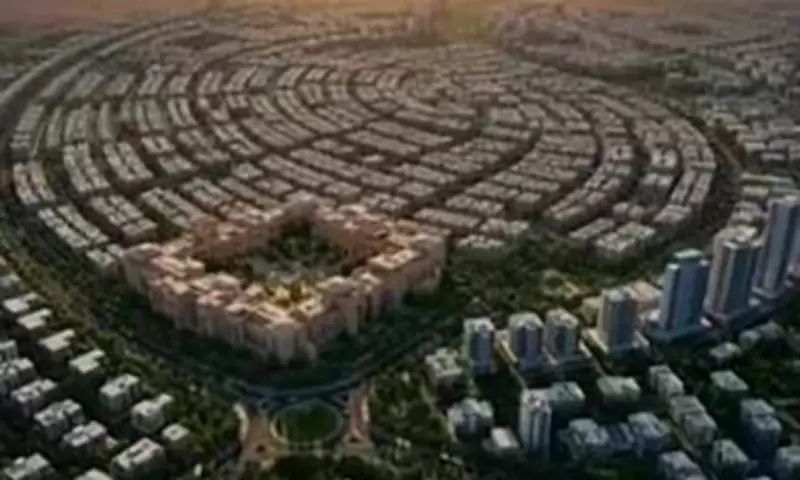
Residents of Gaza have shared with the Daily Mail that a newly revealed 'master plan' for the territory, unveiled by former US President Donald Trump, has ignited a complex mix of hope and apprehension about their future. The ambitious proposal, presented by Trump's son-in-law Jared Kushner at the World Economic Forum in Davos, outlines a vision for large-scale reconstruction, coastal tourism developments, high-rise buildings, and the creation of hundreds of thousands of jobs.
A Vision for Transformation Unveiled in Davos
The plan was formally introduced after Trump signed the charter for his 'Board of Peace', an initiative aimed at fostering stability in conflict zones. Kushner's presentation included generated imagery depicting a transformed Gaza coastline, complete with modern skyscrapers and marinas filled with yachts, painting a picture of radical economic renewal.
Core Proposals of the Reconstruction Blueprint
The master plan's key components include the construction of 100,000 permanent housing units and the generation of 500,000 new employment opportunities across diverse sectors such as construction, agriculture, manufacturing, services, and the digital economy. Kushner emphasised that demolition and rubble removal operations are already in progress, with rebuilding slated to commence in Rafah. He projected that the entire transformation could be realised within two to three years.

Furthermore, the proposal mandates the demilitarisation of Gaza, requiring the immediate decommissioning of Hamas's heavy weaponry. Reconstruction efforts would only begin in sectors that have been fully disarmed, linking physical rebuilding directly to security provisions.
Cautious Hope Among Displaced Gazans
For many ordinary Palestinians enduring displacement after two years of devastating conflict, the announcement has provided a fragile sense of optimism. Youssef Al-Sakani, a 65-year-old displaced from Al-Shati camp and now residing in Deir al-Balah, told the Daily Mail he felt 'optimistic' upon hearing the details. "Many people in the area where I'm displaced were cautiously discussing it," he said. "At the same time, we're realistic and we know that change takes time."
Al-Sakani welcomed any "positive steps", adding: "It gives me a sense of hope, because any idea to improve the situation is a starting point, even if it's small." He noted that proposals related to infrastructure and public services seemed particularly realistic and could tangibly improve daily life.
Community Sentiment: Curiosity Tempered by Caution
Mohammed Taysi, a 29-year-old from Nuseirat Camp, described a prevailing mood of "curiosity and caution" within his community. "Talk about Gaza at the international level catches our attention because we are tired of the current situation and are looking for any opportunity to improve our lives," he explained.
Taysi highlighted that while some Gazans are excited about potential economic opportunities, others fear the plan might be "disconnected" from their actual needs. "Any plan that includes reconstruction, job opportunities, and improvements to electricity and water definitely gives us a positive feeling," he stated. "The only fear is that decisions might be made about us without involving the people who live this reality every day."
This sentiment was echoed by Halima Awad, 54, displaced from Jabalia camp to Al-Mawasi. She expressed skepticism about proposals promising rapid solutions, feeling they detach from the scale of destruction. "An idea that does not take into account the situation and living conditions of the people will naturally be a plan that is far from reality," she cautioned.
Sharp Criticism from Officials and Advocates
The proposal has faced significant condemnation from various quarters. A senior United Nations official criticised the approach, stating: "Real estate development is always a great project – except when it’s developed on the rubble of people’s homes." The official grimly added, "These new residences will be built on graveyards of countless unidentified Gazans who were killed during the war."

Mustafa Barghouti, a politician based in the West Bank, also strongly criticised the plan's formulation. "How can they have a plan for Gaza without consulting its people: the Palestinians?" he questioned, underscoring a fundamental concern about the lack of local consultation in the planning process.
The Devastating Backdrop of Conflict
The context for this proposed reconstruction is one of profound devastation. The two-year-long war, triggered by Hamas's attack on Israel in October 2023 and followed by an extensive Israeli military offensive, resulted in the displacement of nearly the entire population of the Gaza Strip. Vast swathes of civilian infrastructure were reduced to ruins, creating a humanitarian crisis of staggering proportions.
The Ultimate Aspirations of Gaza's Residents
Despite the scale of the proposed economic transformations, displaced Gazans emphasise that their most fundamental desires are for safety, dignity, and a return to normalcy. "We want them to understand that our daily lives are difficult, and that hope for peace, work, and education is extremely important," Al-Sakani stressed.
Taysi poignantly remarked, "Gaza is not just numbers or projects on paper. It's people with ambitions, students who want an education, patients who need treatment, and young people who want a chance to work and build their future with dignity." He articulated a widespread yearning for "a normal life: safety, freedom of movement, and the opportunity to dream and make those dreams come true."
Halima Awad voiced a simple, powerful wish shared by many: a return to life before the conflict. "Our lives used to be simple, easy, and full of wonderful things, but now life has become difficult and the challenges are great," she reflected. "All we want is for our lives to return to what they were before, with our simple rights: education, security, dignity, and a homeland that shelters us."
In Davos, Trump framed the ongoing conflict as "little fires" that were "coming to an end," and committed to ensuring Gaza would be demilitarised and "beautifully rebuilt." Describing himself as a "real estate person at heart," he argued Gaza's location made it ripe for transformation, promising that people "living so poorly are going to be living so well" once reconstruction is complete. The plan now exists as a bold vision, met with a complex tapestry of hope, skepticism, and a desperate longing for stability among those it aims to help.