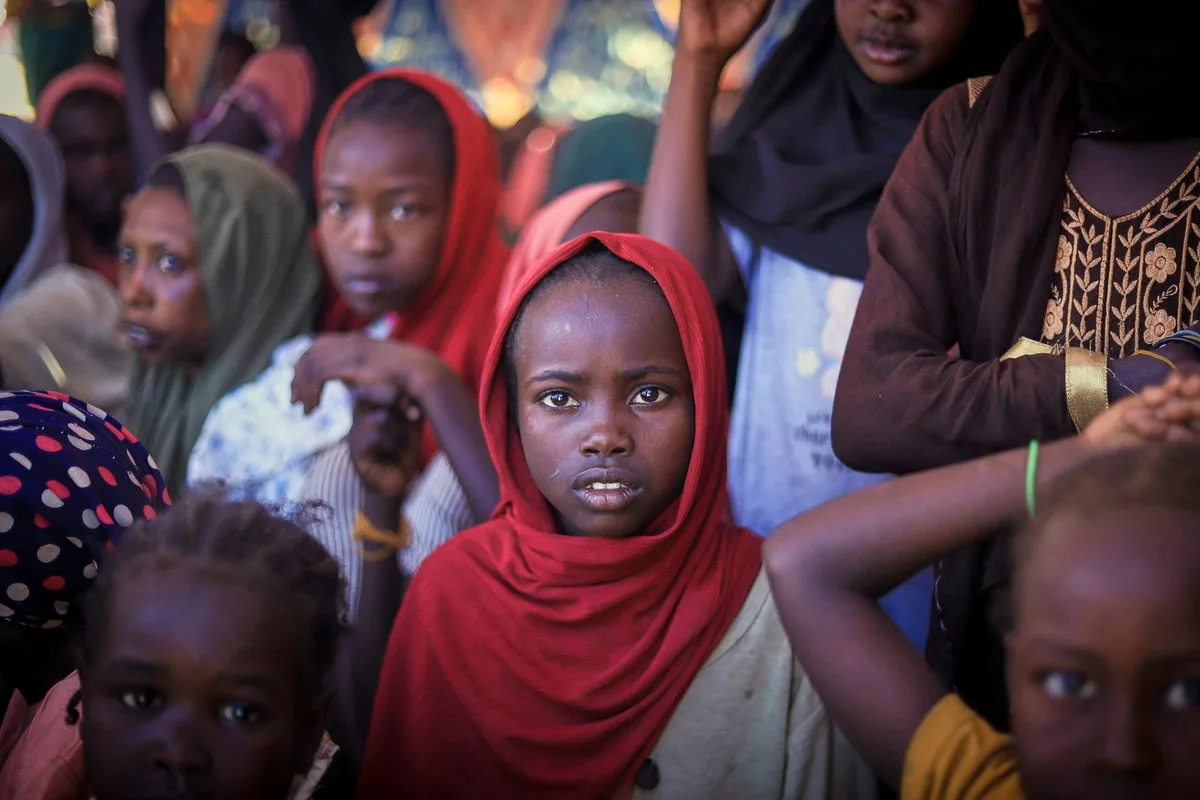
Sudan is now the largest child-displacement crisis in the world, yet it remains one of the most overlooked. Five million children have been forced from their homes, 17 million require humanitarian assistance, and nearly half of Sudan’s children have lost between 15 and 18 months of schooling.
Earlier this month in Sudan, I met the children behind these statistics. They have suffered unimaginable loss. Girls and boys are living in fear, traumatised by what they have seen and experienced. For them and their families, survival has become a daily challenge.
Meeting Farah, a mother of four sheltering in a primary school outside Port Sudan, brought home the impossible choices parents across Sudan are being forced to make. Farah fled the fighting in Khartoum with her children in late 2023. After weeks of displacement, the family found refuge in Hai Almatar, where a government primary school supported by Save the Children has become a shelter. Nearly two years later, Farah and her children are still there, living in a small tent within the school compound. But local authorities are planning to relocate displaced families from the school to a new settlement, threatening their fragile sense of safety.
Sudan is not simply facing a humanitarian emergency; it is witnessing the collapse of the services that keep children alive and help them thrive. More than 80 per cent of Sudan’s hospitals are no longer functioning. Children who could easily be treated for malnutrition or disease cannot access care. Despite catastrophic need, the international response has been consistently underfunded. In 2025, less than 40 per cent of the humanitarian funding required was available.
Yet amid this devastation, communities themselves are sustaining life through Emergency Response Rooms – informal, community-led initiatives rooted in Sudan’s tradition of Nafeer, a call to collective action. They organise food distribution, medical assistance and local support, despite extraordinary risks. But community-led initiatives cannot carry a crisis of this magnitude alone.
The UK will co-host a global conference on Sudan in Berlin in April to mark the three-year anniversary of the war. It provides a vital opportunity to drive international action – both to end the conflict and to meet urgent humanitarian needs. The cost of delayed action is measured in lives lost, families shattered, and a generation of children left behind.