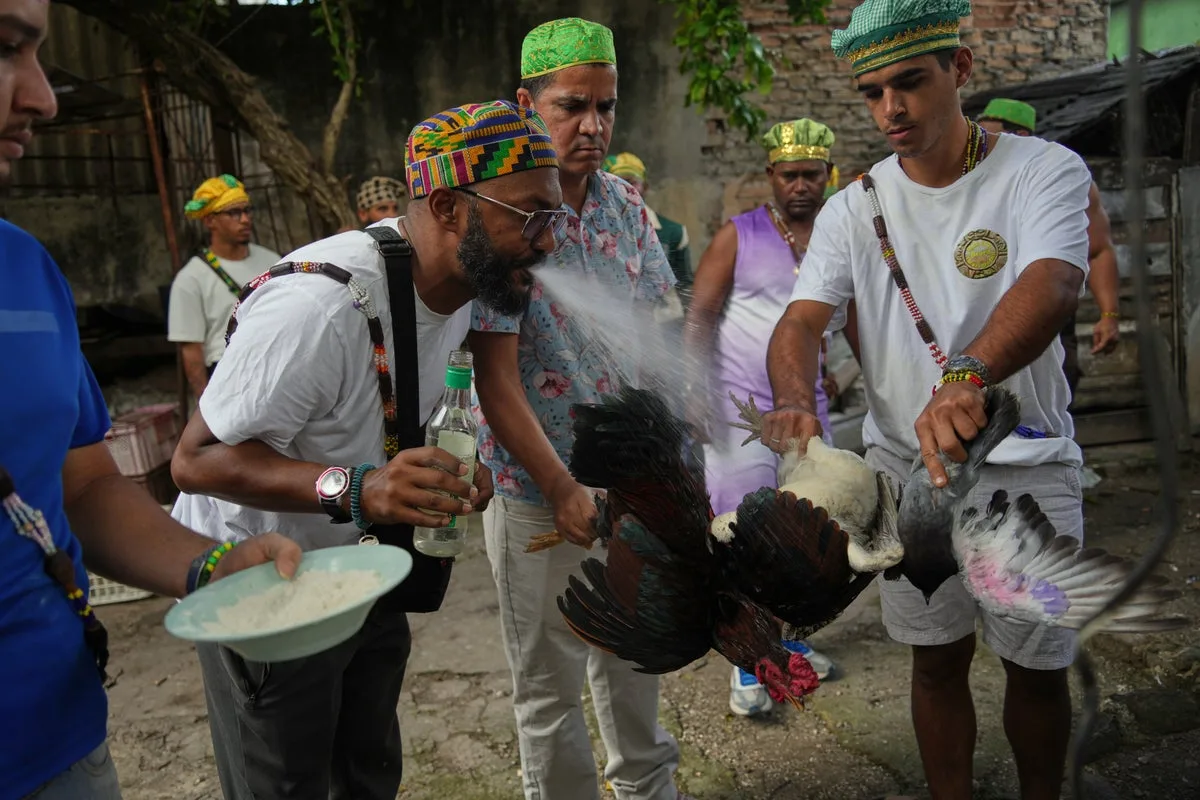
As tensions escalate between the United States and Cuba, and the island braces for further economic hardship, priests and priestesses of the Afro-Cuban religion Santería held ceremonies on Sunday, offering gifts to deities and praying for peace.
Several leading figures in the Santería community prayed for the “spiritual healing” of the Cuban people and an end to violence and conflicts that, according to their predictions in late December, would characterise this year. They chanted in ancient Yoruba, brought to the island by enslaved Africans and passed down orally.
“We believe that through sacrifices and prayers we can alleviate the impact of harmful issues,” said Lázaro Cuesta, a renowned priest who organised the ceremony in the courtyard of an old house. On 2 January, Cuban Santería priests known as babalawos predicted the possibility of war and violence affecting Cuba and the world using traditional divining methods.
A day later, the United States struck Venezuela's capital, Caracas, and arrested then-President Nicolás Maduro. Thirty-two Cuban soldiers from Maduro’s personal security detail died in the operation. Venezuela is one of Cuba’s main political, ideological and commercial allies, and the attack shocked the island’s population.
Cuba is currently experiencing a radical tightening of US sanctions, strangling its economy to pressure for a change in its political system, and US President Donald Trump has directly threatened the island. “As religious people, we always try to distance ourselves from anything negative that comes into our lives,” said Yusmina Hernández, a 49-year-old homemaker, as she participated in the ceremony.
At the foot of a leafy mango tree, a hen, a rooster and a dove were sacrificed. Dozens of babalawos raised their voices in prayer, repeatedly asking Eggun, the deity of the ancestors, for permission to invoke his power. Later, several hundred people formed a single file, circled a basket and were “cleansed” with live chickens while chanting in Yoruba. “This is being done for the good of society, so that there is no conflict or violence, so that there is harmony and health,” said Eraimy León, a 43-year-old babalawo.