Russia Intensifies Spring Offensive with Major Strikes on Ukrainian Civilian Areas
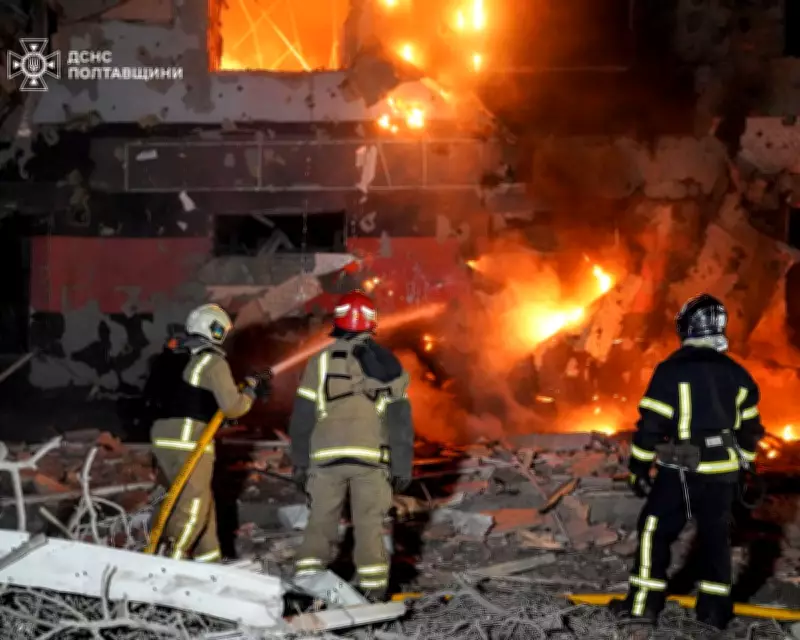
Russia has unleashed a fresh wave of missile and drone strikes targeting civilian areas across Ukraine, resulting in the deaths of at least five individuals. This aggressive move appears to signal an escalation in Moscow's spring offensive, aimed at breaking Ukrainian resistance along the front lines. The attacks come at a time when international attention is largely diverted towards the conflict involving Iran, potentially leaving Kyiv more vulnerable.
Scale and Impact of the Overnight Assault
According to Ukraine's air force, Moscow fired nearly 400 long-range drones and 23 cruise missiles overnight, marking one of the most substantial assaults in recent weeks after a period of relative calm. The barrage caused significant damage across 11 regions, as reported by Ukrainian President Volodymyr Zelenskyy. He has urgently renewed calls for allies to supply more air defence munitions, highlighting looming shortages as the United States remains preoccupied with the US-Israeli conflict with Iran.
In a related development, neighbouring Moldova announced that a crucial power line connecting it to Europe was damaged during the overnight strikes, prompting authorities to urge citizens to reduce electricity consumption during peak hours. This incident underscores the broader regional impact of Russia's military actions.

Strategic Context and Military Dynamics
Ukraine is bracing for a renewed Russian push, following a winter marked by widespread power and heating disruptions. Historically, Moscow's war of attrition tends to intensify in the spring as weather conditions improve. Russian forces, which outnumber Ukrainian troops by approximately three to one, are actively seeking gains along the eastern and southern fronts.
In the eastern Donetsk region, Russian troops have continued a slow advance during the winter, edging closer to the key city of Slovyansk from both the north and east, with positions now about 12 miles (20km) from its outskirts. Additionally, open-source analysts have reported Russian gains near Zaliznychne in the Zaporizhzhia region. The Institute for the Study of War noted late on Monday that the Kremlin has moved heavy equipment and additional troops to the frontline, reinforcing its offensive capabilities.
Analytical Perspectives and Battlefield Developments
Michael Kofman, an analyst at the Carnegie Endowment in Washington DC, commented on the typical pattern of Russian assaults, stating, "Usually there is a Russian wave of mechanised assaults around April, and they once again prove costly and ineffective." He added that Ukrainian defences have been "optimised for defeating mechanised assaults," with current fighting largely focused on suppressing or displacing opposing drone units.
Despite the challenges, Ukraine has achieved some notable successes on the battlefield this year. In southern Zaporizhzhia, Ukrainian forces retook roughly 150 square miles of territory where Russian advances had previously been made. February marked the first month since 2023 in which Kyiv regained more territory than it lost, according to military analysts. This counteroffensive was aided by Elon Musk's decision in February to disable Russian forces' access to Starlink internet connections, disrupting a key communication line for the troops.
Diplomatic Efforts and Geopolitical Complications
Ukrainian and US delegations engaged in two days of talks in Florida over the weekend, aiming to find a path to end Russia's full-scale invasion. However, no breakthrough was reported, with a key sticking point remaining the Donbas region, which Moscow insists Kyiv must cede in full. President Zelenskyy highlighted the timing of these discussions, noting on social media that "while our negotiators were reporting, Russia launched a new wave of 'shahed' drones against Ukraine."

He further emphasised the geopolitical complexities, stating, "The geopolitical situation has become more complicated due to the war against Iran, and unfortunately, this is emboldening Russia." Reports from the well-sourced outlet Ukrainska Pravda suggested that the US pressured Ukraine to withdraw its troops from the Donetsk region during the Florida talks, warning that Washington might shift its focus further to the military operation in Iran if peace negotiations stalled.
Zelenskyy has consistently asserted that any discussion of a voluntary withdrawal would only be feasible if Ukraine first received ironclad security guarantees from the West. Meanwhile, the Kremlin, benefiting from an unexpected economic windfall driven by surging global energy prices, indicated last week that talks between Washington, Moscow, and Kyiv on ending the war were on a "situational pause" due to the conflict in Iran.
As Ukraine faces a precarious position with much of the world's attention focused on the Middle East, concerns persist that US Patriot missile interceptors, which form the backbone of the country's air defences, could run out. This situation underscores the urgent need for sustained international support to bolster Ukraine's resilience against ongoing Russian aggression.