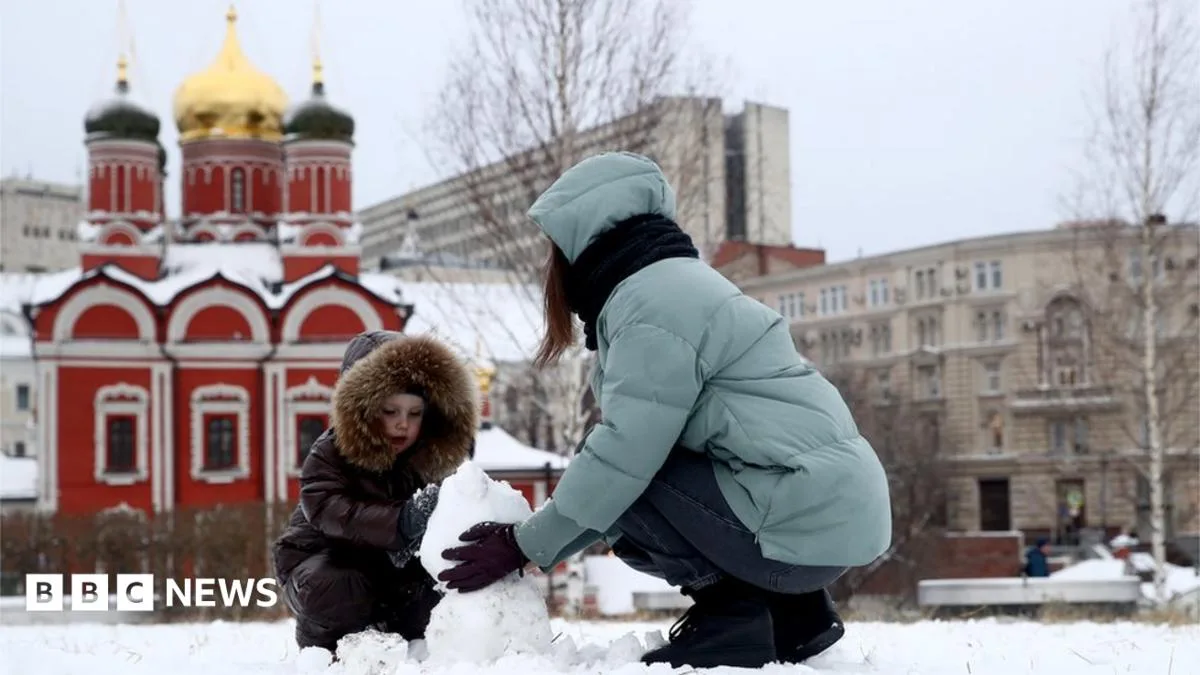
Putin's 'Handmaid's Tale' Policies Target Birth Rate Crisis Amid War
Putin's 'Handmaid's Tale' Policies Target Birth Rate Crisis

Putin's 'Handmaid's Tale' Policies Target Birth Rate Crisis Amid War

Russia is grappling with a severe demographic crisis, marked by a rapidly shrinking population exacerbated by the ongoing war in Ukraine, soaring mortality rates, and persistently low birth rates, where deaths now significantly outnumber births. In response, Vladimir Putin's government has rolled out a series of controversial policies aimed at reversing this decline, with critics warning of a chilling, state-controlled approach to reproduction that echoes dystopian narratives like The Handmaid's Tale.

Controversial Reproductive Measures

Under new government plans, Russian men who frequently visit saunas could be subjected to mandatory sperm testing due to concerns that heat exposure may impair sperm health. This proposal includes reproductive screenings, such as spermograms, for regular sauna users, building on earlier 2024 reforms that expanded state-funded health checks for men aged 18 to 49. Simultaneously, women who express a desire not to have children might be referred to psychologists for what human rights groups describe as soft coercion, raising alarms about personal freedoms.

Financial Incentives and State Monitoring

Several Russian regions have introduced cash incentives, offering around 100,000 rubles (approximately £850–£1,000) to students and young mothers to encourage childbirth. While officials claim this supports women in difficult situations, critics argue it risks promoting early motherhood at the expense of education and career opportunities. Additionally, the government is developing digital systems to track pregnancies through healthcare services, ostensibly for improved medical oversight. A special register announced in October 2025 aims to monitor pregnancy outcomes, which human rights organisations contend violates privacy rights.

Wide Pickt banner — collaborative shopping lists app for Telegram, phone mockup with grocery list

Restrictions on Abortion and Propaganda Bans

Access to abortion, while still legal in Russia, has become increasingly restricted in practice. Women often face mandatory counselling periods and pressure from authorities to avoid terminations. In 2023, Russia enacted a ban on child-free propaganda, outlawing the promotion of lifestyles that reject having children. Supporters view this as a defense of traditional values, but critics decry it as an infringement on personal liberty and a tool for state pressure on women to bear children.

Workplace and Societal Pressures

Efforts to boost birth rates extend beyond healthcare into workplaces and public life. Government-backed initiatives encourage employers to actively support and, in some cases, monitor employees' family lives. Proposals include fertility health checks and workplace policies designed to foster parenting, reflecting a broader strategic prioritisation of population growth. Holly Cartner, deputy program director at Human Rights Watch, warns, Russian authorities are jeopardising women's rights, health, and even lives as part of their harmful 'traditional values' crusade.

Demographic Decline and War Impact

Russia's long-term population decline stems from low birth rates, high mortality, and economic instability post-Soviet collapse. The war in Ukraine has intensified these pressures, with significant casualties among young men and an exodus of citizens. Official statistics show birth rates at decades-low levels, prompting urgent Kremlin action. In contrast, the UK faces its own fertility challenges due to financial pressures and housing costs, but policies focus on childcare support and parental leave rather than direct reproductive intervention.

Pickt after-article banner — collaborative shopping lists app with family illustration