Pope Leo's Historic Monaco Visit: First Papal Trip in 488 Years
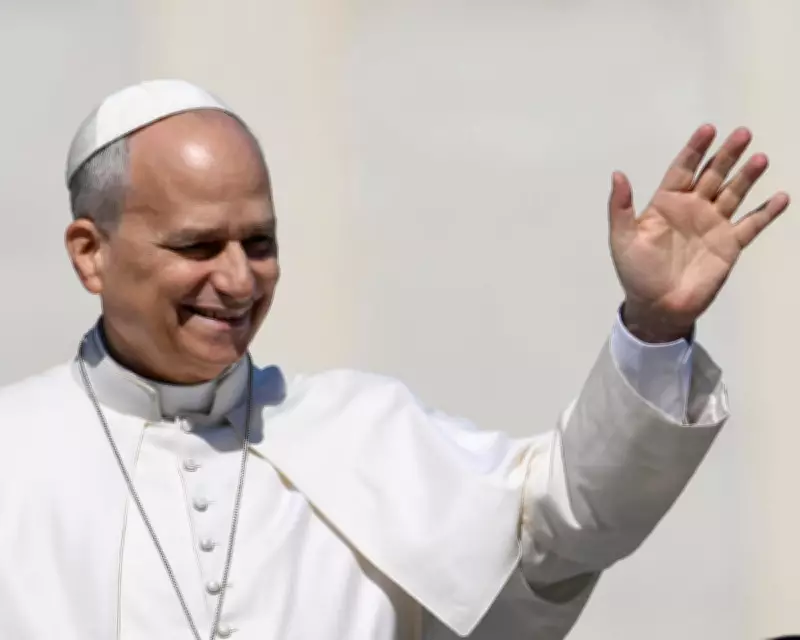
Pope Leo will embark on a landmark journey to Monaco this Saturday, marking his inaugural European excursion since ascending to the papacy. This one-day visit, the first by a pontiff to the principality since Pope Paul III in 1538, has sparked intrigue among Vatican watchers, given Monaco's reputation for casinos and luxury rather than traditional papal destinations.
A Helicopter Journey to a Princely Welcome
The pontiff will depart from the Vatican via helicopter, touching down at Monaco's heliport where he will be formally received by Prince Albert and Princess Charlene. From there, he will proceed to the Grimaldi dynasty's palace, a residence steeped in history dating back to the 13th century. This brief but significant trip underscores the Vatican's focus on engaging with Europe's smaller nations.
Monaco: A Small State with Big Significance
Vatican spokesperson Matteo Bruni framed Monaco as a "small country with big horizons," highlighting its role as a "laboratory of peace" due to its responsible stewardship of wealth and influence. He invoked biblical imagery of the small playing a pivotal role, noting that this visit offers Pope Leo, elected as the first American pope in May last year, a unique platform to address all of Europe.

Despite its affluence, Monaco remains deeply Catholic, with Catholicism as the official state religion. The principality boasts five Catholic churches, outnumbering its casinos, and Prince Albert recently reaffirmed this commitment by rejecting a proposal to legalise abortion. Bruni indicated that "the defence of life" would be a central theme of the visit, extending beyond abortion to encompass broader issues like war and conflict.
Mass at Stade Louis-II and Public Anticipation
Following a private audience with Prince Albert, Pope Leo will travel in the popemobile to Monaco's cathedral before celebrating mass at the Stade Louis-II. Approximately 15,000 Catholics are expected to attend, with many crossing the border from Italy. Although admission is free, attendees had to pre-book, leading to long queues in the rain to collect wristbands, as reported by the French daily Nice-Matin.
The newspaper noted that anticipation for the pope's arrival "goes beyond mere curiosity," with residents hoping for a "rare and deeply personal moment of communion with the pontiff." This reflects the deep-seated Catholic faith within the community, despite Monaco's global image of opulence.
Vatican Observers Puzzled by the Choice
The decision to visit Monaco has left some Vatican analysts perplexed. Marco Politi, a seasoned Vatican journalist, remarked, "Nobody has really been able to understand why he chose Monaco – it's the Vatican's best-kept secret." He speculated that it might be a "gesture of delicacy towards very small European countries," potentially hinting at future trips to places like Andorra or Liechtenstein.
Severina Bartonitschek, Vatican correspondent for Germany's Catholic news agency KNA, pointed out the contrast with Pope Francis's focus on marginalised areas, calling Monaco "the exact opposite." However, she noted commonalities between Pope Leo and Prince Albert, including their strong Catholic faith, pro-life stances, and love of sports. "Monaco is a small state but with an international community and lots of Catholics. Plus, it is doable in a day," she added.
Broader Travel Plans and Diplomatic Considerations
This visit follows Pope Leo's first overseas trips to Turkey and Lebanon in November, with a 10-day African tour scheduled for April. Despite an early invitation from US President Donald Trump, the pope has delayed a White House visit to avoid appearing to favour his homeland. Politi explained, "He will eventually go, but he doesn't want to give the impression of giving precedence to his own country, so he will prioritise other countries."
Prince Albert extended the invitation during a Vatican visit in January, setting the stage for this historic encounter. As Pope Leo prepares to set foot in Monaco, his journey not only bridges a 488-year gap but also signals a nuanced approach to papal diplomacy, blending tradition with contemporary global engagement.