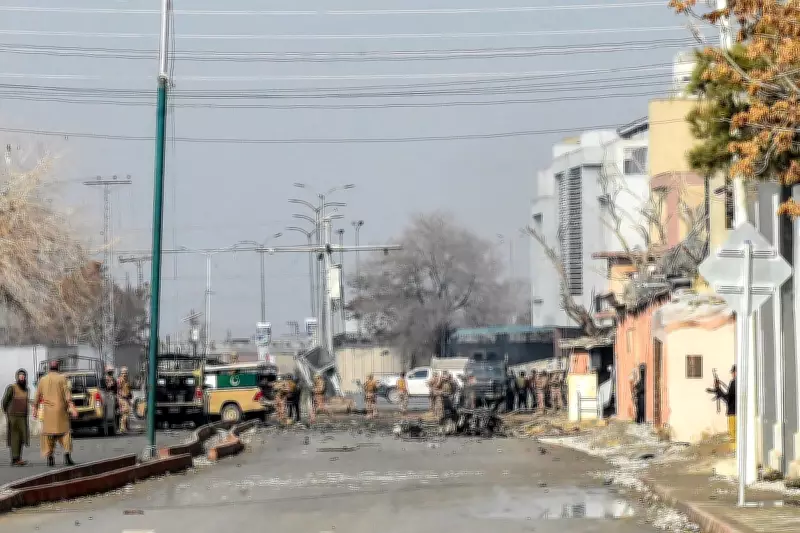
Pakistan has been rocked by its worst weekend of insurgent violence in decades, with almost 200 people reported dead following a series of coordinated attacks across the southern province of Balochistan. The devastating raids, which targeted police stations, a prison, a bank, and paramilitary installations, have plunged the region into crisis and triggered large-scale military counter-operations.
Official Death Toll and Military Response
Balochistan's chief minister, Sarfaraz Bugti, provided a detailed breakdown of the casualties on Sunday, revealing that 31 civilians, 17 security personnel, and 145 militants lost their lives during the violent spree on Friday and Saturday. Pakistan's army confirmed that nearly 100 militants were killed on Saturday alone, with their bodies now in official custody.
"145 terrorists have been killed, and their bodies are in the custody of authorities," Mr Bugti stated, emphasising that the military operations were deliberately limited and intelligence-based to minimise civilian harm. "We could have used mortars and heavy firepower, but terrorists hide among civilians. We did not want innocent lives harmed," he explained to reporters during a press briefing.

Coordinated Attacks Across Multiple Locations
The violence erupted simultaneously across twelve different locations in Balochistan, including major centres such as Quetta, Gwadar, Mastung, and Noshki. The Baloch Liberation Army (BLA) claimed responsibility for what it described as Operation "Black Storm," specifically targeting Pakistani security forces throughout the province.
While insurgent groups have routinely attacked security targets in Balochistan, analysts note that coordinated assaults on this scale have been exceptionally rare, marking a significant escalation in the region's long-running separatist conflict.
International Reactions and Accusations
The United States quickly expressed solidarity with Pakistan following the attacks. US Charge d'Affaires Natalie Baker stated that "Washington stood in solidarity with Pakistan after the attacks," adding that "The United States remains a steadfast partner of Pakistan in its efforts to ensure peace and stability."
Meanwhile, Pakistan's military made familiar allegations on Saturday, claiming the BLA attacks were "Indian-sponsored" - an accusation that has become routine in the country's national security narrative. India promptly denied any involvement, with foreign ministry spokesperson Randhir Jaiswal stating: "We categorically reject the baseless allegations made by Pakistan."
Mr Jaiswal suggested that Islamabad should instead focus on addressing "long-standing demands" of Balochistan's people rather than making external accusations.
Underlying Grievances in Balochistan
Balochistan, Pakistan's poorest province despite its considerable natural resources, has been embroiled in a decades-long insurgency led by separatists seeking greater autonomy and a larger share of regional wealth. Ethnic Baloch nationalists have long complained about economic marginalisation and political disenfranchisement.
Local residents frequently speak of rampant corruption plaguing the resource-rich but impoverished province. "Everyone here is corrupt," one former chief minister of Balochistan told Al Jazeera, highlighting systemic governance issues that fuel separatist sentiments.
Government's Stern Warning to Families
In a stern post on social media platform X, Chief Minister Bugti issued a warning to families of those involved in militant activities. "Those who have joined the ranks of terrorists are the responsibility of their families to inform the government," he declared.
Mr Bugti added a chilling ultimatum: "The law will be set in motion against all those whose families did not inform the government about the terrorists who were killed," indicating potential legal consequences for relatives who fail to report militant family members to authorities.
The weekend's violence represents one of the deadliest episodes in Balochistan's troubled history, raising serious questions about security preparedness, counterterrorism strategies, and the underlying political and economic grievances driving the separatist movement in Pakistan's largest province.