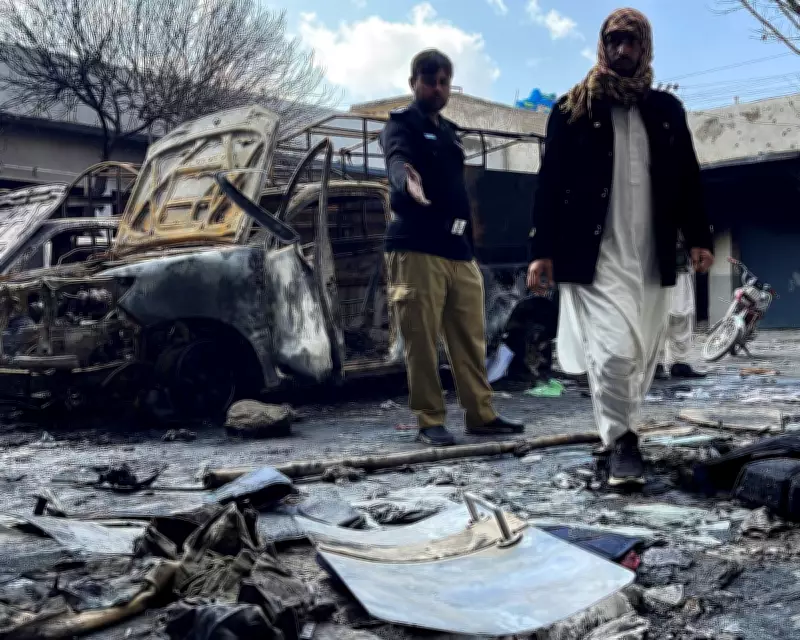
Pakistan Launches Major Security Crackdown Following Coordinated Balochistan Assaults
Pakistan's security apparatus has dramatically escalated its counter-insurgency operations in the troubled province of Balochistan, responding to what officials have described as "unprecedented" coordinated attacks that struck multiple urban centres simultaneously over the weekend. The violent assaults, which targeted military installations, police stations, banks, and critical infrastructure, resulted in significant casualties and have reignited concerns about the long-standing separatist insurgency in the region.
Deadly Multi-City Offensive Claims Dozens of Lives
The wave of violence began in the pre-dawn hours of Saturday, with insurgents launching sophisticated, coordinated strikes across at least ten cities throughout Balochistan. According to official reports, the attacks claimed the lives of at least 31 civilians and 17 security personnel, though militant groups have made conflicting claims about higher casualty figures. The provincial capital, Quetta, became a focal point of the violence, with suicide attacks targeting the city's secure red zone where key government buildings, including the offices of the governor and chief minister, are located.
In a particularly devastating incident confirmed by local officials, a vehicle-borne explosive device was detonated near government compounds in Quetta, killing multiple police officers including a deputy superintendent. Meanwhile, in the coastal district of Gwadar – where China has developed a strategically significant deep-sea port – insurgents attempted to breach perimeter security but were reportedly repelled by security forces after intense exchanges of fire.

Security Forces Respond with Forceful Counter-Operations
Balochistan's Chief Minister, Sarfraz Bugti, announced that security forces had responded decisively to the militant offensive, claiming that 145 militants had been killed during forty hours of intensive counter-operations following the initial attacks. The proscribed Baloch Liberation Army (BLA) has claimed responsibility for the coordinated assaults, asserting in statements that they had inflicted substantial casualties on security forces and taken prisoners – claims that remain unverified by independent sources.
Pakistan's Interior Minister, Mohsin Naqvi, swiftly travelled to Quetta alongside Chief Minister Bugti to offer condolences to bereaved families and assess the security situation firsthand. During his visit, Naqvi pointed the finger at neighbouring India, alleging support for terrorist activities – an accusation that Delhi has firmly denied. Meanwhile, Pakistan's Defence Minister, Khawaja Asif, informed local media that calm had been largely restored across the province, though security forces remained engaged in what he termed "mopping-up operations" to secure affected areas.
Insurgency Gains Lethal Momentum Despite Official Claims
The weekend's violence has starkly contradicted recent assertions from both central and provincial government officials who had suggested that Balochistan's decades-old separatist insurgency was being effectively contained. Security analyst and author Zahid Hussain described the simultaneous attacks across multiple urban centres as genuinely unprecedented in scale and coordination, noting that they demonstrated the insurgents' substantial local support base and operational capabilities.
"The situation has escalated to a dangerous level," Hussain observed. "These attacks prove the militants maintain significant local support – without which such coordinated operations would be impossible, even considering the alleged safe sanctuaries they may have in neighbouring Afghanistan." Pakistan has repeatedly accused Afghanistan of providing refuge to Baloch insurgents, as well as to Pakistani Taliban and other militant groups, though Kabul has consistently denied these allegations.

Widespread Disruption and Continuing Tensions
The attacks caused extensive disruption across Balochistan, with insurgents blocking major highways, damaging railway infrastructure, and targeting financial institutions. In Mastung district, dozens of militants reportedly stormed a prison facility, freeing approximately thirty inmates. Meanwhile, in Pasni within Gwadar district, security forces engaged militants who attempted to breach the headquarters of Pakistan's coastguard, resulting in multiple casualties including a suicide bomber and a maritime security official.
Authorities have imposed widespread mobile internet suspensions in various cities including Quetta, Gwadar, and Noshki as security operations continue. Residents in affected areas reported ongoing tensions, with some describing hearing sustained gunfire and explosions throughout the night following the initial assaults. Videos circulated on social media platforms, including by the BLA itself, showed insurgents moving freely through parts of Quetta, firing rocket launchers at banking institutions and setting police stations ablaze.
The weekend's violence represents a significant escalation in Balochistan's long-running separatist conflict, highlighting both the resilience of militant groups and the substantial challenges facing Pakistan's security establishment in the strategically vital province.