Kenyan Survivor Reveals Trafficking Ordeal That Led to Russian Frontline
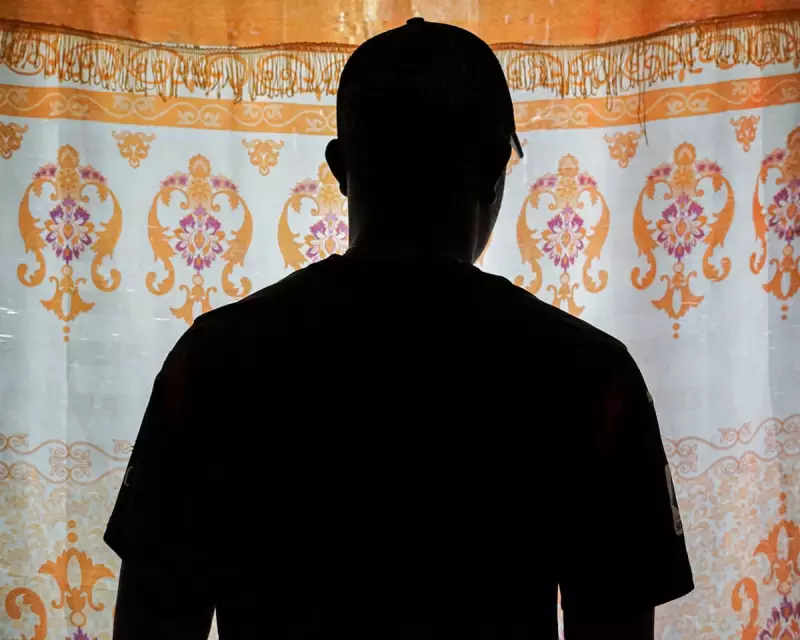
In an exclusive interview conducted under a pseudonym for his protection, a young Kenyan man has shared his terrifying journey from seeking employment abroad to fighting on the Russian frontline in Ukraine. Stephen Oduor's story exposes a disturbing pattern of human trafficking targeting vulnerable African men through deceptive recruitment networks.
From Plumbing Promises to Military Conscription
Stephen Oduor, a 24-year-old trained plumber from Kenya, had been struggling with unemployment for months when he learned about lucrative job opportunities in Russia through local employment agents. The agents promised him a plumbing position paying approximately £567 monthly, requiring only a £142 fee to cover travel and visa expenses.
"I was looking forward to supporting my family after such a long period without work," Oduor explained. "The agents assured me everything was legitimate and they would handle all the arrangements."

Last August, Oduor traveled with six other Kenyans from Nairobi to St. Petersburg, expecting to begin his new career. However, upon arrival, their luggage was confiscated and they were given black clothing to wear before being taken to a police station. There, they were fingerprinted and forced to sign documents written entirely in Russian, a language none of them understood.
The Shocking Realisation of Military Enlistment
The following day brought the devastating truth when the group was transported to a large military facility for processing of military identification cards. "When I asked one of the Russians why we needed these cards, he responded with disbelief," Oduor recalled. "He said, 'You traveled all the way from Kenya and didn't know what you were coming to do?' That's when I realised I had been tricked into enlisting in the Russian armed forces."
Oduor is among more than 200 Kenyans and hundreds of other Africans who have reportedly been trafficked to Russia under similar false pretences, according to Kenya's Ministry of Foreign and Diaspora Affairs. Ukraine's foreign minister has stated that over 1,400 citizens from 36 African countries are currently fighting for Russia in Ukraine, with many held as prisoners of war in Ukrainian camps.
Untrained and Unprepared for Combat
After receiving military IDs, Oduor and his fellow Kenyans were transported by train for two days to Belgorod in southwestern Russia, near the Ukrainian border. At a military camp there, they were issued military uniforms and assault rifles without any proper training.
"I didn't know how to shoot anything," Oduor admitted. "We were sent straight to the battlefield completely unprepared."
For the next three months, Oduor's primary duty involved shooting down Ukrainian weaponised drones while hiding in foxholes within Ukrainian forests. "Every day alive felt like a miracle," he said. "If a drone spotted me first, it would strike immediately. The constant fear was overwhelming."
Allegations of Racist Mistreatment and Strategic Deployment
Security analyst Denis Muniu explained that recruitment networks specifically target unemployed youth and former security personnel who require minimal training. "They're capitalising on Kenya's high youth unemployment rate and weak oversight of employment agencies," Muniu stated. "It's a very strategic way of recruiting these people."
Disturbing social media footage has emerged showing apparent racist mistreatment of African fighters by Russian soldiers. One video purportedly shows a Black man with an anti-tank mine strapped to his chest being ordered at gunpoint to move toward Ukrainian positions, while a Russian speaker refers to him as a "piece of coal" and suggests he will be used to "open" a Ukrainian bunker.
Another video appears to show armed Black men singing a Ugandan revolutionary song in snowy woods while a Russian speaker in the background laughs and describes them as "disposables." While these videos remain unverified, they align with previous reports of Russian military tactics that deliberately send soldiers on what amount to suicide missions.

A Bloody Escape and Lingering Trauma
Oduor's opportunity for escape came after a near-fatal drone attack. While traveling in a pickup truck through a forest with three Russian soldiers, a kamikaze drone targeted their vehicle. "I just saw death... I knew this was the end of us," Oduor recalled.
The driver attempted to evade the drone, but within two minutes it exploded near their vehicle. One passenger was killed instantly, while Oduor and the driver suffered injuries from shrapnel. "We were lucky. God was with us," Oduor said of the survivors.
After receiving initial medical treatment in Belgorod and subsequent hospitals, Oduor recognised his likely return to the frontline upon recovery. While supposedly walking to a supermarket during his hospital stay, he instead took a taxi to the Kenyan embassy in Moscow, over 400 miles away. Embassy officials provided him with an emergency passport for his return flight to Kenya in November.
Families Left in Anguish and Uncertainty
Many Kenyan families remain in agonising uncertainty about loved ones who haven't returned. Susan Kuloba hasn't seen her 22-year-old son David since he left for Russia in August, having been promised work as a security guard but instead conscripted into the Russian military.
Before his second mission to fight Ukrainians on September 30th, David sent his mother a copy of his military contract and a disturbing voice message: "In case of anything, you'll get a call to inform you whether I'll have died or I'll be alive. If I'll have died, take the documents to Immigration or to the embassy... I love you all very much."
After three days of communication, David went silent. A friend who had escaped Russia later informed Susan that WhatsApp groups for Kenyan fighters suggested her son had been killed. "What hurts is I don't know whether he's dead or alive," Susan said through tears. "All I have is a claim by someone that he died, but I don't believe it. The government should just help us."
Government Responses and Ongoing Challenges
Kenya's Ministry of Foreign and Diaspora Affairs has acknowledged the crisis, stating it is engaging with both Russian and Ukrainian authorities in repatriation efforts. Foreign Affairs Principal Secretary Abraham Korir Sing'Oei announced on January 22nd that the government had repatriated 28 Kenyans since December.
Russia's foreign affairs ministry and its embassy in Nairobi did not respond to requests for comment, though the Russian government has previously denied involvement in schemes to recruit foreigners into its military.
Meanwhile, Oduor attempts to rebuild his life outside Nairobi, having sold his belongings for the ill-fated Russian journey and returned empty-handed. He underwent surgery to remove shrapnel and continues to recover, limiting him to light work while seeking employment in plumbing and other fields.
"The experience seriously hurt me," Oduor confessed. "When you see someone dying and his head falling off, that disturbs you. It disturbed me a lot." His story serves as a stark warning about the dangers facing vulnerable job seekers and the urgent need for stronger protections against international trafficking networks.