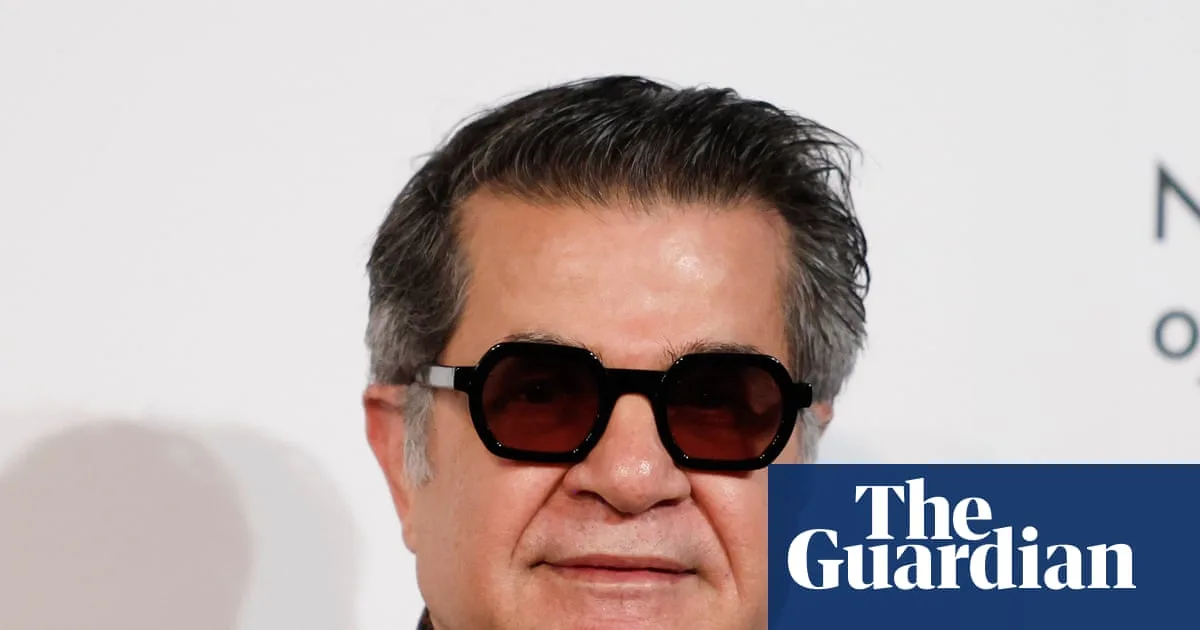
Iranian Film-Maker Jafar Panahi Predicts Regime Collapse After 'Massacre'
Jafar Panahi: Khamenei regime cannot sustain control

One of Iran's most celebrated film-makers has issued a stark prediction that the country's ruling regime will be unable to maintain its grip on power following a violent suppression of widespread protests.

Internet Blackout Signalled 'A Very Big Massacre'

In an exclusive interview with the Guardian, director Jafar Panahi stated that a near-total internet shutdown imposed last Friday was a clear harbinger of the state's brutal response. The blackout, which blocked between 95% and 99% of Iran's communication network, was, in his words, "a sign that there would be a very big massacre on the way."

Panahi, 65, admitted the scale of the crackdown exceeded expectations. "We never predicted that the crackdown would have such dimensions and numbers," he said. Reports indicate that protests stemming from a severe economic crisis, which began in late December, were met with deadly force over the weekend, with estimates of more than 2,500 people killed.

'The Regime Will Collapse, 100%'

Speaking from the United States while promoting his latest film, Panahi was unequivocal about the future of the government led by Ayatollah Ali Khamenei. "It is impossible for this government to sustain itself in this situation," he asserted. "They know it too. They know that it will be impossible to rule over people."

He suggested the leadership's current aim might be purely destructive. "Perhaps their only goal right now is to bring the country to the verge of complete collapse and try to destroy it," Panahi told the Guardian.

Drawing historical parallels, the director was categorical about the outcome: "The regime will collapse, 100%," he said. "It is what has happened to dictatorship governments throughout history. When it will collapse, no one knows."

Art Imitating Life: A Cycle of Violence

Panahi's award-winning film, It Was Just An Accident, which won the Palme d'Or at Cannes in 2025 and is an Oscar contender, explores themes deeply relevant to the current crisis. The film is a revenge thriller and black comedy about former political prisoners contemplating retribution against a suspected torturer.

"What I have been depicting in this film is when the cycle of violence continues, then it becomes very difficult to stop it," Panahi explained. He expressed fear that the state's current "savagery" would perpetuate this very cycle.

The director himself is no stranger to state persecution. In December, he was sentenced in absentia to a one-year prison term on propaganda charges. He has been jailed twice before, in 2010 for supporting anti-government protests and in 2022 for demonstrating against the detention of fellow film-makers.

A Warning to the West and Thoughts on Transition

Panahi cautioned Western governments against dealing with Tehran's clerical leadership as rational actors. He argued that unlike some other authoritarian regimes, "in this system there is no rationality."

"All they can think of is crackdown and how they can stay in power even just one more day," he said via his interpreter, Sheida Dayani. "The last thing they're thinking about is the people."

Addressing calls from some protestors for the return of Reza Pahlavi, the exiled son of Iran's last Shah, Panahi acknowledged this as a prominent voice. He highlighted Pahlavi's own call for a post-transition referendum, stating that during a transition period, unity was paramount.

"Whether we agree with Pahlavi or not," Panahi concluded, "we know that the overwhelming majority of the population of Iran want the current regime to go."