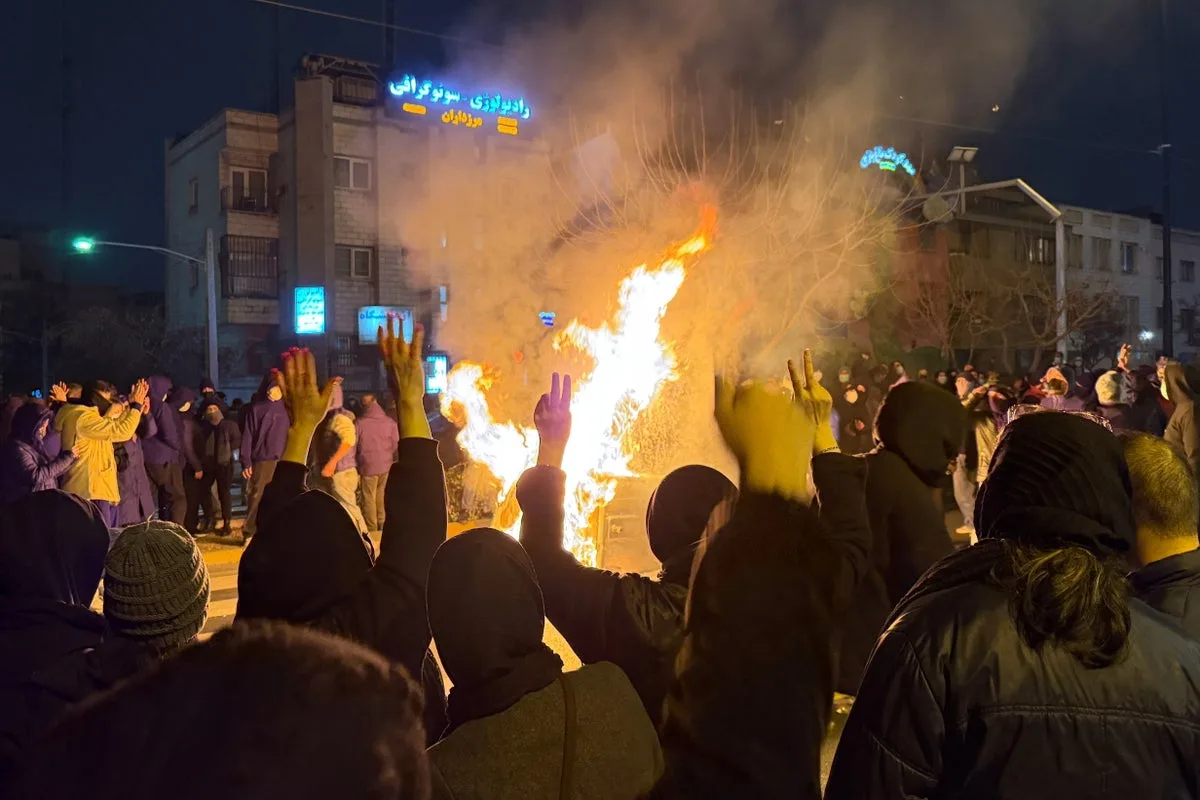
Iranians across the country are still reeling with shock, grief and fear after massive nationwide protests were crushed by the deadliest crackdown ever seen under the rule of Supreme Leader Ali Khamenei. Thousands were killed and tens of thousands are believed to have been arrested, according to activists and protesters who spoke to the Associated Press.
But a vein of defiance persists. A seething anger at Iran's rulers is evident in videos shared on social media and in conversations with protesters. At the same time, three protesters reached by the AP also expressed futility over what can be done after hundreds of thousands braved taking to the streets only to be met with overwhelming violence. The protesters all spoke on condition of anonymity, fearing retribution or arrest.
The defiance appears in the shouting of slogans from windows and rooftops at night, a ritual displayed in past waves of protests. It is also evident at memorial gatherings for those killed 40 days earlier. Such commemorations — known as the 'chehelom,' Persian for 'the 40th' — are traditionally held by families for anyone who has died. But in times of unrest, chehelom can have a political dimension.
This week marks 40 days since Jan. 8 and 9, the deadliest days of the crackdown, and multiple videos circulating online show 40-day ceremonies in towns and cities around Iran. Some appear to have drawn hundreds of people, who often break into anti-government chants. Often they are festive, with friends and loved ones of the slain protester singing and throwing flowers – a rejection of the solemn atmosphere encouraged by the state at official ceremonies.
Videos posted this week and verified by the AP showed a crowd of hundreds at the main cemetery in the small western Iranian town of Abdanan, chanting, 'Death to Khamenei' and pumping their fists at the chehelom of Alireza Seydi, a 16-year-old boy killed on Jan. 8. The videos show security forces firing from an armoured vehicle, raising clouds of what appeared to be tear gas, sending men and women running.
The Human Rights Activists News Agency has so far counted more than 7,000 dead and believes the death toll is far higher. The government held its own chehelom for those killed, whom the Revolutionary Guard in a statement depicted as victims of violence caused by foreign-backed armed 'terrorist' groups that exploited 'legitimate public demands.'