Through the eyes of six Iranian citizens who risked their safety to speak out, a disturbing portrait emerges of recent nationwide protests that have shaken the Islamic Republic to its core. These individuals, speaking anonymously through secure channels to The Associated Press, describe scenes of unprecedented state violence alongside a fragile but persistent sense of hope for change.
A Movement Sparked by Economic Despair and Political Anger
The latest wave of demonstrations, which erupted in early January, was initially fuelled by rampant inflation and the collapsing value of the Iranian rial. However, chants quickly evolved to directly challenge the country's theocratic leadership. A 25-year-old fashion designer from Tehran, who participated in both the current and previous major protests, noted a significant shift. "The crowd was larger, more diverse," she observed, describing a momentum that felt unprecedented compared to past uprisings.
The Brutal Reality of State Suppression
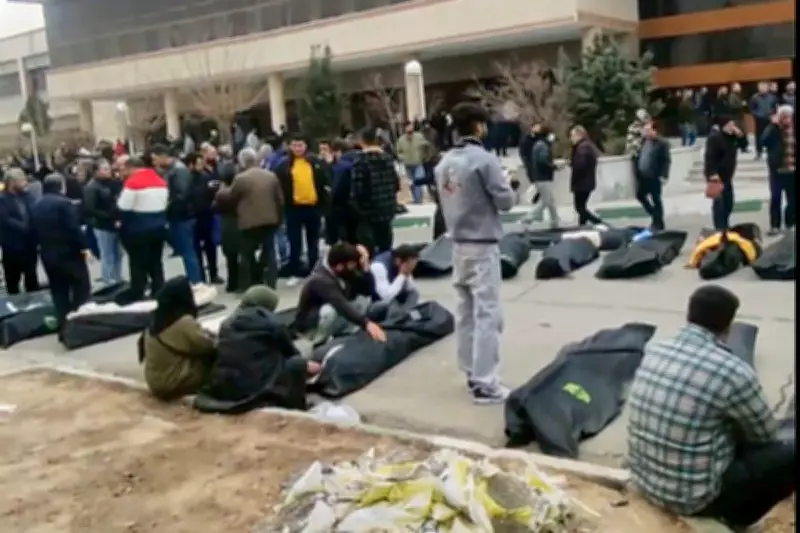
Activists estimate the security crackdown has resulted in over 6,000 fatalities, predominantly protesters, marking it as the bloodiest suppression of dissent since the 1979 revolution. The individuals interviewed witnessed this violence firsthand. "I expected the state to respond aggressively, but I was horrified by the extent," one protester confessed. The government's rare admission by Supreme Leader Ayatollah Ali Khamenei that "several thousand have been killed" underscores the scale of both the movement and its brutal repression.

Eyewitness Accounts from the Streets of Tehran
The fashion designer recounted the pivotal events of January 8th. What began as a still, empty city transformed into a sea of thousands heeding a call to protest. "Everyone was afraid," she admitted, "but they kept saying, 'This time, we can't leave it.'" Protesters, including teenagers and elderly residents, marched along Shariati Street, spraying graffiti and shouting anti-government slogans—some calling for the death of Khamenei, an act punishable by execution.
The response was swift and violent. Anti-riot police and Basij paramilitary forces blocked roads, firing tear gas and pellet guns into the crowd. The designer described a scene of panic, with protesters scrambling and the air thick with chemical stench. Despite attempts to push forward, throwing rocks at security forces, a violent charge forced a retreat. The designer herself was injured, struck by pellets in her hand and leg, saved from worse facial injury only by her protective mask.
A Doctor's Harrowing Testimony from Mashhad
A physician from Mashhad, Iran's second-largest city, provided a chilling account from within the medical system. While the protests reaching her city were not surprising, their scale was. "This had never happened before at this scale," she stated. From her hospital, she witnessed the aftermath as security forces escalated their response.
She described a night where colleagues reported 150 bodies brought in, including a boy and a young woman with gunshot wounds. More disturbingly, she recounted how security agents—both uniformed and plainclothes—took command of the emergency room. "They were standing over their heads with a gun, telling them not to touch the wounded," she relayed from a colleague's account, "as if they wanted those injured people to die on their own."
Grief, Intimidation, and a Plea to the World
The doctor shared a particularly painful memory of a family arriving to claim their daughter's body, only to be told by agents they must surrender her national ID and allow her to be posthumously identified as a government supporter. When the family protested, stating "Our daughter was killed by your forces," they were arrested and the body was taken away. "I can't get the picture of that day out of my mind, even for an hour," the doctor said.
As January concludes, surface tensions in Tehran have cooled, with some semblance of daily life returning. However, a pervasive atmosphere of surveillance remains. Protesters report large deployments of security forces in public squares and plainclothes agents monitoring movements. The ongoing internet blackout severely limits communication, isolating communities.

The individuals interviewed expressed a desperate hope that the international community will not look away. "No matter how many times I explain, I truly can't really convey the extent of the horrible situation," the doctor concluded. "No one would believe that a government of a country can so easily kill its own people." Their testimonies, while not representative of Iran's entire 85-million-strong population, offer a rare and vital glimpse into a nation at a critical historical juncture, battered by economic sanctions, international isolation, and internal strife.