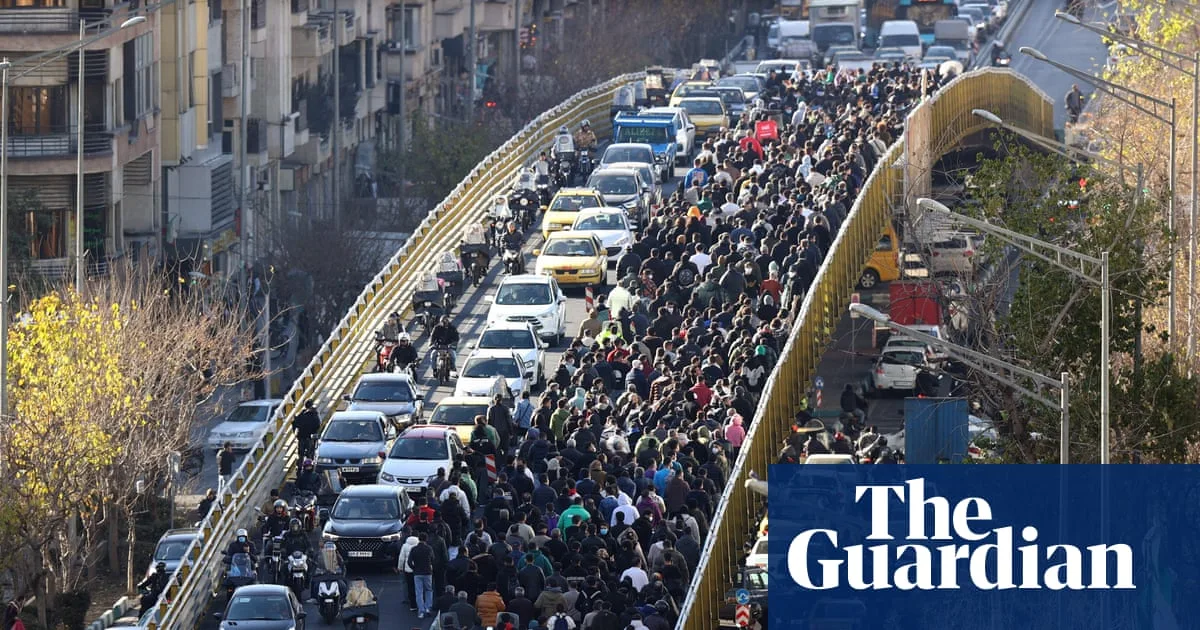
Demonstrations against deteriorating living conditions in Iran have widened to include criticism of the government, marking the largest protests since 2022. The unrest, now in its fourth day, has spread from Tehran to cities across the country, with merchants shuttering stores and students occupying campuses.
The protests were triggered by a historic plunge in the Iranian rial, which dropped to 1.42 million to the US dollar on Sunday, a more than 56% decrease in six months. Soaring inflation has pushed food prices up by 72% compared with last year, leaving many Iranians struggling to afford basic necessities.
One protester, a textile merchant in Isfahan using the pseudonym Alborz, told the Guardian: 'What will my children eat? Do we have to bring suitcases of cash to simply buy bread?' He said the corrupt government had forced families to make significant lifestyle changes, adding: 'This was the last nail in the coffin. We wanted this regime gone.'
Social media videos show protesters chanting anti-government slogans and throwing stones at security forces. Slogans such as 'death to the dictator' and 'woman, life, freedom' have been heard, echoing the 2022 protests sparked by the death of Mahsa Amini. Security forces have used teargas and arrested some protesters, with reports of student IDs being confiscated.
Iran's president, Masoud Pezeshkian, has called for dialogue with protest leaders, saying the government should listen to 'legitimate demands'. However, protesters are wary, believing it to be an attempt to co-opt their movement. A student activist using the pseudonym Farhad said: 'If the administration wanted to talk, they wouldn't fire teargas, shoot at protesters... we want the mullahs gone and we want democracy.'
The protests come as Iran faces intense international sanctions and a recent 12-day war with Israel. The US president, Donald Trump, has suggested possible renewed nuclear activity in Iran, adding to the country's external pressures.