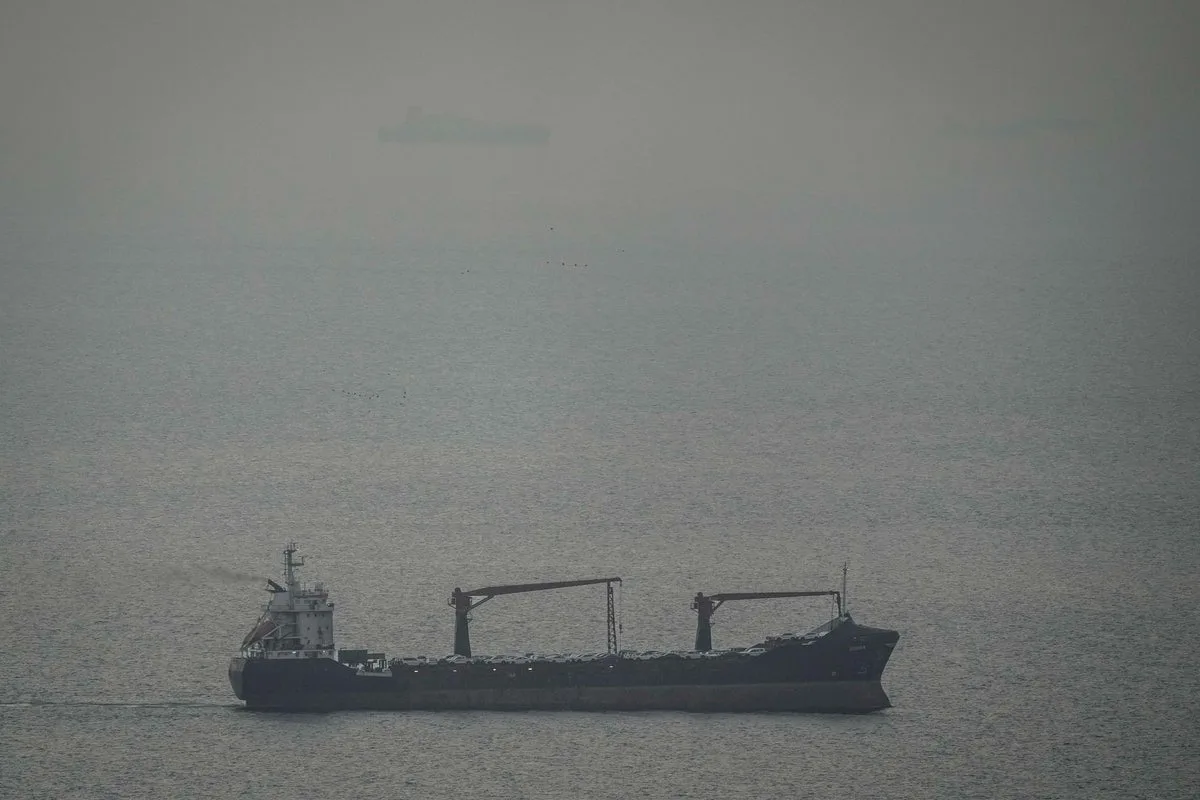
Iran Cements Control Over Vital Oil Shipping Lane
Iran is moving to formalise its chokehold on the Strait of Hormuz, the world's most critical artery for oil shipments, by implementing what shipping analysts describe as a "toll booth" regime. This development could solidify Tehran's de facto control over the crucial waterway and institutionalise its ability to maintain oil exports to China amidst ongoing regional conflict.
Vessels Forced into Iranian Waters for Vetting
According to communications sent to United Nations maritime authorities and firsthand accounts from transiting ships, Iran is now requiring vessels to enter Iranian territorial waters and undergo vetting by the Islamic Revolutionary Guards Corps (IRGC) before passage. Lloyd's List Intelligence reports that ships must navigate north around Larak Island, placing them firmly within Iranian jurisdiction and closer to the Iranian coastline.
Entities seeking safe passage must submit detailed information to what Lloyd's List Intelligence calls "approved intermediaries" of the Revolutionary Guard. This includes comprehensive cargo details, ownership information, destination specifics, and complete crew lists. Approved vessels receive a security code and are escorted by IRGC vessels through the contested waters.
Traffic Plummets as Oil Prices Skyrocket
The impact on global shipping has been catastrophic. Traffic through the Strait of Hormuz has fallen by a staggering 90% since the beginning of the Iran war, sending global oil prices soaring and creating alarming shortages in Asian nations that depend on Persian Gulf oil shipments. According to Lloyd's List Intelligence, only about 150 vessels, including tankers and container ships, have transited since March 1st - barely more than a single day's normal traffic before the conflict began.
"Iran's IRGC has imposed a de facto 'toll booth' regime in the Strait of Hormuz," confirms shipping information firm Lloyd's List Intelligence. The firm notes that while not all ships are paying direct tolls, at least two vessels have made payments settled in Chinese yuan, reflecting Tehran's economic alignment with Beijing.
Iranian Parliament Moves to Formalise Fees
Iran appears to be establishing a permanent system for controlling the strategic waterway. The International Maritime Organization (IMO) recently received a letter from the Iranian government claiming it had "implemented a set of precautionary measures aimed at preserving maritime safety and security" while acting within international law principles.
More significantly, Iranian media outlets close to the Revolutionary Guard report that parliament is working on legislation to formalise fees for certain ships transiting the Strait of Hormuz. Lawmaker Mohammadreza Rezaei Kouchi stated that "parliament is pursuing a plan to formally codify Iran's sovereignty, control and oversight over the Strait of Hormuz, while also creating a source of revenue through the collection of fees."
International Condemnation and Legal Challenges
The IMO has condemned attacks on vessels in the region and called for an internationally coordinated approach to secure passage through the Strait that respects freedom of navigation. Maritime experts argue Iran's approach likely violates international law, particularly Article 19 of the UN's Law of the Sea Treaty, which guarantees "innocent passage" of peaceful vessels through territorial waters.
"There's no provision in international law anywhere to set up a toll booth and shake down shipping," said Sal Mercogliano, a maritime historian at Campbell University. "This is Iran using the element that they have right now, which is control of the Strait of Hormuz."
The secretary general of the Gulf Cooperation Council, Jasem Mohamed al-Budaiwi, called Iran's collection of passage fees "an aggression and a violation of the United Nations agreement on the law of the sea."
Economic Terrorism Allegations
Sultan al-Jaber, who leads the massive state-run Abu Dhabi National Oil Company, has characterised Iran's actions as "economic terrorism." In a speech hosted by the Middle East Institute in Washington, al-Jaber declared: "Weaponizing the Strait of Hormuz is not an act of aggression against one nation. It is economic terrorism against every consumer, every family that depends on affordable energy and food."
He added: "When Iran holds Hormuz hostage, every nation pays the ransom, at the gas pump, at the grocery store and at the pharmacy. No country can be allowed to destabilize the global economy in this way."
Shipping Patterns Reveal Iranian Dominance
Analysis of recent transits reveals Iranian-affiliated ships accounted for 24% of passages, with Greek vessels at 18% and Chinese ships at 10% when counted by ownership or flag registration. However, during the initial phase of the conflict, vessels connected to Iran represented 60% of transits, rising to approximately 90% in recent days.
Approximately half of transiting vessels disable their radio identification systems before entering the Strait, only reappearing on tracking systems in the Gulf of Oman. This caution stems from significant security risks - according to the IMO, at least 18 ships have been attacked and at least seven crew members killed, though the organisation hasn't specified which nation conducted the attacks.
Despite the dramatic reduction in overall traffic, Iran's Kharg Island terminal loaded 1.6 million barrels in March - largely unchanged from prewar monthly totals, according to data firm Kpler. Most customers are small, private refineries in China that disregard US sanctions.