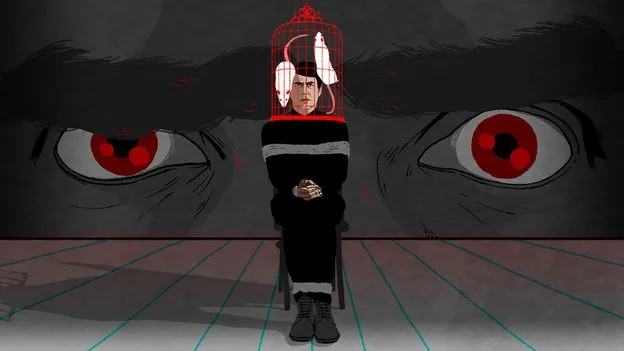
For decades, commentators have hailed George Orwell's seminal novel Nineteen Eighty-Four as a chillingly accurate forecast of domestic surveillance and state oppression. Yet in recent years, a different facet of his dystopian masterpiece has surged to the fore: its stark vision of a world fractured into perpetually warring superstates.
A Tripolar World No Longer Feels Like Fiction
Orwell's fictional world of Oceania, Eurasia, and Eastasia – three totalitarian blocs locked in a shifting balance of power – was once dismissed by some critics as an obsolete relic. Today, that framework appears startlingly relevant. The opening years of this decade have been marked by seismic geopolitical shifts that mirror Orwell's grim prophecy.
In 2022, Vladimir Putin launched Russia's full-scale invasion of Ukraine, reasserting imperial ambitions. The start of 2026 saw the United States, under the second term of Donald Trump, mount a raid in Venezuela. Concurrently, Xi Jinping consistently reaffirms China's intent to achieve "reunification" with Taiwan, by force if necessary. Observers now frequently draw parallels between these powerful, centralising figures and Orwell's omnipresent Big Brother.
As American historian Alfred McCoy posed in a 2025 Foreign Policy essay: "Is 2025 the New 1984?" This sentiment was echoed in a Bloomberg report on a Trump-Putin summit, headlined "It Looks Like a Trump-Putin-Xi World, But It’s Really Orwell’s". In The Atlantic, journalist Anne Applebaum opened 2026 by warning that while "Orwell’s world is fiction, some want it to become reality," noting a dangerous appetite for spheres of dominance.
The Literary and Historical Roots of Orwell's Vision
Scholars have long traced the influences on Orwell's depiction of life inside Oceania to earlier dystopian works like Jack London's The Iron Heel and Yevgeny Zamyatin's We. However, the inspiration for his tripolar global structure is less clear in fiction. While H.G. Wells' The War in the Air (1908) depicted a multi-polar conflict, the most compelling sources lie in Orwell's own experiences and non-fiction reading.
Orwell's deep, critical engagement with three oppressive systems – capitalism, fascism, and Soviet communism – shaped his worldview. His time in the colonial police in Burma bred a disgust for empire. Fighting in the Spanish Civil War exposed him to the brutal betrayals within the anti-Franco coalition, where allies became enemies overnight.
Key historical events also left their mark. The 1939 Nazi-Soviet pact and its subsequent rupture in 1941 demonstrated how ideological rivals could swiftly align and just as quickly turn on each other. Biographer D.J. Taylor highlights a pivotal 1943 news story: reports of Roosevelt, Stalin, and Churchill discussing the post-war carve-up of the world into spheres of influence at the Tehran Conference. This, Taylor suggests, may have been a direct inspiration.
Why 1984's Geopolitical Warning Resonates Now
The enduring power of Nineteen Eighty-Four as a tool for political commentary stems from its dual relevance. It remains the definitive text on the repression of dissent and the corruption of language through propaganda like Newspeak. Yet its current potency equally lies in its framework for understanding the precarious, alliance-driven tensions defining the 2020s.
Social media is now awash with maps and commentary envisioning a world split into a Chinese-dominated Asia, a Russian-dominated Europe, and a US-dominated Western Hemisphere – a vision that uncannily reflects Orwell's three superstates. The novel's portrayal of perpetual, managed conflict between shifting power blocs offers a lens through which to view today's volatile international landscape, proving that Orwell's foresight extended far beyond the telescreen.