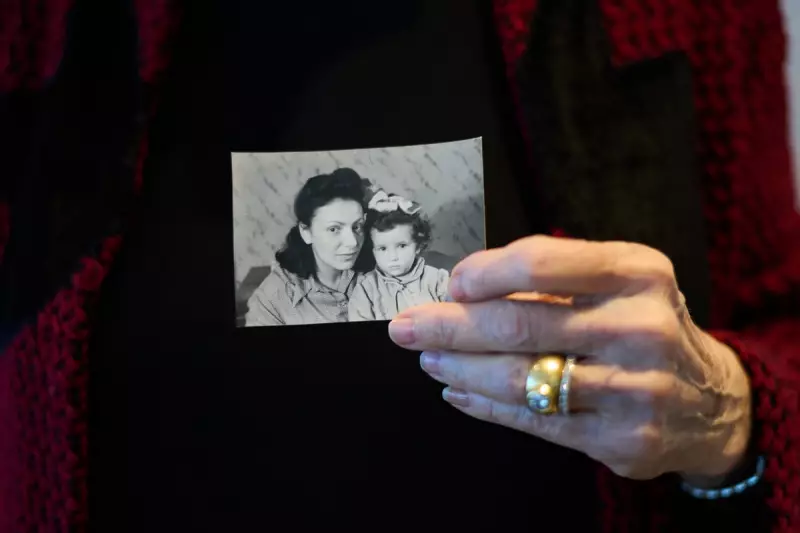
Ilana Kantorowicz Shalem, now 81 years old, has emerged as one of the youngest living Holocaust survivors after being born into the notorious Bergen-Belsen concentration camp in March 1945. Her remarkable survival story, kept private for decades, is now being shared publicly for the first time as the number of Holocaust survivors dwindles worldwide.
A Birth Amidst Chaos and Liberation
Ilana entered the world on 19 March 1945, during the final chaotic weeks before British troops liberated Bergen-Belsen. Her birth occurred just thirty days before the camp's liberation, a timing that proved crucial to her survival. During the Nazi leadership's disarray as World War II drew to a close, newborn infants would typically have faced immediate execution under normal camp conditions.
Mother's Extraordinary Concealment
Ilana's mother, Lola Kantorowicz, successfully hid her pregnancy throughout her imprisonment. This was tragically possible because most prisoners at Bergen-Belsen suffered from severely distended bellies due to prolonged starvation, effectively masking Lola's condition. "If they discovered she was pregnant, they would have killed her," Shalem revealed about her mother's desperate situation.

Lola had endured multiple camps including Auschwitz and completed a death march to Bergen-Belsen while carrying her unborn child. She concealed her pregnancy even from friends, fearing both the attention it might draw and the possibility that others might sacrifice their meager food rations for her.
Love and Survival in Darkest Times
Ilana's parents, Lola Rosenblum and Hersz (Zvi) Abraham Kantorowicz, first met as teenagers in the Tomaszow Ghetto in Poland. After informal marriage ceremonies in the ghetto, they maintained secret meetings in labor camps despite brutal conditions. "My mother said there was actually a lot of love in those places," Shalem recalled. "They used to walk along the river. There was romance."
Tragically, the couple was separated in 1944, with Hersz perishing in a death march just days before the war ended. Lola never remarried and held hope for years that her husband had survived, raising Ilana as their only child.
Unimaginable Birth Conditions
Yad Vashem archivist Sima Velkovich, who has researched Shalem's story, described the conditions as "unimaginable" for childbirth. "In March, the conditions were really awful, there were mountains of corpses," Velkovich noted. "There were thousands, dozens of thousands of people who were ill, almost without food at that time."
Remarkably, both mother and daughter survived their month in Bergen-Belsen before liberation, then spent two years in a nearby displaced persons camp before eventually moving to Israel where Hersz's parents had relocated before the war.
A Symbol of Hope for Survivors
In the immediate postwar months, baby Ilana became "everyone's child" in the refugee camp. "Actually, I was everyone's child, because for them, it was some kind of sign of life," Shalem explained. "Many, many women took care of me there, because they were very excited to be with a little baby."
Survivors referred to her as "a new seed" and a ray of hope during profoundly dark times. Historical photos show a smiling infant surrounded by attentive adults in the displaced persons camp.
Documentation and Historical Rarity
Yad Vashem, Israel's Holocaust museum and research center, has documented Ilana's birth with precise details including the hour she was born. While the museum has records of over 2,000 babies born at the Bergen-Belsen refugee camp between 1945 and 1950, Shalem knows of no other children born in the concentration camp itself who survived.
Breaking Decades of Silence
Shalem, who studied social work, began asking her mother questions during university in the 1960s when discussing Holocaust experiences remained taboo in Israeli society. "Now we know, in order to absorb trauma, we need to talk about it," Shalem observed. "These people didn't want to talk about it."
Her mother often faced disbelief when sharing her story of giving birth in a concentration camp, leading her to mostly stop telling it. Shalem has never publicly shared her mother's story until now, following Lola's death in 1991 at age 71.

Contemporary Relevance and Remembrance
Shalem's decision to speak out coincides with International Holocaust Remembrance Day observed on 27 January, the anniversary of Auschwitz-Birkenau's liberation. The United Nations General Assembly established this annual commemoration in 2005 to honour the approximately six million European Jews and millions of other victims murdered by the Nazis and their collaborators.
Current commemorations occur against a backdrop of rising antisemitism globally. Shalem draws parallels between historical and contemporary events, noting how survivors of the October 2023 Hamas-led attack on southern Israel immediately began sharing their experiences, unlike Holocaust survivors who often remained silent for decades.
Dwindling Numbers of Survivors
According to the Conference on Jewish Material Claims Against Germany, approximately 196,600 Holocaust survivors remain alive today, with nearly half residing in Israel. Nearly 25,000 survivors died last year alone, with the median age now reaching 87 years old. Shalem's decision to share her story gains urgency as firsthand accounts become increasingly rare.
As a mother of two daughters herself, Shalem reflects on her own pregnancies with renewed appreciation for her mother's extraordinary strength. "It's a situation that was very unusual, it probably required special strength to be able to believe," she said. "She wanted him to know me."
Her story serves as both a testament to human resilience and a poignant reminder of the importance of preserving historical memory as the generation that witnessed the Holocaust firsthand gradually disappears.