Goma's Precarious Existence One Year After Rebel Seizure
The strategic city of Goma in eastern Democratic Republic of Congo continues to exist in a state of profound uncertainty, marking one full year since falling under the control of the Rwanda-backed M23 rebel faction. This anniversary finds the urban centre still firmly in militant hands, with the group consolidating its authority while the civilian population grapples with economic devastation and shattered livelihoods.
Economic Paralysis and Banking Collapse
Perhaps the most visible symbol of Goma's transformed reality lies in its deserted banking district. Once bustling financial institutions now stand shuttered, their ATMs silent and signs dark. This systemic collapse has forced residents into almost complete dependence on mobile money transfer services—a survival mechanism that comes at a steep cost.
"Today, we pay up to 3.5% for each withdrawal," explains Grâce Omari, a resident of the Chaumage neighbourhood. "These are significant sums for families who have almost no income left." The closure of banks followed by the shutdown of Goma's international airport has crippled formal economic activity, plunging thousands of households into deepening poverty.

Surface Normalcy Masks Deepening Crisis
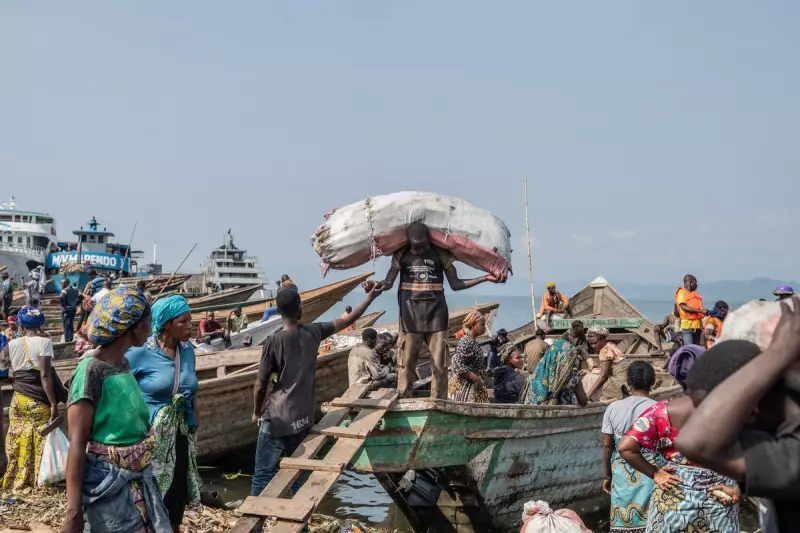
At Kituku Market, the city's main trading centre, crowds still gather on traditional market days. Local boats dock at the pier, unloading agricultural products from surrounding rural areas that quickly fill market stalls. Women sell vegetables, flour, secondhand clothing and basic necessities—but their movements appear mechanical, their gazes weary.
Espérance Mushashire, a 44-year-old mother of twelve who has sold vegetables for years, describes a stark deterioration: "We buy at high prices, but we hardly sell anything. Customers have no money left. Our children don't even go to school anymore." She remembers a time of dignified living that has evaporated under the current conditions.
Humanitarian Catastrophe and Displacement
The M23 represents the most powerful of over one hundred armed groups operating in mineral-rich eastern Congo near the Rwandan border. The protracted conflict has generated what United Nations agencies describe as one of the world's most severe humanitarian emergencies, with displacement figures exceeding seven million people.
In Goma's Mugunga neighbourhood, daily life unfolds with resigned quietness. "The situation deteriorated," says local resident Agathe Hanghi. "Before, I sold things, I earned money, and that allowed me to eat and get medical treatment. But now, there's no money left. All my savings are gone." Like countless families, Hanghi's children no longer attend school as priorities shrink to bare survival essentials.
Academic Analysis of Economic Collapse
At the university level, economics professor Deo Bengeya attempts to teach students how to analyse a situation that defies conventional economic models. He describes an economy paralysed by the absence of financial institutions, where recovery remains impossible without banking infrastructure.
"The economy of the city of Goma after its fall is in a very critical state," Bengeya told The Associated Press. "The purchasing power of the population has fallen, some residents have fled the city, wages have fallen, and unemployment has risen." His assessment paints a picture of economic stagnation where households consume existing resources without prospects for improvement.
Scars of Conflict and Uncertain Future
Physical scars from the January 2025 fighting between Congolese army forces and M23 militants remain visible throughout Goma, though daily life has gradually established a fragile rhythm. Markets function, people adapt—but genuine economic recovery appears distant. The banking sector's collapse has eliminated credit mechanisms, investment opportunities, and savings protection.
One year after Goma's fall to rebel forces, inhabitants move forward in incremental steps, sustained by a single certainty: the obligation to continue living despite profoundly uncertain futures. Their resilience persists even as the city hangs by a thread, caught between militant control and humanitarian desperation in one of Africa's most volatile regions.