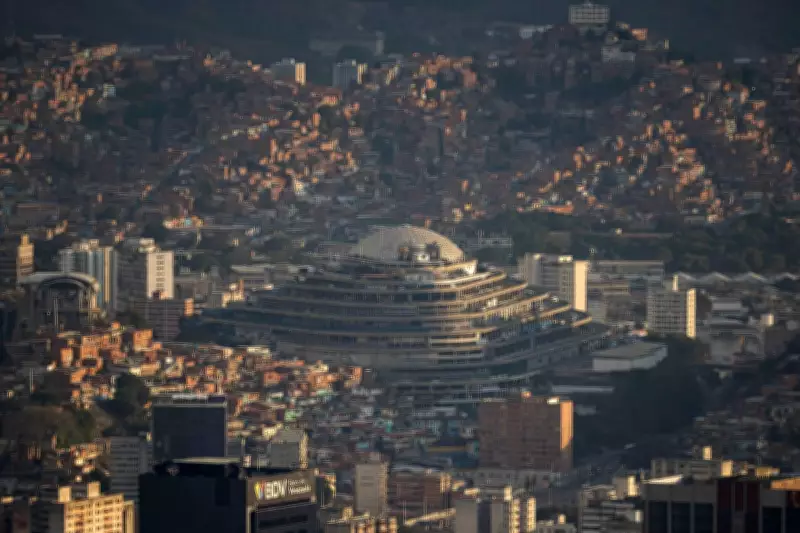
In a move that has ignited widespread discussion across Venezuela, Vice President Delcy Rodríguez has taken up residence in the Helicoide, a distinctive modernist structure located in the heart of Caracas. This decision, reported in early 2026, places Rodríguez at the centre of a building with a complex and controversial history, reflecting the deep political divisions within the nation.
The Helicoide: From Architectural Marvel to Political Flashpoint
The Helicoide, originally conceived in the 1950s as a futuristic shopping centre and symbol of progress, has never fulfilled its intended commercial purpose. Over the decades, it has served various roles, including as a detention centre during previous governments, which has imbued it with a dark legacy in the eyes of many Venezuelans. Its spiral design, once hailed as an architectural innovation, now stands as a stark reminder of the country's turbulent past and present struggles.
Rodríguez's Move Amid Economic and Social Turmoil
Rodríguez's relocation to the Helicoide comes at a time when Venezuela continues to grapple with severe economic challenges, including hyperinflation, widespread poverty, and a humanitarian crisis that has driven millions to emigrate. As a key figure in President Nicolás Maduro's administration, her choice of residence is seen by critics as a provocative act, symbolising the government's perceived detachment from the everyday hardships faced by ordinary citizens. Supporters, however, may view it as a reclamation of a national landmark, aligning with the socialist government's narrative of resilience and sovereignty.

The building's location in Caracas, the capital city, further amplifies its significance. Caracas has long been a battleground for political ideologies, with protests and tensions frequently erupting in its streets. Rodríguez's presence in the Helicoide could be interpreted as a strategic move to assert control and visibility in this volatile urban landscape.
Public Reaction and Symbolic Interpretations
Reactions to the news have been polarised, mirroring Venezuela's broader political climate. Opponents of the Maduro regime argue that Rodríguez's occupancy of the Helicoide underscores the administration's authoritarian tendencies and its willingness to repurpose spaces associated with past repression. In contrast, government allies might frame it as a step towards revitalising underutilised infrastructure, potentially for state purposes.
This development also raises questions about the future use of the Helicoide. Will it become a governmental hub, a private residence, or something else entirely? Its history as a site of detention adds layers of irony and controversy, particularly given Rodríguez's role in a government accused of human rights abuses by international observers.
Broader Implications for Venezuela's Political Landscape
Beyond the immediate symbolism, Rodríguez's move highlights the ongoing power struggles within Venezuela. As the country faces international sanctions and internal dissent, such actions can be seen as efforts to consolidate power and project strength. The Helicoide, with its unique architecture and fraught past, serves as a potent metaphor for Venezuela's journey from mid-century optimism to contemporary crisis.
In summary, Delcy Rodríguez's decision to inhabit the Helicoide is more than a personal relocation; it is a politically charged statement that resonates deeply in a nation divided by ideology and hardship. As Venezuela navigates its complex challenges, this event underscores how physical spaces can become focal points for broader debates about governance, history, and national identity.