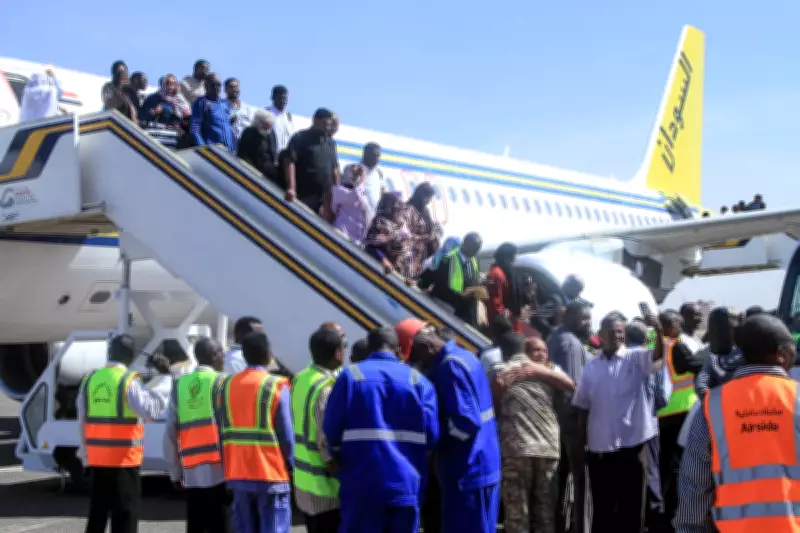
A commercial flight has successfully landed in Sudan's capital, Khartoum, representing only the second such arrival since a catastrophic war erupted across the northeastern African nation nearly three years ago. This development signals a tentative move towards restoring normalcy in a city ravaged by prolonged conflict.
Historic Touchdown at Khartoum International Airport
The domestic service, operated by the national flag carrier SUDANAIR, touched down at Khartoum International Airport on Sunday afternoon, as confirmed by the state-run SUNA news agency. The aircraft had departed earlier that morning from Port Sudan, the eastern Red Sea city which functioned as the interim government seat until the administration relocated back to Khartoum earlier this year.
The reopening of Khartoum International Airport is widely regarded as a vital and symbolic step within the government's broader strategy to normalise daily life in the capital. Khartoum has endured severe devastation due to the ongoing, brutal conflict between the Sudanese military and the powerful paramilitary Rapid Support Forces (RSF).

A Precarious Path to Reopening
Sunday's landmark arrival follows a previous commercial flight operated by the privately owned Badr Airlines, which managed to land at the airport in October last year. That earlier attempt was marred by significant security threats, with the RSF launching drones in a deliberate effort to disrupt the government's initial push to reopen the critical facility. This hostile action occurred after the military had retaken control of Khartoum from the paramilitary group earlier in the year.
The airport itself suffered extensive damage during the first weeks of the war, which began in April 2023 when a long-simmering power struggle between the military and the RSF erupted into open, widespread fighting across Khartoum and other regions of Sudan.
The Devastating Human Cost of Conflict
The war has exacted a horrific human toll. According to United Nations figures, the conflict has killed more than 40,000 people, though numerous aid groups contend this number is a significant undercount, with the true death toll potentially being many times higher.
Furthermore, the fighting has precipitated the world's largest current humanitarian crisis, forcibly displacing over 14 million people from their homes. The collapse of infrastructure and services has fueled dangerous disease outbreaks and pushed several areas of the country towards famine conditions.
International Investigations into Alleged Atrocities
Amidst this backdrop of suffering, international legal bodies are actively investigating alleged crimes. During a briefing at the U.N. Security Council on 20 January, deputy International Criminal Court prosecutor Nazhat Shameem Khan stated her office is investigating alleged crimes committed by the RSF in al-Fashir.
Khan indicated the investigation has a particular focus on violence targeted against women, girls, and children. Based on evidence gathered so far, her office believes that war crimes and crimes against humanity occurred in the city in late October during the culmination of the RSF's siege of al-Fashir.
The resumption of commercial air travel to Khartoum, while a positive logistical development, occurs within a context of immense ongoing human suffering and complex security challenges. The airport's operational status remains fragile, symbolising both a hope for recovery and the deep scars left by nearly three years of devastating warfare.