Supernanny host Jo Frost has issued a stern warning to parents, saying it is 'worth listening to'. In a recent Instagram post, the parenting expert acknowledges that 'your child is special to you', but urges parents not to teach them that they are 'more special than anyone else'. She claims children raised with this belief will 'struggle' as they grow up.
What Jo Frost said
In the social media video, Frost says this is something she sees and asks parents: 'Do you teach them how to lose a game? Do you teach them how to accept someone else’s imaginary game at recess, even when it’s not their idea? Do you teach your child how to listen like every other child being asked to line up at school?' She also asks, 'Do you teach your child how to be sociable?'
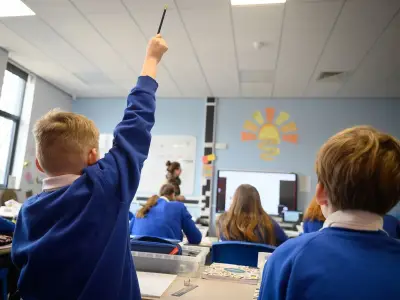
According to Frost, parents are letting down their kids if they do not. She continues: 'I’m seeing children struggling in school with others, not because they’re not capable, but because they haven’t been taught how to function alongside their own peers.' The TV star says children do not know how to take turns, wait, or not always be in control.
Reaction from parents and experts
Frost adds: 'Your child is special to you, but the moment we start teaching them that they are more special than anyone else, we’re going to be setting them up to struggle big time.' She emphasises: 'Life doesn’t work like that.' She urges parents to let kids lose in games, ensure they take turns, and make sure they have patience. 'Loving your child is a given, but doesn’t mean removing the lessons they need.'
By teaching them, Frost says children will be 'more confident and capable and secure in the world around them'. In the Instagram caption, she says this ensures children understand that other people matter, as well as themselves. Parents raising kids to think they are more special than others 'won’t serve them well in the real world'. She ends the post: 'Are you working on that parents? Jo x'
Commenters on the video had mixed reactions. @kaisa1974 commented: 'Prepare the child for the road, not the road for the child.' @lisa.waitwright.509 wrote: 'This is such an important message. My children have ASD and ADHD. I’ve never allowed this to make them feel any different from anybody else. I’ve spent many tough years teaching them how to cope with losing a game when they toss the board up, how to wait in a queue when they want to run off and how to follow other games they haven’t thought up themselves. Being consistent is key.'
She added: 'My children deal with life like everybody else and don’t ever use their condition to justify their mistakes. Those tough years paid off.' @jenn_olives, a teacher, said: 'As a teacher, I see this every day. It’s sad that these children are failing because their parents don’t want to hurt their feelings.'
But some pointed out it is not always simple, especially with children who have extra needs. On Facebook, Victoria Briggs said: 'Great advice for neurotypical children but I know my AuDHD [Autism and ADHD] grandson really struggles with some of this (although with good parenting he is getting better).' Yvonne Vieira asked: 'What about autistic children who lose temper easily and are physically aggressive or outwardly aggressive with things?' Ethan Antram asked: 'But how do the parents know what to teach them? Is there a checklist out there?'
Expert advice
Parenting specialist Kristy Ketley, with over 30 years' experience working with young children and their families, says: 'I think there is an important distinction between telling a child they are special and teaching them that they are more important than other people. So while Supernanny isn’t inherently wrong, those two things are not the same.'
Ketley tells Metro children need to know they are loved, valued, and special to their parents, because their sense of security is important. 'The problem comes when that message becomes, consciously or otherwise, “because you are special, your needs should always come first.” Children are still learning how to navigate a world that doesn’t revolve around them, and it takes practice.' She adds: 'A child can still have a voice; they can still question something and have their feelings acknowledged, but they need to while still understanding that other people have feelings and boundaries too.'
Ketley advises parents not to worry that saying 'no' or enforcing a boundary will damage confidence. She suggests: 'I know you’re disappointed, and you’re allowed to feel that way, but the answer is still no.' She explains: 'The aim isn’t to make children feel less special. It’s to help them understand that being special to their family doesn’t make them more important than everyone else.'
She also recommends modelling behaviour: 'Let children see you listen to other people, apologise, compromise, wait your turn and respect someone else’s “no”. Those everyday interactions teach children far more about consideration than a lecture ever will.'
Ketley concludes: 'And I don’t think parents should feel guilty about this. Most of us aren’t deliberately raising entitled children. We are parenting in a culture where there is a huge emphasis on making sure children feel heard and have their needs met. And while that’s a positive shift, we need to be mindful that children also need to learn that relationships are reciprocal: their needs matter, but so do everybody else’s. Ultimately, we aren’t raising children to be the centre of everyone’s world. We are raising them to be able to live well in a world that they share with other people.'