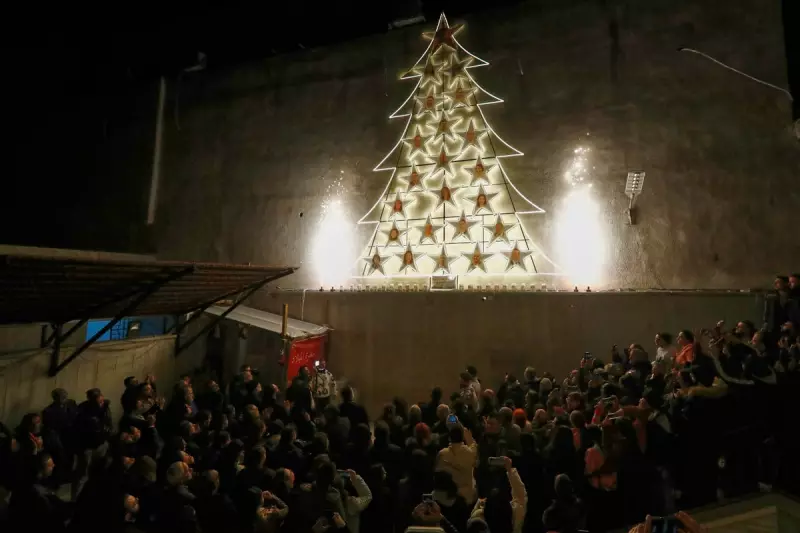
Hundreds of worshippers have gathered at a church in Syria for a poignant Christmas ceremony, months after a devastating suicide attack claimed 25 lives within its walls. The service at Mar Elias Church, a Greek Orthodox place of worship on the outskirts of Damascus, served as both a memorial for the lost and a powerful reaffirmation of faith.
A Ceremony of Remembrance and Resilience
On Tuesday evening, under the watch of a small security detail, the congregation held Mass. The focal point was the lighting of a neon Christmas tree image on the courtyard wall, a symbol of hope adorned with photographs of those killed in the June 22 attack. The assailant had opened fire before detonating an explosive vest inside the church, which was filled with Sunday worshippers.
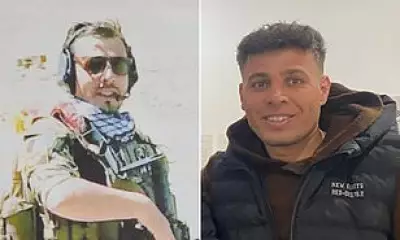
Among the honoured dead are three men hailed as heroes by the community: brothers Boutros and Gergis Bechara, and Milad Haddad. Congregants say they tackled the gunman, pushing him away from the centre of the church and likely preventing a far greater tragedy. "If it weren't for the three of them, maybe not one person would remain out of 400 people," said Imad Haddad, Milad's brother, who attended the tree lighting.

For many, like the widow of Boutros Bechara, Thana al-Masoud, the pain remains raw. She recalled frantically searching the aftermath of the blast, only to later learn her husband's body had been torn apart. "There's no holiday, neither this year nor next year nor the one after it," she said, drawing solace only from the belief that her husband died a martyr for his faith.
Attack Stoked Deep-Rooted Fears Among Minorities
The assault on Mar Elias was the first of its kind targeting a Syrian church in years. It occurred against a tense political backdrop, as a new Sunni Islamist-dominated government in Damascus attempts to win the confidence of the country's religious minorities following the ouster of former President Bashar al-Assad. While the government condemned the attack, many accuse it of failing to control the armed factions it is trying to integrate into state forces.
Authorities blamed an Islamic State cell for the June attack, alleging it had also planned to target a Shiite shrine. The incident has exacerbated fears within Syria's Christian community, which constituted roughly 10% of the pre-war population of 23 million. The brutal 14-year civil war saw the rise of extremist groups, leading to sectarian attacks, kidnappings, the destruction of churches, and the flight of hundreds of thousands of Christians. Many who remain are now once again seeking to leave.
Faith Solidified in the Face of Loss
Despite the fear and grief, some congregants say the violence has only strengthened their spiritual resolve. Hadi Kindarji described an intense spiritual experience during the explosion, hearing a voice say, "I will not forsake you and I will not leave you." He now believes the tragedy, however senseless it seemed, was part of a divine plan.
For others, like Juliette Alkashi, who lost her husband Emile Bechara in the attack, life has become numb. She had returned to Syria from Venezuela to marry him despite the ongoing conflict, embodying a fatalistic faith: "If one goes to pray and dies in the church — whatever God has written is what will be."
Father Yohanna Shehadeh, the priest of Mar Elias, acknowledged the pervasive fear, not just among Christians but all Syrians. As Christmas approaches, he said, the community's primary prayer is for peace. The ceremony, as Imad Haddad poignantly stated, was "a message of peace and love" and a declaration that "we are believers and we are strong and we are steadfast in spite of everything."