Recent Attacks Across Multiple States Highlight Elevated US Terrorism Threat During Iran Conflict
A series of ideologically motivated violent incidents across the United States over the past week has exposed a significantly heightened terrorism threat, raising serious questions about the nation's preparedness and security infrastructure. These concerning developments emerge as the United States finds itself engaged in direct conflict with Iran, placing additional strain on counterterrorism systems already weakened by significant personnel losses within key national security agencies.
Three Distinct Attacks Reveal Pattern of Ideological Violence
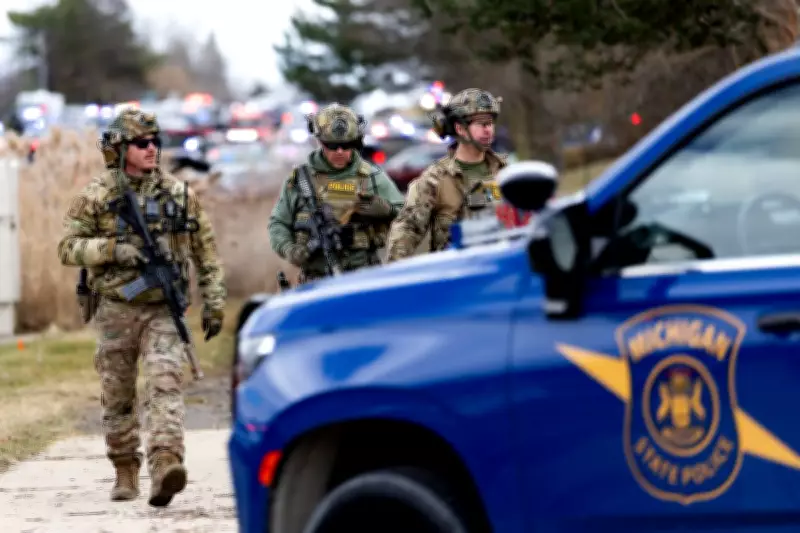
In New York City, two men reportedly inspired by Islamic State ideology brought powerful homemade explosive devices to a protest outside the mayoral mansion, demonstrating sophisticated planning capabilities among domestic extremists. Separately, in Michigan, a naturalized citizen originally from Lebanon deliberately rammed his vehicle into a synagogue before being neutralized by security personnel. Meanwhile, in Virginia, a man with previous terrorism convictions shouted religious phrases before opening fire at a university campus, with officials confirming the attack ended when students themselves killed the assailant.
These three separate incidents, occurring within days of each other across different geographical regions, collectively underscore what security experts describe as an elevated threat environment. The timing coincides with escalating military tensions between the United States and Iran, creating what former officials describe as a perfect storm of international conflict and domestic vulnerability.

Counterterrorism Infrastructure Under Strain
The FBI and Justice Department's national security divisions have experienced significant depletion of experienced personnel through firings, resignations, and reassignments over the past year. According to Frank Montoya, a retired senior FBI official who previously led the U.S. government's Office of the National Counterintelligence Executive, "So much experience has been decimated from the ranks. The folks that were best-positioned to get to the bottom of it before something really bad happened are in many cases no longer with the government."
This loss of institutional knowledge and expertise means that less experienced personnel assigned to monitor terrorism threats are "starting from way behind" according to Montoya, creating significant gaps in America's defensive capabilities. The Justice Department's National Security Division, established specifically to address terrorism threats, has seen approximately half of its counterterrorism prosecutors depart since the beginning of the previous administration, along with about one-third of its senior leadership.
Iran's History of Targeting American Soil
Iran has publicly vowed revenge for recent military actions against its leadership and has demonstrated both capability and willingness to conduct operations on American territory. The Islamic Republic maintains a documented history of plotting attacks and targeted killings within the United States, including disrupted assassination attempts against former officials. Most recently, a Pakistani business owner was convicted in New York for attempting to hire hitmen to assassinate public figures while allegedly following instructions from contacts within Iran's paramilitary Revolutionary Guard.
While much attention focuses on Iran's use of proxies and hired operatives, security officials express particular concern about the country's potential to inspire lone actor attacks that are notoriously difficult to prevent. The conflict has also extended into cyberspace, with hackers supporting Iran claiming responsibility for attacks against American companies, while the Justice Department has seized websites used by Iran to call for violence against dissidents.

The Persistent Challenge of Lone Actor Terrorism
Since the September 11, 2001 attacks, the United States government overhauled its intelligence and national security apparatus to prevent similarly catastrophic events. However, in subsequent years, lone actors radicalized through online channels have proven exceptionally difficult to detect and intercept before they strike. These self-directed individuals, operating without direct command structures, have carried out devastating attacks including the 2015 military site ambushes in Chattanooga and the 2016 Orlando nightclub shooting that claimed 49 lives.
Retired FBI official Edward Herbst emphasized the particular danger of such actors: "They're self-directed. That's what makes them really lethal. You never know when they're going to rise up. You never know when and where they're going to attack." Security concerns typically intensify during periods of international conflict when military actions overseas can serve as "accelerants" for domestic radicalization, according to former FBI national security official Claire Moravec.
Resource Diversion and Institutional Knowledge Loss
The diversion of experienced personnel and resources to meet other administration priorities has further complicated the counterterrorism landscape. Lawyers within the Justice Department's National Security Division have reportedly been reassigned to review unrelated files, while elite sections dedicated to prosecuting terrorists and catching spies have endured significant turnover. FBI Director Kash Patel has fired dozens of agents, including approximately a dozen who worked on counterintelligence investigations related to Iran cases.
Matthew Olsen, who led the National Security Division during the previous administration, stated publicly this week that "they are not as capable as they were a year and a half ago" and that "they've lost, forced out, fired, the most capable, the most experienced FBI agents, FBI officials and DOJ prosecutors, that were working on the Iran threat." In the specialized realm of national security, where experience and carefully cultivated source relationships are paramount, such abrupt personnel changes represent what former officials describe as a crushing blow to institutional capability.
The FBI issued a statement emphasizing that "agents and staff are dedicated professionals working around the clock to defend the homeland and crush violent crime" and that the agency "continuously assesses and realigns our resources to ensure the safety of the American people." However, security experts maintain that the combination of heightened international tensions, demonstrated domestic attack capabilities, and depleted counterterrorism resources creates what may be the most challenging security environment since the immediate post-9/11 period.