US Terror Threat Heightened Amid Iran Conflict as Attacks Rock Multiple States
A series of ideologically motivated attacks across the United States over the past week has exposed a significantly elevated terrorism threat, raising urgent questions about the nation's preparedness and counterterrorism capabilities. These incidents coincide with escalating US conflict with Iran, placing additional strain on security systems already weakened by substantial departures of experienced professionals from key agencies.
Three Coordinated Attacks Reveal Vulnerabilities
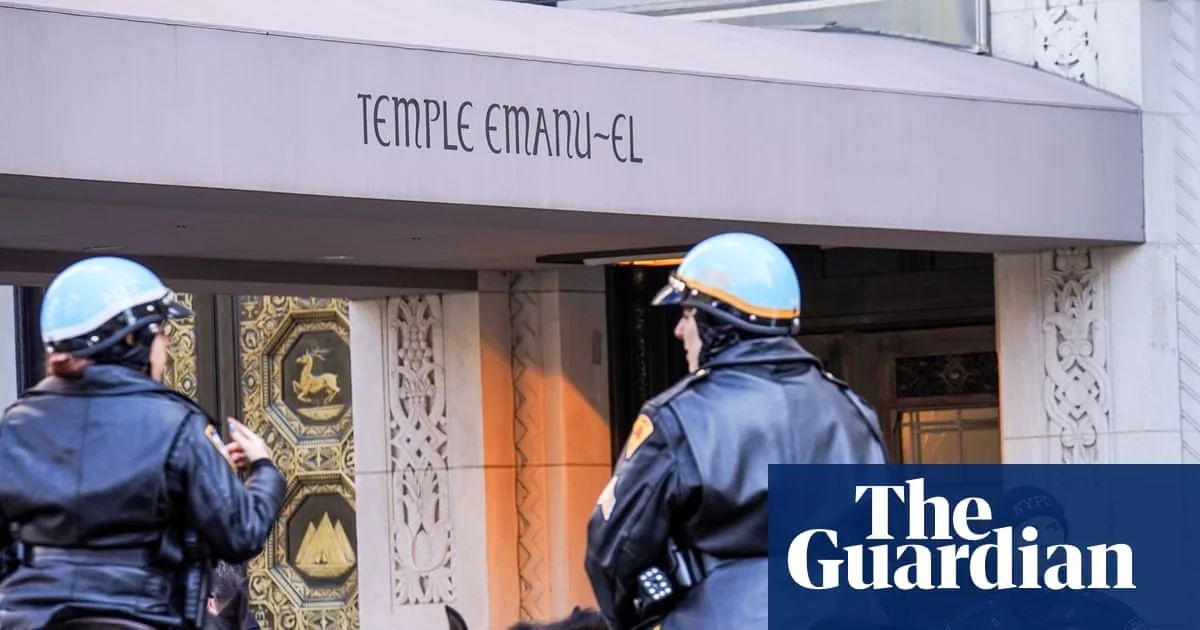
In New York City, two men reportedly inspired by Islamic State brought powerful homemade bombs to a protest outside the mayoral mansion, demonstrating sophisticated planning capabilities among domestic extremists. Meanwhile, in Michigan, a naturalised citizen from Lebanon deliberately rammed his vehicle into a synagogue before being neutralised by security personnel. Separately, in Virginia, a man with previous terrorism convictions shouted religious phrases before opening fire at a university campus, with students ultimately killing the assailant during the confrontation.
These three distinct acts of violence emerge as the United States finds itself engaged in direct conflict with Iran, creating a perfect storm of international tension and domestic vulnerability. The counterterrorism apparatus, already compromised by significant personnel losses at the FBI and Justice Department, now faces unprecedented challenges in monitoring and preventing potential threats.
Counterterrorism Capabilities Depleted by Personnel Losses
"So much experience has been decimated from the ranks," warned Frank Montoya, a retired senior FBI official who previously led the U.S. government's Office of the National Counterintelligence Executive. "The folks that were best-positioned to get to the bottom of it before something really bad happened are in many cases no longer with the government." This depletion means less experienced personnel assigned to monitor threats are "starting from way behind" in their understanding of complex security landscapes.
The FBI declined to comment specifically on personnel numbers and decisions but issued a statement emphasizing that "agents and staff are dedicated professionals working around the clock to defend the homeland and crush violent crime. The FBI continuously assesses and realigns our resources to ensure the safety of the American people."
Iran's History of Targeting US Soil
Iran has explicitly vowed revenge for recent military actions against its leadership, and while current fighting remains concentrated in the Middle East, the Islamic Republic has consistently demonstrated determination to execute violence on American territory. Iranian operatives previously responded to the 2020 assassination of General Qassem Soleimani with a disrupted murder-for-hire plot targeting then-national security adviser John Bolton.
Just last week, a Pakistani business owner was convicted in New York for attempting to hire hit men in 2024 for assassination plots targeting public figures, including then-presidential candidate Donald Trump, while allegedly following instructions from contacts within Iran's paramilitary Revolutionary Guard.
Though much attention focuses on Iran's use of proxies or hired operatives, the country's capability to organize large-scale assaults within the United States remains uncertain despite clear anxiety about the potential. The FBI recently warned law enforcement about Iran's aspiration to conduct drone attacks targeting California, though officials later clarified this intelligence was unverified and no specific plot was known to exist.
Cybersecurity Threats and Lone Actor Concerns
The conflict extends into digital realms, with hackers supporting Iran claiming responsibility for a cyberattack this week against US medical device company Stryker. Simultaneously, the Justice Department announced seizure of four websites Iran used to call for killings of dissidents.
Lone actors radicalized online present persistent challenges for security agencies. Since the September 11 attacks prompted massive intelligence overhauls, self-directed individuals have proven notoriously difficult to intercept, carrying out devastating attacks including the 2015 ambushes at military sites in Chattanooga and the 2016 Orlando nightclub shooting that claimed 49 lives.
"They're self-directed," explained retired FBI official Edward Herbst. "That's what makes them really lethal. You never know when they're going to rise up. You never know when and where they're going to attack."
Institutional Knowledge Erosion at Critical Agencies
The Justice Department's National Security Division, established in 2006 specifically to address terrorism threats, has seen significant erosion of expertise. Lawyers recently found themselves reassigned to review Jeffrey Epstein files rather than focusing on security threats, while elite sections dedicated to prosecuting terrorists and catching spies have endured substantial turnover.
Approximately half of the division's counterterrorism prosecutors have departed since the beginning of the Trump administration, along with about one-third of its senior leadership, according to estimates from Justice Connection, a network of department alumni. A Justice Department spokesperson maintained the division's "singular focus remains keeping the American people safe from threats foreign and domestic" and stated there are no known credible threats to the homeland.
FBI Director Kash Patel has fired dozens of agents, most recently about a dozen employees who worked on the counterintelligence investigation into Trump's retention of classified documents at Mar-a-Lago, including some with expertise on Iran cases.
"This is not an exaggeration to say that they are not as capable as they were a year and a half ago," stated Matthew Olsen, who led the National Security Division during the Biden administration. "They've lost, forced out, fired, the most capable, the most experienced FBI agents, FBI officials and DOJ prosecutors that were working on the Iran threat."
In national security operations where experience and source development prove vital, the loss of institutional knowledge and community relationships creates substantial obstacles. "There was no transition," Montoya noted regarding abruptly fired agents. "These guys were just walked out of the building. The new guys can call them and say, 'Hey, can you tell me what you were doing?' but even so, you're still introducing a brand new face into the equation."
While officials state there is no indication the recent attacks were explicitly motivated by the Iran conflict, international wars frequently function as "accelerants," raising the volume and intensity of grievances among disaffected individuals. The man who crashed into the Michigan synagogue reportedly lost four family members in an Israeli airstrike in Lebanon just last week, illustrating how international events translate into domestic security risks.