British and European authorities have launched a major joint investigation after a series of self-igniting parcels were discovered in the United Kingdom, Germany, and Poland. The Metropolitan Police have stated that a package of electric sex toys concealing incendiary devices, which caught fire in DHL depots in Britain and Germany, was sent by Russian military intelligence.
Incidents Across Europe
On July 22, 2024, a package caught fire at a DHL depot near Birmingham, while a second ignited at a centre in Leipzig, Germany. It has been revealed that the explosives were reportedly hidden within a shipment containing erotic gadgets and massage pillows, used as cover to smuggle highly dangerous incendiary devices onto cargo routes destined for Western Europe.
Official Statements and Investigations
The only official statement in the UK about the alleged plot was issued by counter-terror police, who confirmed a device had caught fire, nobody was injured, and it was dealt with by staff and the local fire brigade at the time. Sources previously suggested the package in Leipzig was also bound for the UK, though it remains unclear why the UK was the chosen destination for the two devices, originally shipped from Lithuania.

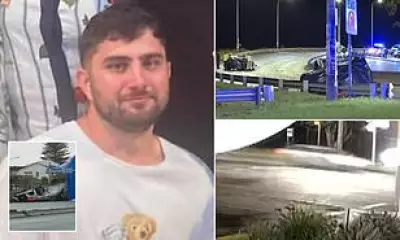
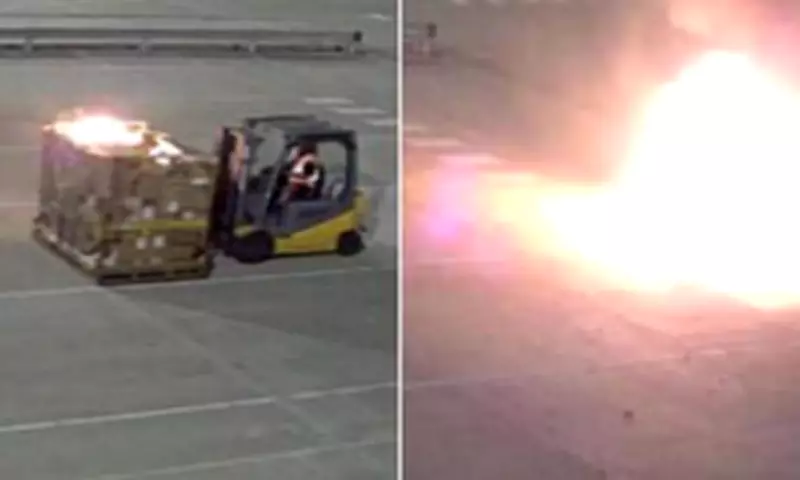
Authorities have identified 22 suspects in Lithuania and Poland likely to have been working on behalf of the Russian military intelligence services. Images released by the Wall Street Journal, provided by an unnamed European security official, appear to show the massage pillows, suspect, and the moment of the explosion.
Broader Plot and International Response
Four parcels were sent from Lithuania to addresses in the UK and Poland, according to the European Union agency Eurojust. Another parcel sent through a sorting centre in Germany caught fire at Leipzig airport, just before it was loaded onto an aircraft. Officials fear the consequences could have been far worse if any of the camouflaged devices ignited during a flight.
Investigators also identified two test packages that had been sent to the United States and Canada, as well as two parcels in Amsterdam intended for the same destinations. Two cases have now been sent to courts in Lithuania and Poland, with trials expected to happen later in the year.
Recruitment and Methods
The suspected perpetrators were recruited from Russia, Latvia, Estonia, Lithuania, and Ukraine, often in a vulnerable socio-economic situation, Eurojust said. They were recruited and given instructions through an online messaging service, with tasks divided among them and payments made in cryptocurrencies.
A 38-year-old Romanian man was arrested by counter-terrorism police over the Birmingham fire and remains under investigation. He was apprehended after arriving on a flight to the UK at Stansted Airport.
Government and Police Reactions
A Government spokesperson said: 'Russia's ongoing hostile action puts our national security at risk, which is why this Government has taken concerted action to deter their hostility - increasing defence spending, expelling intelligence officers, sanctioning the GRU, targeting their illicit finance, and ensuring many of their proxies are brought to justice.'
Deputy Assistant Commissioner Vicki Evans of Counter Terrorism Policing, said: 'The work of our European counterparts has been truly remarkable and demonstrates the critical need for us to work across borders, as well as the expertise of our colleagues overseas. The strength of cooperation in this case has led us to collectively identify what we believe to be Russian military intelligence involvement in a series of incidents across Europe.'
Technical Details and Denials
In November, the WSJ reported that the secretive weapons were electronic massagers modified with a flammable magnesium-based substance. Magnesium-related fires are notoriously challenging to put out and are worsened if water is applied. However, Russia has denied involvement in the alleged plot. 'These are traditional unsubstantiated insinuations from the media,' Kremlin spokesperson Dmitry Peskov told the US newspaper.

British police and officials, as well as their European counterparts in Germany, Poland, and Lithuania, strongly suspect that Russia was behind the attacks as part of an effort to cause mayhem in the west in retaliation for western military support to Ukraine. The head of Poland's foreign intelligence agency, Pawel Szota, previously blamed Russia, although the prosecutor's office statement did not name a foreign government suspected of directing the operations.