
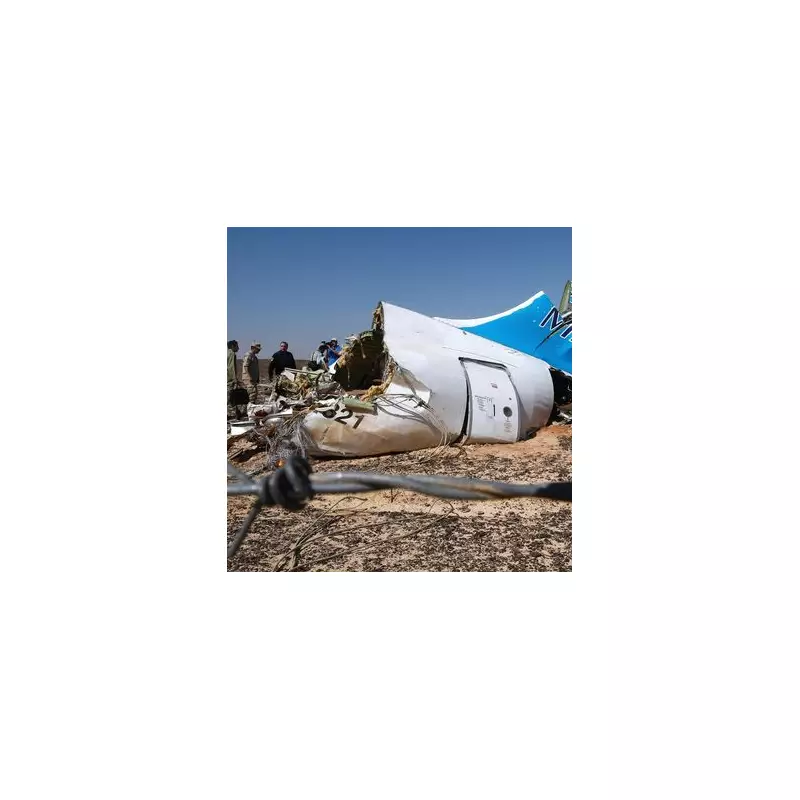
A decade after one of aviation's most devastating tragedies, a veteran expert has come forward with a chilling explanation for the mysterious mid-air explosion that tore apart a passenger plane minutes after takeoff from a popular British holiday destination.
The Fateful Morning That Ended 224 Lives
On October 31, 2015, at precisely 5:58 am, Metrojet Flight 9268 began what should have been a routine journey from Egypt's Sharm el-Sheikh airport to Russia. The Airbus A321 carried 224 passengers and crew members, including young families settling into their seats as the aircraft ascended into the clear morning sky.
Tragically, just 23 minutes into the flight, as the plane reached its cruising altitude of 31,000 feet, catastrophe struck. A massive explosion ripped through the aircraft's rear fuselage, tearing the plane apart in seconds and sending it into an uncontrolled dive towards the Sinai desert below.
The crash claimed every life on board, including 25 children, seven crew members, 212 Russian citizens, four Ukrainians, and one Belarusian national. Medical examinations later revealed that most passengers died from severe barotrauma - catastrophic damage caused by rapid changes in air pressure during the plane's disintegration.
Years of Uncertainty and Competing Theories
In the immediate aftermath, investigators scrambled to determine what caused one of history's deadliest aviation disasters. Early theories pointed toward technical failures, with Russian media reporting that the pilot had mentioned technical problems during ascent, though Egyptian officials denied any distress calls were made.
The Islamic State quickly claimed responsibility for the attack, publishing detailed accounts of how they allegedly carried out the bombing. However, Egyptian authorities never officially declared the incident a terrorist attack, leaving families of victims without closure and the aviation community searching for answers.
Other possibilities explored included fuel explosions, battery malfunctions, and even suspicions that airport employees might have smuggled explosives aboard working with terrorist organisations.
Veteran Expert's Bombshell Revelation
Now, ten years after the tragedy, veteran aviation expert Julian Bray believes he has uncovered the truth that investigators missed. In an exclusive interview with The Sun, Bray presented compelling evidence pointing squarely to terrorism.
"The whole tail section came off. There's definitely an explosion inside, and I tend to think there was a device on board," Bray stated unequivocally. "And it was terrorism. We have a fairly clued-up terrorist group taking responsibility for it."
Bray's analysis suggests terrorists used TNT concealed in luggage loaded onto the rear of the aircraft at the last moment. He explained that even a small bomb could cause catastrophic damage, sufficient to "fracture fuel lines, take out electrics, cause shorts, cause fires" - exactly the chain of events that would lead to the plane's rapid destruction.
The aviation specialist also detailed how terrorists could have detonated the explosive using either mobile phone technology or timing devices, methods consistent with known terrorist tactics at the time.
Unanswered Questions and Lasting Impact
Despite Bray's compelling theory, the official investigation never confirmed terrorism as the cause, leaving the case officially unresolved. The lack of definitive conclusions has haunted families of victims and raised ongoing concerns about aviation security, particularly at popular tourist destinations.
The tragedy prompted temporary flight bans and heightened security measures at airports serving British holidaymakers, but Bray's revelations suggest the full truth about what happened that October morning may have been overlooked by initial investigators.
As the aviation community reflects on this decade-old tragedy, Bray's analysis provides both closure and concerning insights into how such catastrophic security failures could occur - lessons that remain critically relevant for aviation security today.