A Decade of Healing: The Enduring Legacy of the Paris Attacks
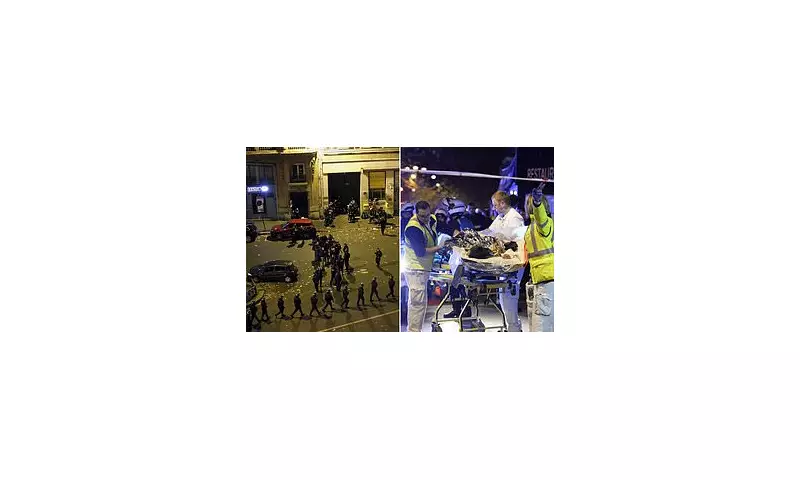
Ten years after the devastating coordinated terror attacks that shook Paris to its core, survivors and victims' families continue rebuilding their lives while carrying the permanent scars of that fateful night. On November 13, 2015, jihadist attacks targeting the Bataclan concert hall, cafes, restaurants, and the Stade de France stadium claimed 130 lives in the French capital, leaving hundreds more physically and psychologically wounded.
Living with Visible and Invisible Scars
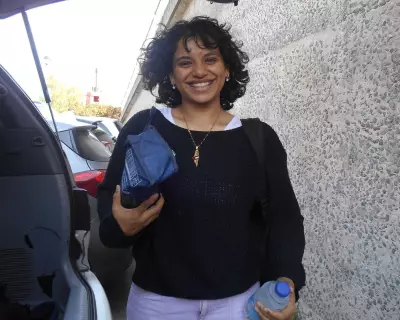
Eva, a 35-year-old Parisian who publicly shared her story for the first time, bears both physical and emotional marks from the attack at the Belle Equipe restaurant. "I have a huge scar on my arm," she revealed, explaining that during summer, she feels strangers staring and has considered reconstructive surgery, though she notes "on black skin, it's complicated." Despite the challenges, she's reached a point of acceptance: "It's been 10 years, it's part of me."
The memory of the "terrifying silence" between bursts of gunfire remains vivid for Eva, who was celebrating her best friend's birthday when Islamic State group jihadists gunned down 21 people on the terrace. Hit by multiple bullets on her left side, including her foot, Eva ultimately required amputation below the knee. Today, wearing a prosthesis, she says she's doing "pretty well," though acknowledging "life isn't easy every day." While she still enjoys Parisian cafe culture, she will "never again" sit with her back to the street.
For many survivors like Bilal Mokono, the anniversary brings particular dread. "It haunts us," said Mokono, who uses a wheelchair after being wounded by a suicide bomber near the Stade de France. He has "slept badly" ever since that night, suffering from deafness in his left ear and a "very fragile" right arm alongside the loss of his legs.
The Ongoing Struggle with Loss and Memory
Sophie Dias, daughter of Manuel Dias—the only person killed in the stadium attack—expressed fear that memories of her "one-of-a-kind dad" might fade. "We feel his absence every day," she shared, emphasizing the importance of marking the decade anniversary.
Not all relatives share this perspective. Fabien Petit, brother-in-law of Nicolas Degenhardt who was gunned down at the Bonne Biere cafe at age 37, believes people must eventually move forward. "We can't just relive November 13 over and over," he said, noting numerous other tragedies occurring in France and worldwide. Though doing "better" after battling "dark thoughts," Petit still tears up recalling the tragedy, though he found some closure through the subsequent trial.
The 10-month trial in 2021 and 2022 resulted in life imprisonment for Salah Abdeslam, the only surviving member of the attackers' group. For many affected by the attacks, this legal process provided a measure of justice and healing.
Finding Solace Through Expression and Community
Many survivors and families have discovered healing through creative expression and building connections with others who understand their experience. Aurelie Silvestre, whose partner Matthieu Giroud was among the 89 people killed at the Bataclan, authored a book about the trial. "I feel like writing allows me to collect some of the debris and piece it back together," said Silvestre, who was pregnant when her partner was murdered.
Now raising two children alone, Silvestre attends gatherings with other victims' families, noting that "80 percent of my emotional landscape is made up of victims" with whom "we can laugh really hard, and we can cry too."
Tragically, some survivors ultimately lost their battles with psychological wounds. Chemist Guillaume Valette and graphic novelist Fred Dewilde both took their own years after the attacks. "I will never forget the sound of those machine guns," Valette had confided to his parents, who remember their son as having "lost his smile" before his death in a psychiatric facility.
Following determined advocacy by Valette's parents, both men were officially recognized as additional victims of the attacks, with their names now engraved on commemorative plaques as the 131st and 132nd victims.
The Long Road to Recovery and Remembrance
According to psychiatrist Thierry Baubet, resources for treating psychological trauma in France have improved since 2015 but remain limited in some regions. "Even today, there are victims of the November 13 attacks who are struggling and have not sought care," he told AFP, noting that many fear "not being understood." His important message to survivors: "It is never too late" to seek help.
For Eric Ouzounian, whose 17-year-old daughter Lola died at the Bataclan, a therapist's prediction that he would "never move on and will always feel alone" has proven accurate. "Ten years later, it's still true. You don't recover from the loss of a child," the 60-year-old journalist stated.
Ouzounian has been vocal in his criticism of French policies he believes contributed to the circumstances leading to the attacks, citing "zones of despair" in French neighbourhoods and "disastrous" foreign policy in the Middle East that "put the country in danger."
Former president Francois Hollande, who led France during the attacks, reflected that the jihadists had targeted "freedom, living together, pluralism. That's what terrorists can't stand."
Research by historian Denis Peschanski indicates that while the Bataclan remains strongly associated with the attacks, public memory of other targeted sites has faded over time. Roman, a 34-year-old survivor of the Belle Equipe restaurant attack who withheld his surname, has chosen to speak out precisely so people remember all locations affected. "Sometimes, we feel forgotten," he admitted.
Roman has channeled his experience into his work as a teacher, explaining: "I told myself that teaching history and geography was important, not only to prevent this from happening again, but also to pass on to young people what happened to us."
A decade later, the community of survivors and victims' families continues navigating their complex journey of remembrance, healing, and advocacy—ensuring that those lost are never forgotten while finding ways to move forward with resilience and purpose.