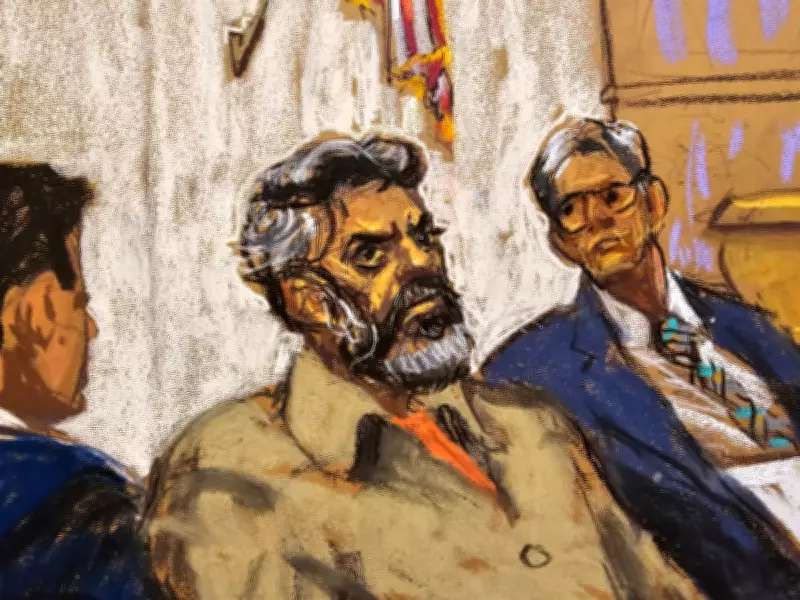
In a dramatic courtroom appearance, a Pakistani businessman accused of plotting to assassinate former US President Donald Trump has claimed he was coerced into the scheme by Iran's Revolutionary Guard Corps, who allegedly threatened his family to secure his participation. Asif Merchant, 47, took the stand in his own defense at Brooklyn federal court on Wednesday, where he faces serious terrorism and murder-for-hire charges related to the alleged conspiracy.
Testimony Reveals Alleged Coercion and Threats
Speaking through an Urdu translator, Merchant told jurors he only went along with the plot out of fear for his wife and adopted daughter living in Tehran. "I was not wanting to do this so willingly," he testified, describing how Iranian officials had allegedly pressured him into participating in what prosecutors describe as a dangerous terrorist scheme.
Details of the Alleged Plot
According to Merchant's testimony, his Iranian handler—identified as Revolutionary Guard official Mehrdad Yousef—directed him to travel to the United States in 2024 and recruit criminals to carry out a four-part operation. This operation allegedly included staging protests, stealing documents, laundering money, and ultimately arranging a murder. While Yousef supposedly didn't initially specify a target, he reportedly named three potential victims: Donald Trump, then-President Joe Biden, and former Republican presidential candidate Nikki Haley.

In a crucial development, the supposed hitmen Merchant eventually paid $5,000 in rubber-banded cash turned out to be undercover FBI agents. A recording played in court captured Merchant telling them he needed someone to "maybe, you can, say, kill someone"—a political figure whose identity he claimed he hadn't yet been given at that point.
Prosecution Challenges Defense Claims
Federal prosecutors have firmly rejected Merchant's account of coercion, telling the judge in a Wednesday filing that there was no evidence supporting a genuine duress defense. They noted that Merchant acknowledged knowing he was working with a designated terrorist organization and was recorded mapping out the plot on a napkin in a Queens hotel room, apparently unaware that surveillance cameras were rolling throughout the meeting.
Key Evidence and Arrest
The prosecution's case relies substantially on intelligence from Nadeem Ali, an acquaintance Merchant trusted who had been secretly working as an FBI informant throughout the investigation. Merchant was eventually arrested on July 12, 2024, in Texas as he prepared to fly back to Pakistan, concluding what authorities describe as a months-long investigation into the alleged plot.
Broader Geopolitical Context
The trial opened last week against the backdrop of escalating tensions between the United States and Iran. Just before proceedings began, the US and Israel launched strikes on Iran that killed Supreme Leader Ayatollah Ali Khamenei and reportedly more than 1,000 others, according to human rights monitors. On Wednesday, Pentagon Secretary Pete Hegseth confirmed that a US strike had also killed the Iranian official the Trump administration says ran the 2024 assassination plot against the president.
It remains unclear whether that person was connected to the alleged handlers Merchant claims to have been speaking with. Trump himself alluded to the alleged plot when commenting on Khamenei's death, telling ABC News: "I got him before he got me." Meanwhile, Iran has consistently denied targeting Trump or other American officials, creating a complex geopolitical narrative surrounding the courtroom proceedings.
Merchant's Awareness of Surveillance
Merchant told jurors he knew the game was up almost immediately after landing in the United States. When immigration agents pulled him aside in Houston, searched his bags, and combed through his electronic devices, he said he realized he was already under surveillance. Despite this awareness, he claimed he pressed forward with the alleged plot because he believed Iranian intelligence was monitoring his every move and would harm his family in Tehran if he wavered or abandoned the scheme.

The trial continues as both sides present their cases, with Merchant's defense relying heavily on his claims of coercion while prosecutors emphasize what they describe as clear evidence of willing participation in a terrorist conspiracy. The outcome could have significant implications for US-Iran relations and counterterrorism efforts moving forward.