Australian police have concluded there is no evidence that the two men accused of a deadly mass shooting at a Jewish festival in Sydney were part of a "broader terrorist cell." The announcement follows an extensive investigation that reached into the Philippines.
Investigation Traces Movements to the Philippines
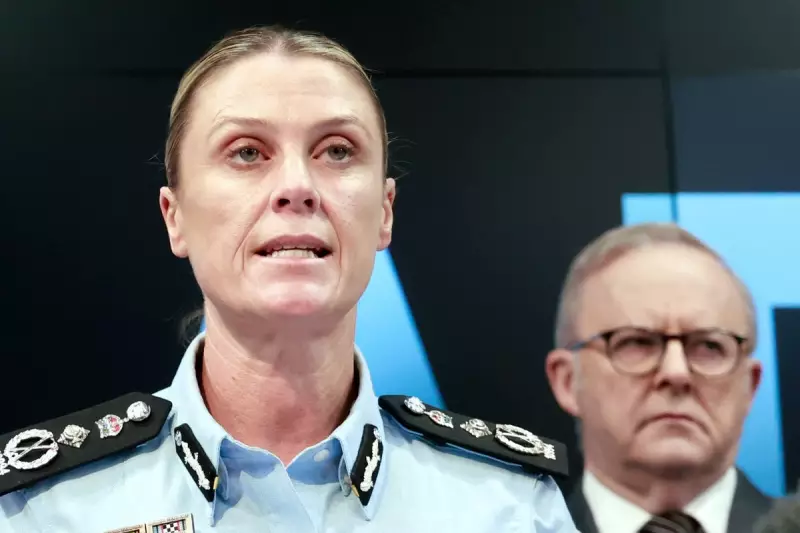
Australian Federal Police Commissioner Krissy Barrett stated on Tuesday that Sydney residents Sajid Akram, 50, and his 24-year-old son Naveed Akram spent most of November in Davao City in the southern Philippines. They returned to Australia on a flight from Manila on November 29.
Two weeks later, on December 14, the pair are alleged to have carried out a mass shooting at a Hannukah festival on Bondi Beach. The attack resulted in 15 people killed and another 40 wounded.

Commissioner Barrett revealed that the Philippine National Police determined the father and son rarely left their hotel during their visit. "There is no evidence to suggest they received training or underwent logistical preparation for their alleged attack," Barrett told reporters.
Acting Alone, But Motive Unclear
Barrett was emphatic that the evidence points to the pair acting independently. "These individuals are alleged to have acted alone. There is no evidence to suggest these alleged offenders were part of a broader terrorist cell, or were directed by others to carry out an attack," she said.
However, she added a significant caveat: "I am not suggesting that they were there for tourism." The precise motive for the Philippine trip, which began on November 1, remains undetailed by authorities.
Police allege the pair were inspired by the Islamic State group. The southern Philippines has historically drawn small numbers of foreign militants aligned with Islamic State or al-Qaida due to local secessionist conflicts.
Barrett noted she was limited in what she could disclose about the overseas investigation to avoid prejudicing the upcoming trial of Naveed Akram. He faces dozens of charges, including 15 counts of murder and one of committing a terrorist act. He was shot in the abdomen by police during the Bondi gunfight and hospitalised before being transferred to prison. His father was shot dead at the scene.
Heightened Security for Sydney's New Year
In the wake of the attack, authorities are deploying unprecedented security measures for Sydney's New Year's Eve festivities. More than 2,500 officers will be on duty at Sydney Harbour, with many openly carrying automatic rifles—a rare sight on the city's streets.
This response comes after it emerged that the first police responders to the Bondi massacre were armed only with Glock pistols, which lacked the lethal range of the Akrams' rifles and shotguns. Two police officers were among the wounded.
New South Wales Premier Chris Minns defended the heightened security posture, acknowledging the attack was "the worst terrorism event in Australia's history" in recent times. "I understand that there'll be some people that oppose this or regard it as the militarization of the police. My sense is far more families would fully support that kind of police operation because they will feel far safer in that environment," Minns stated.
He expressed concern that any reduction in the expected crowd of over one million revelers would be seen as a victory for extremists. "It's an opportunity to thumb our nose at the terrorists and their ideology," Minns said.
The Bondi victims will be commemorated during the celebrations with a one-minute silence at 11 p.m. on Wednesday. Sydney Lord Mayor Clover Moore said four images of a menorah would be projected onto the Sydney Harbour Bridge's pylons, a plan changed from projecting a dove after consultation with Jewish representatives.