The Israeli military has made a significant claim regarding the recent attack on a synagogue in Michigan, stating that the brother of the perpetrator was a Hezbollah commander involved in managing weapons and launching rockets against Israeli civilians. This revelation comes amid escalating tensions in the Middle East and heightened security fears in the United States.
IDF Allegations and Hezbollah Response
In a statement posted on social media platform X, the Israel Defense Forces (IDF) asserted that Ibrahim Mohamad Ghazali, brother of Ayman Mohamad Ghazali, served as a commander within a specialized branch of Hezbollah's Badr unit. The IDF further claimed that Ibrahim Ghazali was eliminated in an Israeli air force strike on a Hezbollah military structure last week.
Separately, a Hezbollah official reportedly confirmed to the New York Times that Ayman Ghazali's attack on Temple Israel in West Bloomfield Township, Michigan, was an act of revenge for the loss of four family members during an Israeli military strike in Lebanon on March 5. However, this official neither confirmed nor denied the IDF's claim regarding Ibrahim Ghazali's role in Hezbollah.

Details of the Michigan Synagogue Attack
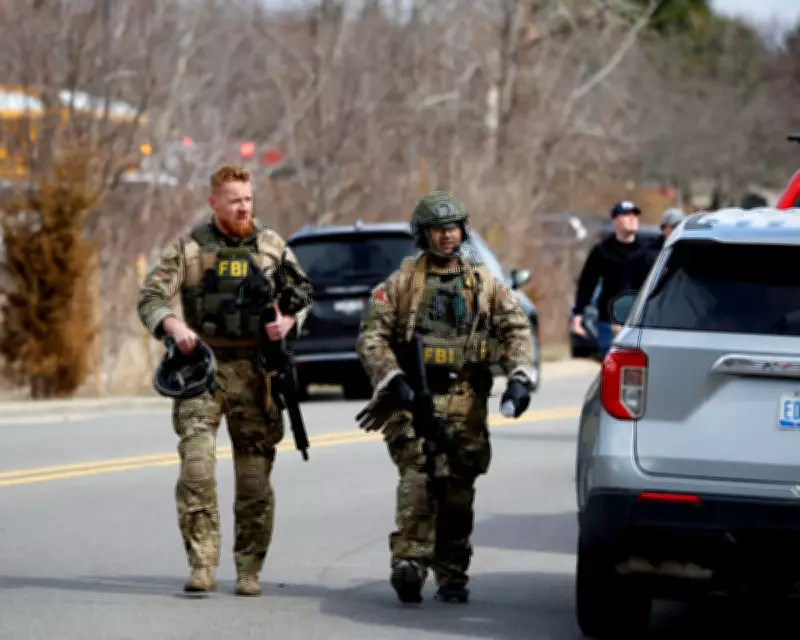
Ayman Ghazali, a naturalized US citizen born in Lebanon, carried out the attack on Thursday by driving his Ford F-150 truck into Temple Israel, one of the largest synagogues in the country. The synagogue had previously enhanced its security measures in response to past attacks on places of worship and antisemitic incidents.
Upon entering the building, Ghazali opened fire through his windshield in a hallway. An armed private security guard returned fire, leading to an exchange in which the guard was injured. The truck's engine caught fire, igniting several jugs of gasoline and fireworks in its bed. Ultimately, Ghazali shot himself to death. Remarkably, none of the 103 children and nearly 50 teachers, clergy, and staff members inside were injured.
Background and Motivations
According to Imam Hassan Qazwini of the Islamic Institute of America, Ayman Ghazali attended a memorial for his slain family members at a mosque in Dearborn Heights, Michigan, on March 8. The family members lost in the March 5 Israeli strike included Ibrahim Ghazali, Ayman's two children, and another brother.
The IDF described the target of the March 5 strike in Mashgharah, Lebanon, as a Hezbollah military structure used for storing weapons and hosting operatives. Lebanese officials reported that the airstrike hit a three-story building, seriously wounding Ibrahim Ghazali's wife.
Escalating Conflict and US Security Concerns
Fighting between Israeli and Hezbollah forces has intensified since the US and Israel began a war in Iran on February 28, following the death of Iranian supreme leader Ayatollah Ali Khamenei in a missile strike. Hezbollah fired rockets into Israel on March 2, prompting Israeli airstrikes that Lebanon's health ministry estimates have killed approximately 800 people.
The Michigan attack has amplified concerns about revenge actions within the US stemming from the Middle East turmoil. US Senator Elissa Slotkin of Michigan praised the heightened security measures at Temple Israel, stating that they prevented a potential tragedy involving children. Michigan Governor Gretchen Whitmer also commended the security personnel for engaging the suspect.
On Sunday, Democratic US House member Adam Smith of Washington state warned on ABC's This Week that the conflict in the Middle East has exacerbated the potential for politically motivated lone wolf attacks on US soil. Smith, the top Democrat on the House armed services committee, emphasized the need for preparedness, noting that the war is spreading and impacting global security dynamics.
This incident underscores the interconnected nature of international conflicts and domestic security, highlighting the challenges faced by law enforcement and policymakers in safeguarding communities against evolving threats.