Four Suspects Arrested in London for Alleged Iranian Espionage Against Jewish Community
Four Arrested for Alleged Iranian Spying on UK Jewish Community

Four Suspects Arrested in London for Alleged Iranian Espionage Against Jewish Community

Four men have been taken into custody by the Metropolitan Police on suspicion of conducting espionage activities on behalf of Iran, specifically targeting locations and individuals connected to the Jewish community in London. The arrests occurred shortly after 1am on Friday, with counter-terrorism officers executing operations at addresses in Harrow, Watford, and Barnet.

Details of the Arrests and Police Operations

The suspects, aged 22, 40, 52, and 55, include one Iranian national and three dual British-Iranian nationals. They were detained on suspicion of assisting a foreign intelligence service, believed to be Iran. According to police sources, the investigation was initiated following a tip-off from a member of the Jewish community regarding the individuals' activities.

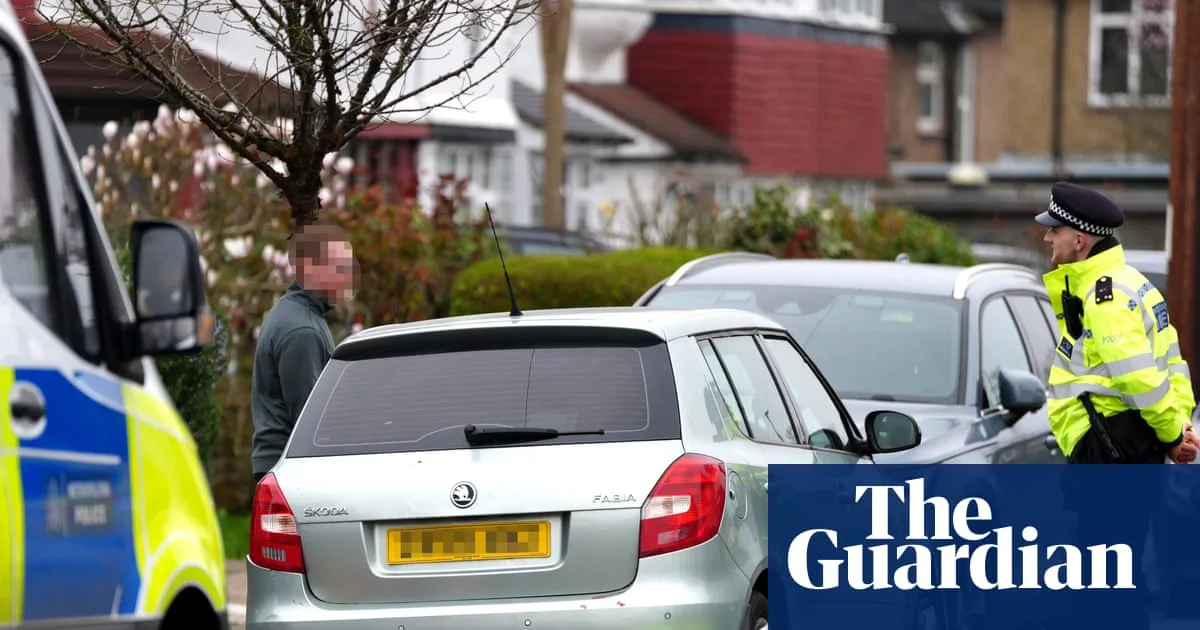
At a property on Brookdene Avenue in Watford, counter-terrorism officers were observed entering the premises, which was subsequently cordoned off with police tape. The front door had been forced open, and multiple police vehicles were stationed on the street. In Finchley, officers wearing blue gloves conducted a thorough inspection of a Skoda Fabia in Sandringham Gardens, checking its engine and undercarriage. Additionally, a semi-detached property on the same quiet street was entered by police, with a temporary cordon established to restrict traffic flow.

The Metropolitan Police declined to confirm or deny whether these properties were directly linked to the arrests when questioned by the Press Association. Searches are ongoing at the initial arrest locations, as well as at additional properties in Wembley and Barnet. In a related development, six other men were arrested in Harrow on suspicion of assisting an offender and have also been taken into custody.

Community Response and Security Concerns

Commander Helen Flanagan, Head of Counter Terrorism Policing London, addressed public concerns, particularly within the Jewish community, urging vigilance. "We understand the public may be concerned, in particular the Jewish community, and as always, I would ask them to remain vigilant and if they see or hear anything that concerns them, then to contact us," she stated.

Rabbi Herschel Gluck, president of Shomrim North and East London, noted that police patrols have been intensified since the onset of conflict in Iran. He emphasized the longstanding presence of Iranian cells in the UK, describing the arrests as unsurprising but potentially reassuring. "It certainly should reduce the concerns in the community. We have been aware for a long time of the danger of an attack from these cells, which there are a number of in this country, would exponentially increase in the situation we are in at the moment," Rabbi Gluck added.

The Community Security Trust (CST), a charity monitoring antisemitism in the UK, acknowledged the strong security measures across the Jewish community and expressed gratitude to Counter Terror Policing London, though it declined further comment.

Political and Legislative Implications

The arrests have reignited criticism of the UK Government's handling of Iranian threats. Campaign Against Antisemitism condemned the Government's "failure to keep its promise" to proscribe Iran's Islamic Revolutionary Guard Corps (IRGC) as a terrorist organisation. A spokesperson for the charity argued, "The UK may not be acting against Iran but Iran is acting against us. It is incredible that the Iranian threat, long recognised by British Jews and those paying attention, like the Intelligence and Security Committee of Parliament, is still not being taken seriously by the Government."

The statement further highlighted that the European Union listed the IRGC as a terror group in January, amid a deadly crackdown on protesters in Iran. This week, Liberal Democrat leader Sir Ed Davey called for emergency legislation to proscribe the IRGC, describing it as "more desperate and dangerous than ever." Prime Minister Sir Keir Starmer responded in the Commons, stating, "We are working 24/7 on dealing with any threats to this country. We don't comment on proscription, but we have made the case that there needs to be legislation to deal with state-backed terrorist groups, and we're looking into that."

This follows an announcement by then-home secretary Yvette Cooper in May 2025, who pledged to create powers for proscribing state-backed groups deemed a threat to Britain, based on recommendations from terror watchdog Jonathan Hall KC.