FBI Investigates Motive Behind Michigan Synagogue Attack by Lebanese-Born Citizen
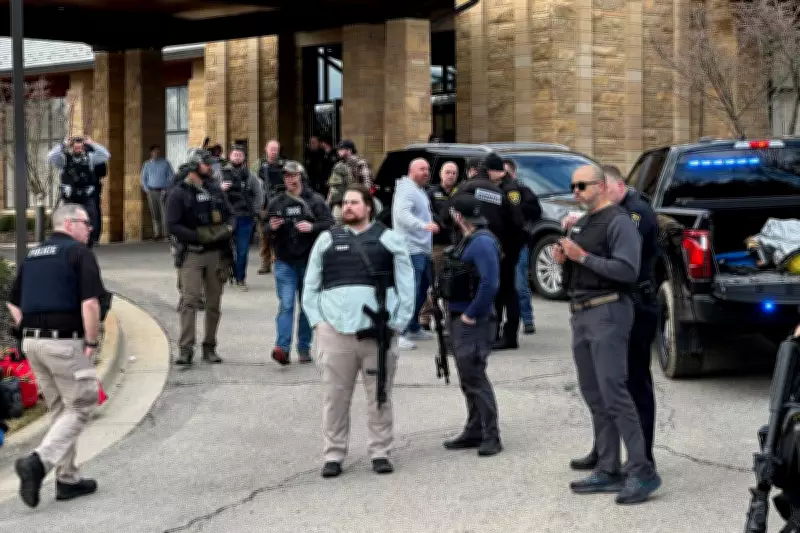
Federal investigators are intensively working to determine the precise motive behind a violent attack at a prominent Michigan synagogue, where a man armed with a rifle crashed his vehicle into the building. The assault, which federal officials have confirmed was carried out by a 41-year-old naturalized U.S. citizen originally from Lebanon, has raised significant security concerns within the Jewish community nationwide.
Details of the Attack at Temple Israel
The incident occurred at Temple Israel, one of the largest Reform synagogues in the United States, located in West Bloomfield Township near Detroit. According to authorities, Ayman Mohamad Ghazali rammed his vehicle into the synagogue, driving down a hallway before the car caught fire. He was subsequently killed by security personnel during the confrontation.
Oakland County Sheriff Mike Bouchard reported that despite the chaos, the synagogue's staff, teachers, and 140 children attending its early childhood center were unharmed. However, one security officer was struck by the vehicle and rendered unconscious, though he sustained no life-threatening injuries. Additionally, approximately 30 law enforcement officers required treatment for smoke inhalation after responding to the scene.

Immigration Background and Community Response
Ghazali immigrated to the United States in 2011 on an immediate relative visa as the spouse of a U.S. citizen and obtained citizenship in 2016, as disclosed by the Department of Homeland Security. The FBI, leading the investigation, has characterized the attack as an act of violence specifically targeting the Jewish community.
Eyewitness Cassi Cohen, director of strategic development at Temple Israel, described hearing a loud crash in the hallway and immediately securing herself and staff members in her office. "When I heard the crash, I knew it was bad," Cohen recounted, emphasizing the proximity of the incident to a classroom area where over 30 staff members were present alongside the children.
Rabbi Arianna Gordon expressed gratitude toward the security team, law enforcement, and early childhood teachers for ensuring the safe evacuation and reunion of children with their parents. Parents, including Allison Jacobs whose 18-month-old daughter attends the daycare, experienced profound shock upon learning of the attack, despite receiving early assurances of their children's safety.
Broader Context of Rising Threats
This attack occurs amid heightened global tensions and increased security measures at synagogues worldwide, particularly following recent military engagements involving the U.S., Israel, and Iran. The FBI has issued warnings about potential threats from Iranian operatives, while other recent incidents include:
- An assailant driving into pedestrians outside an Orthodox synagogue in Manchester, England, on Yom Kippur, resulting in fatalities.
- Individuals bringing explosives to a protest in New York, allegedly inspired by extremist groups.
President Donald Trump commented on the Michigan attack, labeling it a "terrible thing" after being briefed. Steven Ingber, CEO of the Jewish Federation of Detroit, noted a lack of surprise given the current climate, stating, "I'd love to say that I'm shocked, that I'm surprised, but I'm not."
Historical Precedents in Michigan
This marks the second attack on a house of worship in Michigan within the past year. In September, a former Marine fatally shot four individuals at a church north of Detroit and set the building ablaze, with the FBI later attributing the motive to anti-religious beliefs against The Church of Jesus Christ of Latter-day Saints.
Oakland County, home to a significant portion of Detroit's Jewish residents and approximately 1.3 million people, now faces renewed scrutiny over community safety. Temple Israel, with 12,000 members, continues to assess the aftermath while cooperating with ongoing federal investigations to uncover the full rationale behind this targeted assault.