Australia's Home Affairs Minister, Tony Burke, has publicly declared his "full confidence" in the nation's domestic intelligence agency. This statement comes amidst growing questions over how the father and son duo allegedly responsible for the Bondi terror attack travelled internationally without raising alarms.
Scrutiny Over Asio's Actions and International Travel
Minister Burke confirmed he had reviewed the Australian Security and Intelligence Organisation's (Asio) decisions concerning 24-year-old Naveed Akram. Akram was charged on Wednesday with 59 offences, including 15 counts of murder. The minister stated the review covered the period since Akram first came to official attention in October 2019 for alleged links to individuals in a reported Islamic State cell.
"I've gone through the different decisions that have been taken in this respect, and I have confidence of the decisions that [were] made," Burke told the ABC's 7.30 programme. He emphasised he was not engaging in political point-scoring, noting some decisions predated the current government.

This defence follows revelations that Akram and his 50-year-old father, Sajid—who was shot dead by police on Sunday—travelled to the Philippines between 1 and 28 November. Philippine authorities confirmed the pair listed Davao, in the country's south, as their final destination. Davao is the capital of Mindanao, an island where remote western regions have been a centre for pro-Islamic State militant groups.
Burke declined to specify publicly whether Asio maintained surveillance on Akram after the initial six-month investigation six years ago, or if the Philippines trip triggered a movement alert. He described the alert list as "very vast" and noted individuals who come to Asio's attention "generally stay there for a very, very long time."
A Community in Mourning and International Condemnation
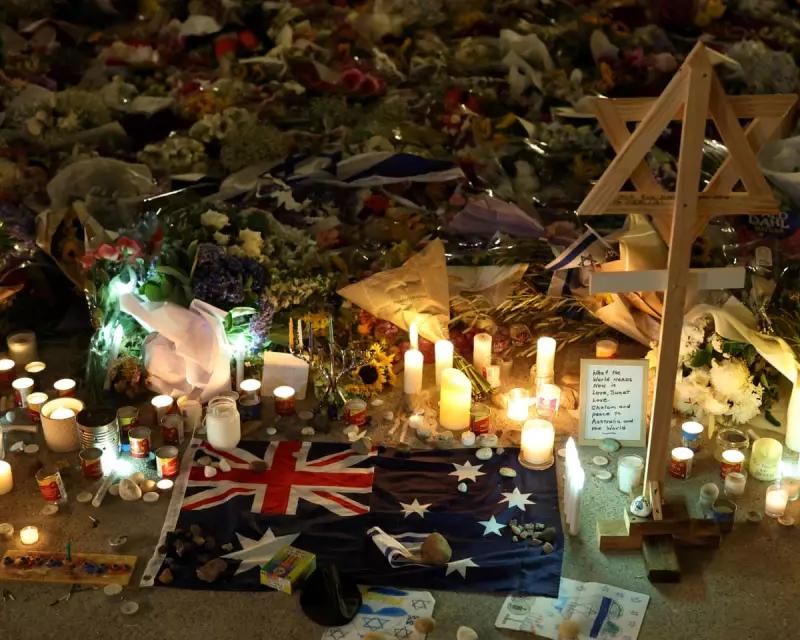
As the political and security analysis continues, the Jewish community in Bondi is preparing for another day of funerals for the 15 people killed. This includes a service for 10-year-old Matilda, the youngest victim. The first two funerals, for rabbis Eli Schlanger and Yaakov Levitan, were held on Wednesday. Of the 38 people injured, 17 remain in hospital, with one in a critical condition.
The attack has drawn strong international reaction. Israel's Prime Minister, Benjamin Netanyahu, claimed in a social media post that "these heinous acts are a direct result of rampant antisemitism," which he alleged was fuelled by a "flaccid policy" of Australian authorities. He had previously blamed Australian Prime Minister Anthony Albanese, suggesting the government's recognition of a Palestinian state encouraged extremism—an accusation Albanese has rejected.
At a multi-faith memorial service at St Mary’s Cathedral in Sydney, Albanese called the Bondi events "pure evil" and urged national unity. "Our nation is stronger than the cowards who seek to divide us," he stated, calling on Australians to "wrap our arms around the Jewish community."
Resources, Reforms, and the Threat Landscape
Burke also addressed whether a 2022 decision to move Asio and the Australian Federal Police (AFP) from the Home Affairs department to the Attorney-General’s department—a move reversed this year—had hampered intelligence work. The minister said returning the agencies to Home Affairs was his decision to ensure "seamless" information-sharing.
He asserted that both Asio and the AFP have more resources than ever before to monitor politically and religiously motivated extremism. "I've confirmed with the Australian federal police and with Asio again in the last 24 hours that they both have more resources than they have ever had," Burke said.
The security context was further highlighted by Asio Director General Mike Burgess, who drew parallels between the Islamist political group Hizb ut-Tahrir and neo-Nazi organisations. Burgess warned their "anti-Israel rhetoric is fuelling and normalising wider antisemitic narratives." While the UK banned Hizb ut-Tahrir in 2024, Burke said the Australian government would proscribe the group only once it met the legal threshold, which he stated it currently does not.

The nation continues to grapple with the aftermath of the attack, balancing grief for the victims with difficult questions about security, extremism, and community cohesion.