A counter-terrorism expert's detailed intelligence report on the horrific Bondi Beach Hanukkah massacre suggests one of the alleged gunmen displayed clear indicators of professional military training during the December 14 attack.
Expert Analysis of Attackers' Tactics
Ben Hosking, a former Royal bodyguard and tactical specialist with over a decade in the Northern Territory Police, prepared the report for Panoptic Solutions. It analyses the movements of the two attackers, referred to as Shooter 1 and Shooter 2, and their substantial arsenal, valued at approximately £24,000.
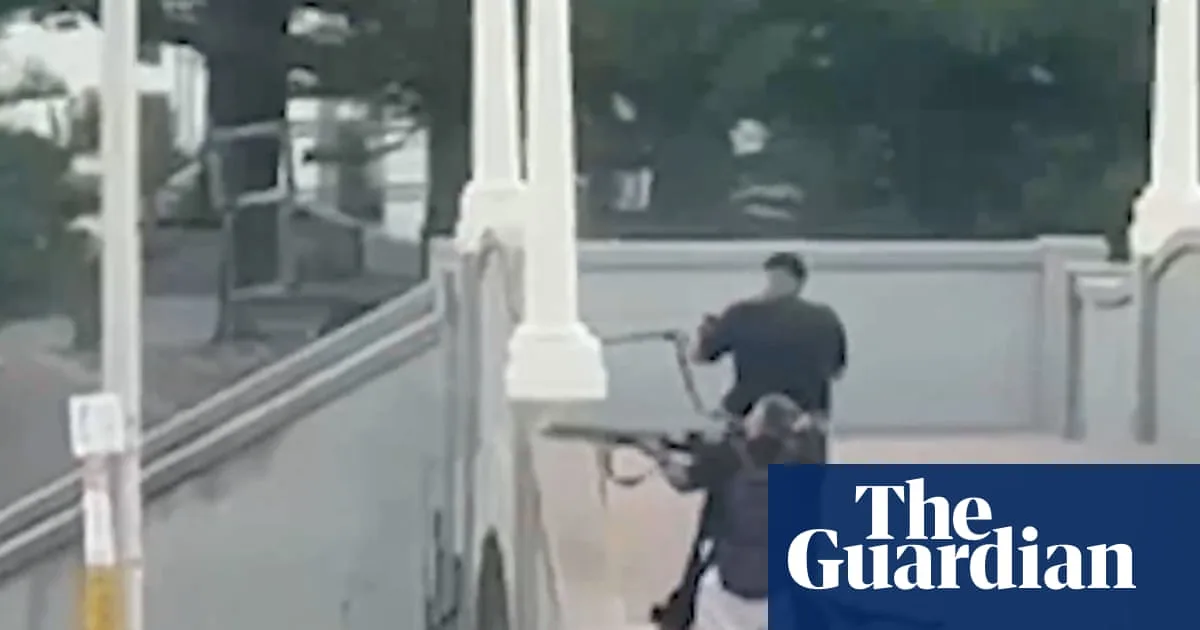
The report found that Shooter 1, alleged to be 24-year-old terror suspect Naveed Akram, demonstrated disciplined, trained behaviour. Positioned on a bridge, he is accused of using a high-powered Beretta BRX1 bolt-action rifle, often employed in big game hunting, to pick off targets from a distance.
"During the shooting, Shooter 1 demonstrated indicators of weapons training and basic military drills," the report states. "He consistently used the same standing firing stance. During reloads, he would crouch and move the rifle to the 'working space' and demonstrated practised repetition on retrieving magazines from his hip pouch."
Contrasting Levels of Discipline
In stark contrast, Shooter 2—alleged to be Naveed's father, 50-year-old Sajid Akram—showed far less discipline. Hosking's analysis indicates he used a pair of Stoeger shotguns at close range during forays into the crowd but demonstrated "lesser indicators of basic military drills."
This included his eventual disarmament by civilian hero Ahmed Al Ahmed, slow movement between cover, and "hip firing" during the initial stages. Hosking suggested Sajid Akram left his elevated position on the bridge because his shotgun was less effective than his son's rifle, forcing him to close the distance.
"From an elevated position with a bolt-action rifle, the second [alleged] terrorist up there on the bridge, he was in the perfect shooting position to take out innocents," Hosking said. "[It] is incredibly sad, but also indicates just how planned and horrible their mission objectives were."
Heroic Intervention and Firearms Access
The report and Hosking's commentary highlight the pivotal role of Ahmed Al Ahmed, who tackled Sajid Akram and wrestled a shotgun from him. Hosking, a former bodyguard for the UK Royal Family, called the footage "pretty amazing" and suggested Mr Al Ahmed may have had some prior training to conduct a weapon readiness check.
The arsenal used in the attack was significant. The weapons were identified as a Beretta BRX1 rifle and two Stoeger M3000 M3K shotguns, accompanied by a huge cache of ammunition. Hosking noted that while such firearms are not particularly difficult to obtain in Australia for someone with the correct licences and funds, the country's laws prevented the attackers from acquiring fully-automatic weapons.
"I think any further restrictions will impact and harm a lot more innocent firearms owners around Australia," Hosking warned, arguing the focus should be on radical ideology, not the firearms themselves.
Meticulous Planning and Aftermath
Police facts allege the attack was meticulously planned for months. The men were reportedly armed with homemade pipe bombs and an explosive tennis ball bomb, which were thrown towards the crowd but failed to detonate. Preliminary analysis indicated the devices were viable improvised explosive devices (IEDs).
Court documents state the pair adhered to a "religiously motivated extremist ideology linked to Islamic State," demonstrated by a videoed speech and the use of IS flags during the attack.
Sajid Akram was shot dead by police at the scene. Naveed Akram, who was seriously injured, has since woken from a coma, been transferred from Royal North Shore Hospital to Sydney's Long Bay jail, and faced court charged with 15 counts of murder.