WARNING: This article contains extremely distressing details.
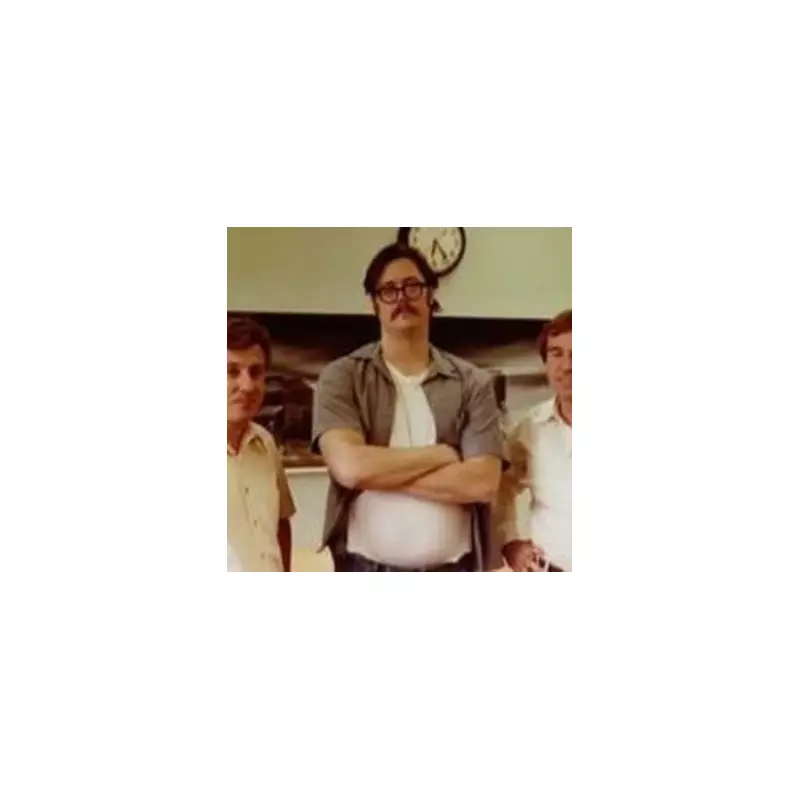
Standing at a towering 6 feet 9 inches tall and possessing a genius-level intellect, Edmund Kemper III remains one of the most chilling and dangerous serial killers in criminal history. His story is a harrowing journey from a disturbed childhood to a spree of murders marked by necrophilia and decapitation.
A Childhood of Disturbing Signs
Experts often look for early warning signs in those who become serial killers, and Edmund Kemper displayed several as a boy. He took pleasure in torturing and killing animals. In a grim foreshadowing of his future acts, he performed macabre rituals with his sister's Barbie dolls, which involved cutting off their heads and hands.

Growing up in California, the hulking youth spent much of his childhood sleeping in the locked basement of his mother's house. True crime expert Kristina Collins, discussing Kemper on a podcast, explained: "As Ed would grow older, his gem of a mother would banish him to the basement. So he wouldn't have a room. He would just have to literally live in the basement anytime he was in the house." This isolation was due to his mother deeming it unseemly for him to share a room with his sisters.
The Murders Begin and a Twisted Education
At age 15, after being sent to live with his grandparents, Kemper's killing started. Following an argument with his grandmother, Maude Kemper, he shot her in the head and back with a .22 rifle before stabbing her repeatedly. When his grandfather, Edmund Kemper Sr., returned home, Kemper shot him dead immediately.
He then calmly called the police and waited. When officers arrived, he chillingly stated, "I just wanted to see what it felt like to kill Grandma." Convicted of these murders, he was diagnosed with paranoid schizophrenia and sent to Atascadero State Hospital, a maximum-security facility.
There, with an IQ of 145, he became a model inmate. He was given responsible jobs, including administering psychiatric tests to other inmates. Kemper later admitted this taught him how to manipulate the system and learn from other criminals, including a serial rapist who shared stories of his crimes. Kemper effectively used his time in the hospital to learn how to be a better predator.
A Killing Spree Defined by Necrophilia and Decapitation
Deemed rehabilitated, Kemper was released on parole on his 21st birthday and moved back in with his mother. The violent arguments resumed instantly. Using compensation from a motorcycle accident, he bought a car resembling a police cruiser and began cruising California highways for young female hitchhikers.
On May 7, 1972, he picked up Mary Ann Pesce and Anita Mary Luchessa, both 18. He handcuffed, stabbed, and killed them. He drove their bodies home in his boot, was stopped for a broken brake light, and then took the corpses to his apartment. There, he photographed them, performed sex acts on them, dismembered them, and disposed of the parts. He sexually used their heads before dumping them.
This established his horrific pattern: murder, necrophilia, and decapitation. His next victim was 15-year-old Aiko Koo. After strangling her, he placed her body in his car boot, went to a bar for beers, and then returned to the car park to admire his "catch."
In January 1973, after killing 18-year-old Cindy Schall, he committed one of his most shocking acts. He kept her severed head for several days, using it repeatedly for sexual gratification. He finally buried it in his mother's garden, facing her bedroom window because, he said, his mother "always wanted people to look up to her."
The Final Murders and Surrender
After killing two more women, Kemper turned on his own family. Following a final argument, he bludgeoned his mother to death with a claw hammer as she slept. He decapitated her, placed her head on a shelf, screamed at it, threw darts at it, and then smashed her face in. He tried to dispose of her tongue and vocal cords down the waste disposal.

He then invited his mother's best friend, 59-year-old Sally Hallett, to the house and strangled her. Expecting immediate arrest, Kemper drove over a thousand miles to Colorado. When no manhunt materialised, he called Santa Cruz police himself. He had to call three times before an officer believed his confession, leading to his arrest in April 1973.
Convicted of ten murders, he was sentenced to life in prison. Eligible for parole since 2017, Kemper has stated he is content to remain incarcerated. His case stands as a terrifying study of a highly intelligent but profoundly broken mind, whose early warning signs escalated into unimaginable horror.