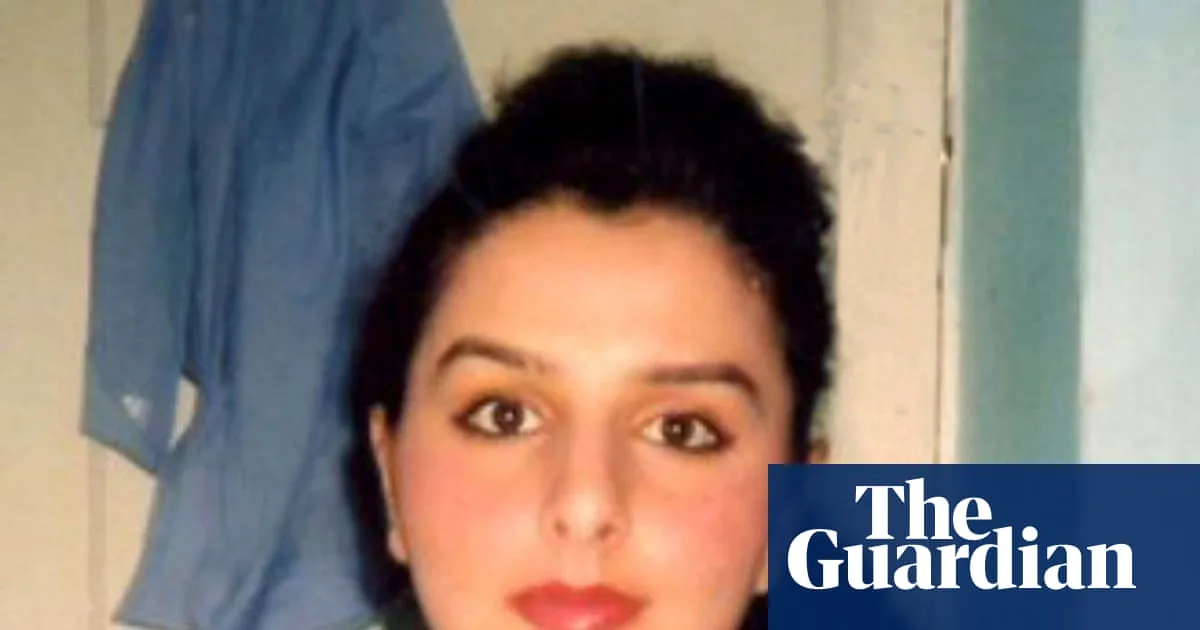
Two decades have passed since a brutal crime in South London shocked the nation, yet its chilling legacy of fear endures. This month marks the 20th anniversary of the 'honour' rape and murder of 20-year-old Banaz Mahmod, a killing orchestrated by her own father.
A Life of Abuse and a Forbidden Love
Banaz Mahmod's short life was marred by control and violence. Her family, Iraqi-Kurdish asylum seekers, moved to the UK when she was ten. In Mitcham, South London, she and her sisters suffered abuse from their father, Mahmod Babakir Mahmod. At just 17, Banaz was forced into an arranged marriage with an abusive older man. After enduring two years of beatings and rape, she left him and returned home.
It was there she quietly began a relationship with Rahmat Sulemani. Their love was forbidden, as she was still considered a married woman. After the couple were seen kissing at Morden Tube station, her father and uncle, Ari Agha Mahmod, convened a secret meeting. They decided both Banaz and Rahmat must die to restore the family's 'honour' within their community.
Pleas for Help Ignored
Terrified after overhearing the plot, Banaz took desperate action. On 12 December 2005, she delivered a letter to Wimbledon Police Station, explicitly naming family members who threatened to kill her and her boyfriend. Just over two weeks later, on New Year's Eve, police were called to a cafe where a drunk and distressed Banaz claimed her father had tried to kill her.
She had been plied with brandy by her father, who wore gloves to handle the glass. After fleeing, she was hospitalised, where Rahmat filmed a video of her detailing the murder plot from her hospital bed. Tragically, an investigating officer did not believe her. Lured by false apologies, Banaz returned to her family. Two days before her death, Rahmat was kidnapped and warned they would both be killed.
The Final Hours and a Grisly Discovery
On 24 January 2006, Banaz's final hours were ones of unimaginable horror. In her parents' living room, she was subjected to over two hours of torture and rape by her cousins, Mohamad Hama, Mohammed Saleh Ali, and Omar Hussain. She was then strangled with a bootlace. Detective Superintendent Caroline Goode, who led the investigation, later revealed the killers described pulling the cord so tightly with their feet on her back that it took more than half an hour for Banaz to die.
Her body was stuffed into a suitcase and buried in a garden in the West Midlands. It was not discovered until 28 April 2006, by which time it was too decomposed for DNA samples. The breakthrough came from mobile phone records, including a call where Hama asked if a 'freezer had been put back over her body'.
Justice, But No Peace
In June 2007, Banaz's father, Mahmod Babakir Mahmod, was found guilty of her murder and jailed for 20 years. Her uncle, Ari Agha Mahmod, received a 23-year sentence. Mohamad Hama, who raped and killed her, was convicted of murder and given a minimum of 17 years. Mohammed Saleh Ali and Omar Hussain were also convicted.
Brave testimony from Rahmat Sulemani, who entered witness protection, helped secure the convictions. However, he never recovered from his loss, stating, "My life went away when Banaz died." He took his own life in 2016.
Banaz's sister, Bekhal, who testified against her family, now lives under a new identity. She told The Guardian she remains in constant fear, always looking over her shoulder. Det Supt Goode noted the unique horror of the case: the family who should have sought justice were the ones who ordered the killing. Two decades on, the tragedy of Banaz Mahmod remains a stark reminder of the deadly consequences of so-called 'honour' and the systemic failures that can leave victims unprotected.