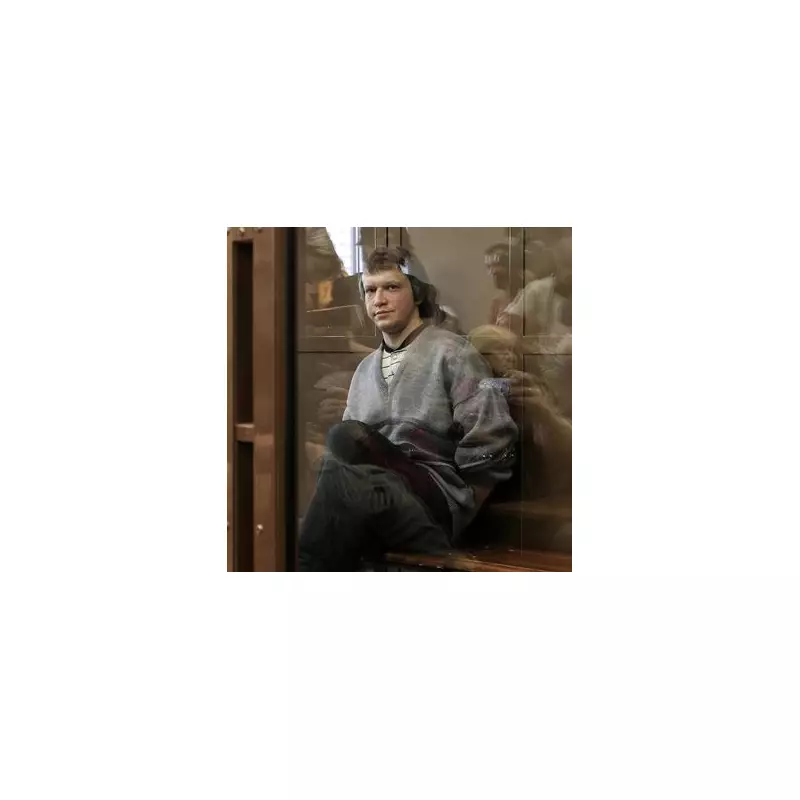
The chilling case of Alexander Pichushkin, known as the 'Chessboard Killer', stands as one of the most disturbing in modern criminal history. A former chess prodigy, Pichushkin harboured a macabre ambition: to kill one person for each of the 64 squares on a chessboard. His murderous spree, which spanned over a decade, cemented his place as Russia's second-most prolific serial killer.
From Prodigy to Predator: The Making of a Killer
Born in Moscow in 1974, Alexander Pichushkin was initially described as a happy and intelligent child. His life took a tragic turn after a fall from a swing caused significant damage to his frontal cortex, the brain region crucial for impulse control. Friends and family noted a drastic change in his personality, leading to volatility and social difficulties.
Despite these challenges, Pichushkin found solace and talent in chess, often playing with his grandfather in Bitsa Park. This green space, a popular Moscow leisure spot, would later become the primary hunting ground for his crimes. The death of his grandfather was a profound loss, pushing Pichushkin into isolation and heavy drinking. During this period, he became fixated on the notorious 'Rostov Ripper' serial killer case.

The Grisly Chessboard Tally Begins
Pichushkin's first murder occurred on 27 July 1992. He had planned to recruit a classmate, Mikhail Odïtchuk, to help achieve his goal of 64 murders. When Odïtchuk refused, an enraged Pichushkin strangled him and disposed of the body in a sewer. Although questioned by police, a lack of evidence allowed him to walk free.
Over the next 14 years, Pichushkin refined his method. He would lure victims—often homeless people or even neighbours from his own street—to Bitsa Park with offers of vodka. There, he would bludgeon them to death, later impaling their skulls with sticks or bottles as a grotesque signature. He later told investigators that killing made him feel like a god, giving him a sense of purpose. "I killed in order to live," he stated.
Capture and a Sinister Souvenir
His downfall came in June 2006 after the disappearance of his colleague, Marina Moskalyova. Wisely wary, she had left a note for her son naming Pichushkin. Upon his arrest, he confessed readily. A search of the one-bedroom flat he shared with his mother revealed a telling piece of evidence: a chessboard with coins covering 62 squares, each representing a life taken. He admitted he was just two murders short of his goal.
On 24 October 2007, Alexander Pichushkin was convicted of 49 murders and sentenced to life imprisonment. His first 15 years were ordered to be spent in solitary confinement. He now resides in the remote Arctic 'Polar Owl' supermax prison, a facility housing Russia's most dangerous criminals. In a startling update from April 2025, reports emerged that Pichushkin was ready to confess to 11 additional murders. He remains behind only Mikhail Popkov, the 'Werewolf Killer', in Russia's grim hierarchy of serial murderers.